Tag Archives: wine advice

Dessert wine basics

dessert wine basicsDessert wine is the great mystery of the wine business, usually associated with “dotty old ladies or rich men with English accents,” as I wrote in the current issue of Bottom Line Personal (which has bought quite a bit of freelance from me lately). Give that I have done very little with dessert wine over the blog’s history, this piece gives me an opportunity to correct that oversight.

Highlights from the piece (click the link to the story for recommendations):

? The most common dessert wines are ports from Portugal and sherries from Spain, but dessert wines are made wherever wine is produced, from Australia to Canada to Hungary. Port and sherry are made with wine grapes, though port uses red grapes and sherry white. There are dry sherries, such as fino, but all port is sweet.

? International law doesn ?t allow most ports or sherries made anywhere else in the world to be called by those names, so non-Portuguese ports and non- Spanish sherries will be labeled as ?dessert wine, ? ?port-style, ? ?sherry-style ? or something similar.

? The production techniques for port and sherry are much more complicated than those for table wine and involve long aging (often years) and the addition of brandy or other alcohol to fortify them. That ?s why they ?re also called fortified wines.

? Dessert wines aren’t cheap, and some, like Sauternes, can cost hundreds of dollars (which may explain their absence here). But since a dessert wine serving is less than a table wine serving, one or two small glasses of port or sherry or whatever are more than sufficient. That means a $20 half-bottle can be the equivalent of a $10 or $15 full bottle of table wine.
Chateau Bonnet Blanc and why scores are useless

Chateau Bonnet BlancChateau Bonnet is the $10 French wine that is one of the world’s great values and has been in the Hall of Fame since the first ranking in 2007. As such, it has always been varietally correct, impeccably made, an outstanding value, and cheap and delicious. The 2012 Bonnet blanc, which I had with dinner the other night, made me shake my head in amazement. How could a cheap white wine that old still be so enjoyable?

What more could a wine drinker want?

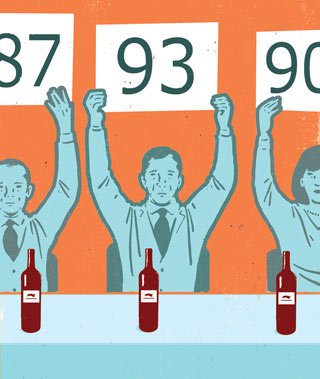
A lot, apparently, if a couple of the scores for the 2012 on CellarTracker (the blog’s unofficial wine inventory app) are to be believed. The Chateau Bonnet blanc scored 80 points from someone who said the label was ugly and 83 points from a Norwegian, and that a Norwegian was using points shows how insidious scores have become.

The irony is that the tasting notes for the low scores were quite complimentary. The 80-point mentioned “crisp dry tones and pleasant blend of melon flavours” while the 83 described herbs, minerals, and citrus, and neither noted any off flavors or flaws. Yet, given those scores, the Bonnet blanc was barely an average wine, hardly better than the grocery store plonk I regularly complain about on the blog.

Which it’s not. Those two wine drinkers are allowed to score the wine as low as they like, and they’re allowed to dislike it. That’s not the problem. The problem is consistency; someone else gave the Bonnet blanc a 90, citing minerality and lime zest — mostly the same description as the low scores. Yet a 90 signifies an outstanding wine. How can a wine that three people describe the same way get such different scores?

Because scores are inherently flawed, depending as they do on the subjective judgment of the people giving the scores. If I believed scores and I saw the 80 or the 83, I’d never try the Chateau Bonnet blanc, even if I liked melon flavors or minerals and citrus. Which is the opposite of what scores are supposed to do. And that they now do the opposite of what they’re supposed to do means it’s time — past time, in fact — to find a better way.

For more on wine scores:
• Wine scores, and why they don’t work (still)
• Wine competitions and wine scores
• Great quotes in wine history: Humphrey Bogart

studio microphone

Winecast 23: Lew Perdue, Wine Industry Insight

Lew PerdueLew Perdue is a long-time wine marketer, wine writer, and wine entrepreneur, and he may be even crankier about the wine business than the Wine Curmudgeon. Or, as he recently wrote about a Kendall-Jackson wine: “At $21.50 retail it is a pale shadow of the Hogue at $13.50. … sour, bitter, thin, harsh.”

Which doesn’t mean his analysis isn’t spot on — the wine industry, which may actually want to make it easier for consumers to buy wine, doesn’t know how to do it. Perdue says he buys six wines at his local grocer for his reviews, and only three are usually worth drinking.

Fortunately, Perdue has several suggestions about what can be done, which we talk about on the podcast. Given that everyone tastes wine differently, he says, wouldn’t it make more sense to find a way for people to find wine recommendations from others with similar tastes, instead of from what he calls the wine elite, with their scores and jargon?

Click here to download or stream the podcast, which is about 20 minutes long and takes up 10 megabytes. The sound quality is very good, and Skype ? the unofficial VoIP provider for the blog ? was in exceptionally fine form for the second consecutive podcast.

How to buy wine at the grocery store

grocery store wine tips

The supermarket Great Wall of Wine is the Rubik’s Cube of wine buying, with hundreds and hundreds of bottles to choose from, confusing pricing, and no one to ask for help. But it is possible to buy quality wine at the grocery store, and you don’t even need to know much about varietal or region. Just keep these grocery store wine tips in mind:

? The cuter the label, the more simple the wine. This means there is little balance or interest. Instead, they’re what producers call easy to drink — red wine with lots of sweet fruit and almost no tannins, and white wine with almost honeyed fruit and the minimal amount of acidity necessary to make it palatable. Whether these wines are good or bad isn’t the point; rather, is this the kind of wine you want to buy (or avoid)? If it is, then these labels are a clue.

? Who makes the wine? This is almost impossible to tell, since most of the wine in the grocery store usually comes from a dozen or so producers — our friends at Big Wine — and they would prefer you don’t know. So look for something like ?Produced and bottled. , ?Vinted and bottled. , or ?Imported and bottled. The location that follows usually identifies the parent company, so that many Gallo-owned brands say Modesto, Calif. The ?imported ? line may have a company name similar to the name of the multi-national that owns the brand, so that CWUS is part of Constellation Brands. A more complete list is in this post.

? Decipher the back label. Pay attention to the choice of words, and not what they mean. Simple, less interesting wines rarely describe themselves as fresh, clean, or earthy. Rather, they use terms like rich, plush, luscious, and even roasted. Also, chocolate and caramel show up more often than not, especially in very ordinary red wine, along with badly written homages to oak — vanilla bean is one of my favorites.

? Beware older vintages with steep discounts, especially if the wine wasn’t made in the U.S. This is often a sign the wine has been sitting in a warehouse, sometimes for years, and is more likely to have gone off. The supermarket, which may have bought the wine for pennies on the dollar, doesn’t care if it’s spoiled; who returns bad wine to the grocery store? One rule of thumb: Be wary of white wine older than two years and red wine older than three.

Shark Tank wine

Shark Tank wineDear Shark Tank Masters of the Universe:

The Wine Curmudgeon does not pretend to be a financial genius; witness my inability to make any money off the blog. But your recent foray into the wine business — Zipz single-serving wine and Beatbox flavored wine — is about something I know. For smart guys, you’re doing dumb things with your money.

Know just two things about the wine business, which should put these investments in perspective:

First, that three-quarters of all wine sold in the U.S. is traditional wine that comes in a 750-milliliter bottle, just as it has been for decades. There is no evidence that that Americans are clamoring for single-serving wine or flavored wine sold in a box, no matter how cool each product may be. If you doubt that, wait in line (or have a minion do it for you) at a World Market, where the single-serving bottles are lined up for impulse purchases. Count how many people buy them. Yes, not all that many.

Second, that wine is not sold like other consumer goods, but through the three-tier system. This means that your entrepreneurs can’t sell their product to a retailer like Costco. The law in all 50 states requires them to hire a distributor to sell their product to the retailer. If they can’t find a distributor, and distributors are notoriously picky about what they represent, then it will never be sold in a store. I should also mention, thanks to three-tier, that it would be even more difficult to sell Zipz (which isn’t all that tasty) and Beatbox in Pennsylvania and New York, two of the largest wine markets in the country. The former doesn’t have any independent wine retailers, and the latter doesn’t allow wine sales in grocery stores.

I hope this helps the next time someone pitches a Shark Tank wine deal. And no need to thank me — it’s enough to know that I’m helping incredibly rich people not waste their money.

Sincerely,
The Wine Curmudgeon

Nine silly wine facts

wine factsNine silly wine facts you probably didn’t know — or didn’t know you needed to know:

1. Two tablespoons of sweetened condensed milk has as many calories as one glass of wine, around 125. Knowing this, I expect the federal Centers for Disease Control to propose higher taxes and more regulation for sweetened condensed milk, as well as strategies to wean us off the stuff.

2. The Romans, the world’s second great wine culture, had wine writers (which no doubt hastened the collapse of the empire). Pliny the Elder, one of the most famous, wrote that second-rate wines “cannot properly be termed wines.” It’s a good thing he didn’t know about scores.

3. That no one but the super-rich can afford the best French wine is nothing new. In 1845, Fraser’s Magazine quoted a Bordeaux wine merchant, who complained that the leading French wines were not only too expensive, but that he wasn’t able find any to buy.

4. The French, whose wine industry was almost destroyed by the phylloxera pest at the end of the 19th and the beginning of the 20th centuries, probably discovered phylloxera — though they didn’t know it. French colonists in 16th century Florida were never able to grow grapes; the vines always died, and the descriptions of what happened seem to have indicated phylloxera.

5. The U.S. attitude toward regional wine — “I don’t need to drink it to know it isn’t any good” — may have its roots in 19th century English wine. Wrote Punch, a popular humor magazine: English wine needed four people to drink it: One victim, two to hold him down, and one other to pour the wine down his throat.

6. It sounds like an urban myth, but there does seem to be something called oenophobia — a fear of wine. Symptoms include anxiety, nervousness, embarrassment, or slight perspiration. In other words, everyone who drinks wine has probably suffered from it at one time or another.

7. The Code of Hammurabi, generally acknowledged as the first written set of civil law (around 1800 BC), included penalties for shady wine retailers: they were to be drowned. Maybe the three-tier system isn’t so bad after all.

8. The Greek philosopher Plato seems to have had the Wine Curmudgeon in mind: He said wine in moderation was important until 40; after that, you can drink as much as you want to cure the “crabbiness of old age” and “soften the hard cast of mind.”

9. The most important fruit crop in Napa Valley after World War II was prunes, and its cash value was higher than grapes as late as 1960. You may make of that what you will, given Napa’s standing as the epicenter of U.S. wine snobbery.

Winebits 369: Cheap wine, sweet red wine, wine lawsuits

wine lawsuits ? Almost correct: The Wine Curmudgeon is always happy to see other wine sites hop on the cheap wine bandwagon, and this recent piece from Wine Folly. a qualiity site, offers several fine pointers: Beware the back label, watch out for private label brands, and double check pricing. My concern is its passive-aggressive style, which comes out in the headline. “Good cheap wine is lying to you.” The piece makes it seem as if only cheap wine does these things, when the entire wine business is full of half-truths, misconceptions, and obfuscations. Which is my reason for being, after all. I was also confused by the post’s fixation on U.S. wine — what’s wrong with buying cheap wine from Spain, France, and Italy?

? Bring on the sweet stuff: You know sweet red wine is firmly established in the market when one of the wine trade newsletters talks about its popularity without one nasty comment. “While ‘sweet’ drinkers may be gravitating toward certain blends and varietals, and ‘dry’ drinkers supporting others, consumers clearly are exploring a variety of options.” That’s quite shocking, that Shanken News Daily (owned by the same company that owns the Wine Spectator), suggests that wine drinkers have minds of their own. But the numbers make believers: sweet red wine is growing at 4 1/2 percent a year, ahead of wine’s overall growth, says the report. And this is where I mention that I was writing about this stuff when the Winestream Media was dismissing it.

? One more lawsuit: Regular visitors know that the Wine Curmudgeon loves lawsuits, when wine companies throw money at their attorneys for no other reason than they can. Though, this suit, about two wines with the same name, does seem to have some merit (with the caveat that I’m not a lawyer and could be completely wrong). I also thought I’d throw this in, two companies named Cipriani suing each other. I mention it for two reasons — first, that it shows wine doesn’t have a monopoly on this sort of thing, and second, that the smaller company, based ion a Chicago suburb, makes some of the best noodles I’ve ever had, and I hope it wins. Update: The two wineries settled out of court a couple of days after this posted. Chalk it up to common sense