
Tag Archives: sauvignon blanc

Winebits 697: Sauvignon blanc shortage, restaurant wine, Fred Tasker

sauvignon blanc
“Anything but this. … How will I survive a New Zealand sauvignon blanc shortage?”

This week’s wine news: A possible New Zealand sauvignon blanc shortage, plus prices for restaurant wine, and long-time wine writer Fred Tasker dies

New Zealand sauvignon blanc shortage? Extreme spring frosts in New Zealand – October 2020 or so in the southern hemisphere – may cut the country’s sauvignon blanc production by almost one-third, reports thedrinksbusiness.com. This matters because New Zealand is the world’s second-largest sauvignon blanc producer after France, and U.S. supermarkets are replete with quality $10 Kiwi sauvignon blanc. Plus, several producers said the country may not be able to meet global demand in 2021. The story in the link is short on actual numbers (and also includes the usual hyperbole about quality that seems to show up in every harvest report). So how small the harvest will be, and whether it will be short enough to send prices up, remains to be seen.

Restaurant wine prices: British researchers may have dispelled the long-standing belief that the second cheapest bottle on a restaurant wine list is a rip-off. Economists from the London School of Economics and The University of Sussex Business School found that the mark-up on the second-cheapest wine is significantly below that of the four next most expensive wines on the list. Previously, it was assumed that the second-cheapest bottle was “significantly overpriced” to take advantage of those of us who are too embarrassed to order the cheapest wine (not the WC, of course). If anything, found the study, we should avoid selecting from the middle of the list, since they tend to have the heftiest mark-up. So, the caveat: The study used London-based restaurants, and there is no guarantee that British restaurant pricing is similar to U.S. pricing.

Fred Tasker, 1942-2021: Fred Tasker, the long-time wine writer for the Miami Herald newspaper, died last week. He was 79. Tasker was the wine columnist for the Herald for two decades, retiring in 2012, and also covered wine for a Miami NPR program. Tasker was one of the leading newspaper wine columnists in the country at a time when newspapers covered wine, joining people like Rebecca Murphy in Dallas, Bill St. John in Chicago and Denver, Robert Whitley in San Diego, and Michael Lonsford in Houston. They played a key role in the U.S. wine boom, offering reviews and analysis that reached a wide audience.

Mother’s Day wine 2021

mother's day 2021
“Remember — buy me what you think I’ll like, and not what you think I should drink.”

Four suggestions — white, sparkling, rose, and red — for Mother’s Day 2021

The blog’s 15th annual Mother’s Day wine post reminds me of a couple of things, but mostly that I always need to write about wines that my mom will enjoy (and won’t have too much trouble finding in a store near her).

So, as always, the emphasis is on valuer and quality, with the reminder that we should buy Mom something she will enjoy and not something we think she should drink. These Mother’s Day wine suggestions should get you started:

Balletto Sauvignon Blanc 2020 ($20, sample, 13.1%): This is classic California sauvignon blanc, which isn’t easy to find any more. That means a wonderful aroma of grassiness with a hint of melon, lemon fruit but not particularly tart, and a long, minerally finish. Highly recommended (and even worth doing a Zoom tasting to sample).

Ackerman Marquis de la Tour Brut NV ($10, purchased, 11%): Terrific cheap bubbly from France’s Loire that’s made with chardonnay, chenin blanc, and – believe it or not – ugni blanc. It’s soft, a little sweet (honey?), with lemon and apple fruit. But the bubbles are tight, even though it’s charmat. Very nicely done. Imported by Palm Bay International

Bonny Doon Vin Gris de Cigare 2020 ($15, sample, 13.5%): This California pink, always one of my favorites, was a little less Doonish last vintage. But this is as it should be: Stony, almost austere, with a hint of barely ripe strawberry fruit to remind you it’s rose, as well as a very long and very clean finish. Highly recommended.

Tinto Negro Malbec 2019 ($10, sample, 13.5%): I’ve probably tasted more Argentine malbecs during the pandemic than the past couple of years combined; the quality, as with this wine, has been much better than expected. It’s a bright, fresh and not too jammy red, with lots of blueberry fruit. But it’s not overdone and there is plenty of acidity and even a little spice to back it up. Very professional rendering of this style. Imported by Vineyard Brands

Photo: Thiago Cerqueira, via Unsplash

More about Mother’s Day wine:
Mother’s Day wine 2020
Mother’s Day wine 2019
Mother’s Day wine 2018
Expensive wine 140: WillaKenzie Estate Chardonnay 2018
Wine of the week: Garofoli Macrina 2019

Mini-reviews 142: Dueling Pistols, Grgich, Frenzy, Louis Jadot

dueling pistolsReviews of wines that don’t need their own post, but are worth noting for one reason or another. Look for it on the fourth Friday of each month.

Dueling Pistols Red Blend 2016 ($50, sample, 14%): Surprisingly restrained red blend from California’s Paso Robles, with more juiciness than sweet fruit. Look for cherry fruit, a long, almost stony finish, and and fine, almost earthy tannins. Very nicely done.

Grgich Hills Cabernet Sauvignom 2014 ($72, sample, 14.5%): This red from one of California’s most respected long-time producers is everything it should be – fruity (dark berries?), rich, complex, and age worthy.

Frenzy Sauvignon Blanc 2019 ($12 purchased, 12.5%): Typical “meh” supermarket New Zealand sauvignon blanc – lots of grapefruit and not much else. Imported by Wilson Daniels

Louis Jadot Beaujolais-Villages 2019 ($12, purchased, 13%): This French red might taste better when and if you try it; I found it fruity (cherries?), but so tart as to be unpleasant. This producer’s quality control has become notoriously inconsistent. Imported by Kobrand

Winebits 677: The year-end supermarket wine edition

supermarket wineThis week’s wine news: Supermarket wines could account for almost half of the wine sold in the U.S. Meanwhile, Kroger says sauvignon blanc was a 2020 hot trend and southern California retailer Gelson scores with its private label wine.
How important is supermarket wine? Pretty damned important, if this study from the American Association of Wine Economists is accurate. Its numbers show that the 30 biggest wine brands in the U.S. – all mostly supermarket labels costing $10 or less – accounted for 49.8 percent of the wine sold in the U.S. by volume in 2019. Think about that: There are more than 10,000 wineries in this country, and just 30 labels make up half of the wine sold. But that’s just part of the study. Barefoot and Franzia sell about one of every seven bottles, and their wineries, E&J Gallo and The Wine Group, control almost one of every three bottles sold. And people doubted consolidation matters? The other bit of news about this study? It’s not really news – just a slightly different take on the numbers than the annual Wine Business Monthly report, which will be released in a month or so.

Bring on the sauvignon blanc: Kroger, which ranks among the biggest wine retailers in the country, reports that sauvignon blanc – yes, that sauvignon blanc – was the fourth biggest food and drink trend in its 2,800-store national chain this year. That put the white wine between flavored potato chips and heavy whipping cream, and ahead of chocolate (No. 8) and coffee pods (No. 9). The pandemic and people drinking at home instead of restaurants no doubt accounted for the high ranking, but let’s not overlook relaxed rules on wine shipping and delivery. As noted last week, Kroger has the money and chops to flex its political muscle to keep many of the changes permanent when the pandemic ends.

Private label wine: Southern California grocer Gelson’s Markets expanded its private label wine collection in 2020, taking advantage of the wine glut to offer pricier wines than the stuff in the first item in this post. The chain added four reserve Napa wines, products that can cost as much as $100 with a winery name on them. Gelson’s is a high end retailer with a big wine commitment; about half of is 27 stores have wine bars.

Photo: “Barefoot Wine Display at Ralph’s” by JoeInSouthernCA is licensed under CC BY-ND 2.0

Mini-reviews 139: Black Friday edition 2020

Black Friday 2020Reviews of wines that don’t need their own post, but are worth noting for one reason or another. Look for it on the fourth Friday of each month. This month: two reds, a white, and a rose for Black Friday 2020
La Vieille Ferme Rouge 2019 ($8, purchased, 13%): Long-time reader Rich Liebman always insisted I was too hard on this French red blend, which I’ve been drinking off and on for longer than I care to remember. And he was correct — it’s nowhere near as old-fashioned as it used to be. It’s less harsh, there’s more dark fruit, and there might even be something that could be oak. But I’m still not sure it should be part of my regular wine rotation. Imported by Vineyard Brands

CK Mondavi Sauvignon Blanc 2019 ($6, sample, 12.6%): This California white is notoriously inconsistent, so the good news is that this vintage tastes like $6 sauvignon blanc — more sauvignon blanc in character (some grass, some citrus fruit) and less cheap tasting.

Dixie & Bass Cabernet Sauvignon 2018 ($18, sample, 14.5%): There’s nothing very subtle about this Washington state red. It’s a standard big, fruity (black cherry?), over-the-top cabernet (though it tastes more Lodi than Washington state). If this is your style of wine, it’s a fair value.

Notre Vue GSM Rose 2019 ($29, sample, 12.7%): This California pink is a pretty, well-made, and enjoyable wine. Look for crisp berryish fruit, and a long, clean, mineral-driven finish. But is really three times better than a top-notch $10 rose?

Mini-reviews 138: German riesling, white Burgundy, godello, Rombauer

rieslingReviews of wines that don’t need their own post, but are worth noting for one reason or another. Look for it on the fourth Friday of each month.

Dr. Heidemanns-Bergweiler Riesling 2018 ($13, purchased, 10%): This Total Wine private label is a German white that is honeyed and lemony.  It’s simple but enjoyable, and the “medium dry” sweetness doesn’t get in the way. Imported by Saranty Imports

Sauzet Bourgogne Blanc 2016 ($32, purchased, 12.5%): The Big Guy brought this white Burgundy, from our favorite Burgundy producer, to WC world headquarters for pandemic, socially-distanced, porch sipping. Sadly, thanks to the tariff and premiumization, this is no longer the “affordable” wine it used to be. It’s fine for what it is,  with some green apple and well-constructed oak. But it lacks the Sauzet verve and dash, and especially at this price. Imported by Vineyard Brands

Virxe de Galir Pagos del Galir 2018 ($18, sample, 13.5%): This Spanish white is made with godello, which the wine geeks compare to chardonnay (same green apple fruit, same mouth feel, though a bit more spice). Hence the problem: You can buy a nice albarino or a Basque Txakolina  for more or less the same price. Imported by Aaron LLC

Rombauer Sauvignon Blance 2019 ($25, sample, 14.2%): This California white is a terrific example of this style of pricey wine — and it’s the style that Rombauer made famous. It’s a little hot, and features some grassy notes but surprisingly muted citrus fruit. Plus, it has a much fuller mouth feel than other sauvignon blancs. In other words, $10 New Zealand it ain’t.

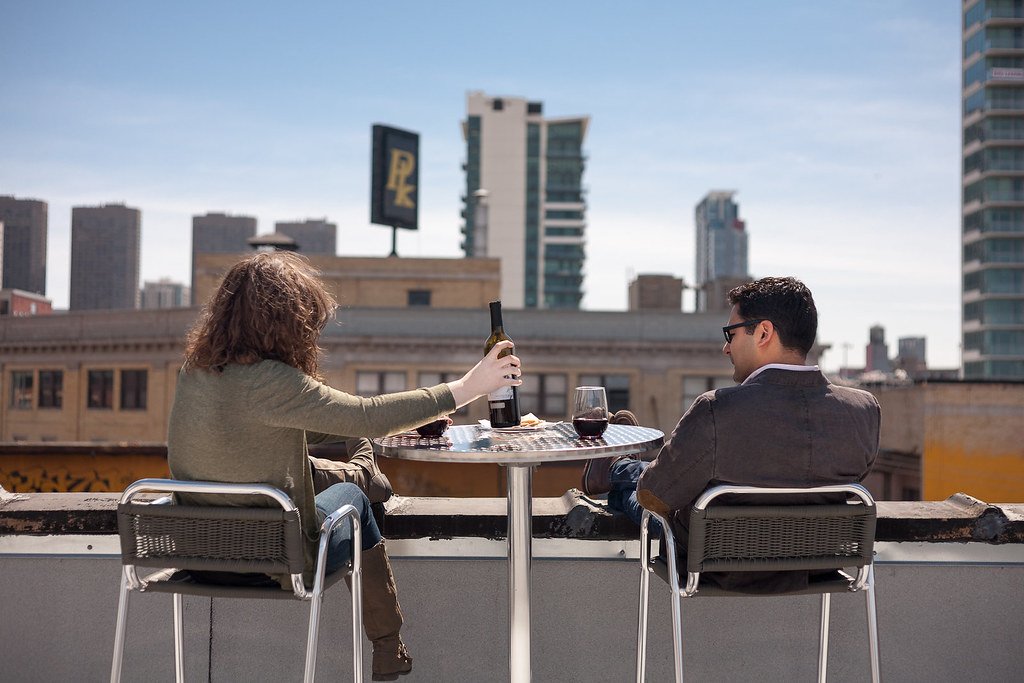
Photo: “Sunny Afternoon on the Roof” by winestyr is licensed under CC BY 2.0

Wine of the week: Biscaye Baie Sauvignon Blanc 2019

biscaye baieThe Biscaye Baie is a Gascon white wine that delivers more than $10 worth of value

The wine business has not been kind to France’s Gascon whites, one of the finest values in the world. There have been importer and distributor problems, the 25 percent Trump wine tariff, and the usual sort of availability foolishness. So imagine the Wine Curmudgeon’s euphoria when he found the Biscaye Baie.

Cheap wine gods be praised.

The Biscaye Baie ($10, purchased, 11.5%) is pretty much everything it should be. If it’s not quite up to the quality of the legendary Domaine Tariquet, it tastes like Gascon wine – fresh, white grapey, maybe a little tart, and, as the producer’s tasting note says, “a wine to be enjoyed at all times. …” Or, as my tasting note says, “Not quite Hall of Fame, but still worth buying in quantity.”

The Biscaye Baie isn’t a blend, like so many other Gascon whites – just sauvignon blanc. Hence, it tastes a little more sauvignon blanc-ish than those blended with colombard, since the latter grape tends to take the edge of the sauvignon blanc’s citrusness. But don’t confuse this with a New Zealand sauvignon blanc; it’s not a grapefruit-style wine, but has a sort of vague lemony something or other.

Practically highly recommended, if I did that sort of thing. But I have bought it in quantity, and keep three or four bottles chilled. We’ve reached the 100-degree season in Dallas, and that’s just one more reason to reach for this wine.

Imported by Aquitane Wine Company