Tag Archives: French wine

Mini-reviews 28: Los Vascos, picpoul, Sledgehammer, Re Midas

Reviews of wines that don ?t need their own post, but are worth noting for one reason or another. Look for it on the final Friday of each month:

? Los Vascos Chardonnay 2010 ($10, purchased): Not what it once was, and can’t be the same wine that several readers suggested I try. Some green apple, but heavy and oily — not good characteristics in a $10 chardonnay.

? Bertrand Picpoul-de-Pinet 2010 ($10, purchased): Extremely disappointing picpoul, more like a white Bordeaux. Mostly citrus fruit without picpoul’s mineral character.

? Sledgehammer Cabernet Sauvignon 2008 ($15, sample): Big, fruity, unsubtle and straightforward. This is a simple wine that delivers chocolate cherries and caramel for those who like that sort of thing.

? Cantina di Soave Re Midas 2010 ($10, sample): Not much there, even for $10. Almost heavy, with little of Soave’s crispness or minerality. Made in more of a New World, chardonnay style.

Wine of the week: Petit Caprice 2009

This wine has been taunting the Wine Curmudgeon for months, daring me to try it. And I would walk past it, ignoring it, refusing to be tempted by what I thought was a previous vintage from an ordinary part of France made by just another producer with a label that seemed to be trying too hard.

So what happened when I finally succumbed, and bought the wine (mostly out of necessity, since finding red wine to review is so much more difficult than finding white wine)? It was a nifty little bottle, proving once again that one should taste the wine before one judging it.

The Caprice ($9, purchased) is a previous vintage, and the current vintage  costs more in France than I paid for this in Dallas. But that doesn't mean it's not a quality $10 wine, offering more value than expected. It's a blend of grenache, syrah and merlot that is a little fruiter (red raspberry?)  than many similar Rhone-style wines, but it's not New World fruit by any stretch. The Caprice has easy tannins, and a dark, earthy middle. Even more impressive: Since it is a previous vintage that it has held up so well. This is fall wine, as the weather gets cooler, to enjoy with soups and braised beef and chicken.

Wine of the week: Domaine Artigaux 2010

DOMAINE ARTIGAUX One of the perks of being the Wine Curmudgeon are trade tastings, where producers and importers offer samples of their various wines. At a recent Dallas trade tasting, two of my favorite Gascon wines were in attendance — Domaine Duffour and Domaine du Tariquet.

Getting to taste them reminded me how much I appreciate Gascon wine, which is cheap, made with odd grapes, and just the thing to keep in the refrigerator for wine emergencies. So I did a quick round of the stores to find some more, and came up with the Artigaux ($10, purchased).

It's made with the Gascon grapes, ugni blanc and colombard, and it's not quite the wine that the Duffour or the Tariquet are. The Artiguaux is more simple, with a touch too much white grapey-ness. But that's not necessarily a bad thing, since the wine is fresh with low alcohol (11 1/2 percent) and almost enough acid to balance the fruit.

This is wine for the end of summer, and wouldn't be bad at any other time — such as the refrigerator emergency wine, when you need a glass after work or something to drink with Chinese takeout.

Wine of the week: Joseph Drouhin Macon-Villages 2009

image from cache.wine.com The Wine Curmudgeon's guilty secret is white Burgundy — chardonnay from the Burgundy region of France. Why guilty secret? Because white Burgundy is not cheap, and has not been so for years. It's not unusual for a very ordinary bottle that's worth $8 or $10 to cost $15 or $20; unless I get a sample (or splurge on a $60 bottle for a special occasion), I don't drink much white Burgundy any more.

So you can imagine my excitement when this wine, along with several other white Burgundies, arrived at the house. Joseph Drouhin is a respected negociant, and its wines are almost always well made. I figured, if nothing else, I could get an expensive wine of the month out of the shipment. And a couple of the bottles do fit that category.

But several weren't expensive, including the Macon ($13, sample). Macon wines are not complicated, don't get much oak (if any), and are made to drink now. In other words, they are Wine Curmudgeon wines. In the long ago days of the strong dollar and more sensible French export policies, there were half a dozen or so quality Macon-Villages wines for $10 or so, but the ones that still cost $10 are usually disappointing and the others aren't $10 any more.

Which makes the Drouhin all that more wonderful. It's one of the best values I've tasted in white Burgundy in years, and my tasting notes show that the producer actually cut the price this year. This is a very traditional wine, with hardly any fruit at all (lime zest?), no oak, and lots of minerality. So, no, it doesn't taste like came from California, but it's not supposed to. In this, it's a hint of what the 2009 vintage will ultimately deliver in Burgundy. Drink this chilled with roast chicken, any kind of shellfish, or on its own.

Expensive wine 29: Pol Roger White Foil Brut NV

The Wine Curmudgeon reported a couple of weeks ago that a study found that French wine gets a disproportionate amount of Internet buzz given its declining share of the world market. There are any number of reasons for this, including the Winestream Media's obsession with red Bordeaux and the sense among many consumers that French wine remains La Grande Dame despite its many problems.

This month, I'm going to add to the Internet buzz, but not for either of those two reasons. The White Foil ($47, sample) can stand on its own as an example of what Champagne is and what French wine can be when the French aren't preoccupied with selling wine to the Chinese, rioting vineyard owners, and sneaking one past all those stupid Americans.

Those of us who write about wine use terms like classic a lot (probably too much, in fact), but that's what the White Foil is. If you want to taste real Champagne — sparkling wine grown in the Champagne region of France — then try this. As Champagne goes, it's not ridiculously expensive, and has all of the qualities Champagne is supposed to have.

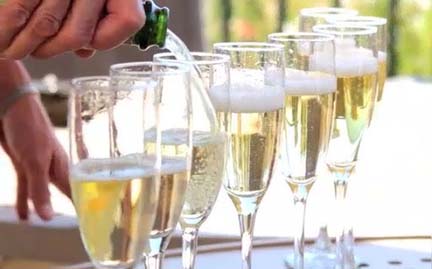
Look for lots of green apple fruit in the front and streams and streams of bubbles in the glass. The wine is crisp and fresh and fine, and has a bit of the toast quality of classic Champagne — though it's quite subtle and not as overdone as other, more popular wines, who offer that baseball bat up the side of the head effect. And leaving the wine open for a few minutes before you drink it won't hurt.

This is a wine for gifts and special occasions, and to share with someone who appreciates quality and a quiet moment.

Winebits 188: Deborah Whiting, French wine, wine business

? Top regional chef dies: Deborah Whiting, a New York chef who was one of the leaders in that state's local food and local wine movements, died last week in an automobile accident. There were any number of eloquent tributes to Whiting, who ran the restaurant at Red Newt Cellars in upstate New York; her husband, David, runs the winery, and I can't begin to list them all. Know that Dave McIntyre at the Washington Post wrote that "David had become one of the Finger Lakes ? top winemakers and Debra the region ?s leading chef, championing the 'locavore' movement by featuring ingredients from nearby farms. She is widely credited with sparking the restaurant revolution in the Finger Lakes wine country, which had been dependent on fast food." McIntyre's post includes links to several other pieces about Whiting, all worth checking out.

? Too much attention for French wine? French wine has continued its downward sales trend in the U.S., yet it seems to be one of the stars of the wine cyber-ether. French wine, despite an almost 10 percent sales decline over the past year, generates what Nielsen calls a disproportionate share of buzz on the Internet through Twitter, Facebook, and the like. This is not surprising, given the incredibly overwhelming coverage on the Internet about Bordeaux. I have not see the Neilsen stats, but I doubt seriously that it's made up of coverage like mine, writing about $10 bottles. Instead, it's almost certainly from places eRobertParker.com, the Wine Spectator, and Decanter and their NFL-like coverage of anything related to Bordeaux. Also amusing: Nielsen reports that consumers don't trust alcohol advertising, and prefer to get recommendations from their friends. Which is a fitting segue to the next item.

? Shooting itself in the foot: Or, as The Italian Wine Guy says in a recent post: "[L]ately it seems like we are doing everything we can to kill the wine business in the world. Actively." Among the culprits are Bordeaux, which seems hell bent on destroying its traditional markets so it can all of its wine to China. Which, as the IWG points out, is probably not the smartest long-term strategy. He also takes on the Italian government and several other of the maroons who try to tell us what to drink when they really aren't interested in what we want.

Four French wines you can afford

Bordeaux The biggest problem with Friday night's Planet Bordeaux Twitter tasting was that the Wine Curmudgeon couldn't drink the four wines over four nights, one night at a time. It was a shame to have to do them all at the same time.

Planet Bordeaux is a marketing effort to give well-made and well-priced wine from the less famous parts of the French region of Bordeaux exposure they don't normally get. The Twitter tasting was part of that effort; you can follow the tweets here. The tweeters, wine writers and bloggers, seemed impressed with the wines.

Here are my notes on the four wines, which kicks off rose week. The blog will feature the dry pink wine that too many of us don't appreciate, including a rose wine of the week on Wednesday and my annual rose preview on Thursday.

? Dourthe Grand Cuvee 2010 ($12, sample): This white is very New World in style, with grapefruit and pineapple in the middle. Well done; just not especially French.

? Chateau La Freynelle Blanc 2010 ($13, sample): This is an old friend, and I wasn't disappointed. It's more French-tasting than the Dourthe, though still a fair amount of citrus.

? Chateau Ballan Larquette Rose 2010 ($16, sample): An interesting wine that divided the tweeters and is difficult to describe. Some said it smelled like tomatoes; others said red fruit. I liked it, but $16 is a problem.

? Chateau Fontenille 2010 ($14, sample): My favorite of the tasting — clean with deep red fruit and almost more red wine than rose. It's available in some markets for $10 a bottle, which makes it highly recommended.