Tag Archives: French wine

Wine of the week: Alliance Loire La Cloti re Rose 2012

La Clotiere roseOne of the Wine Curmudgeon’s best friends in the wine writing business hates rose. This is something I have never understood, because his palate is impeccable in almost every other way. He is even open minded when he tastes Tennessee wine, hardly something that one sees very often.

So, Tom, the La Clotiere rose ($10, purchased, 12%), made with the gamay grape in the Loire region in France, is for you. It’s not a dry white wine that happens to be pink, something you insist is the case with most roses. Rather, since it’s made with the same grape that’s used for Beaujolais, it’s soft like that style of red wine. But because it’s much more than just a red wine that’s pink, there is also an almost tropical fruit flavor along with the cherry, and the softness is balanced by a bright acidity that gives the wine a surprising freshness. And, of course, it’s dry.

The La Clotiere rose is an excellent example of the quality and value that one can find in modern rose, and is exactly the kind of wine to review in anticipation of tomorrow’s annual rose extravaganza. I stumbled on it while looking for something else, and bought it because it’s almost impossible to find a badly made $10 rose anymore. Highly recommended, and a candidate for the 2015 $10 Hall of Fame.

Mini-reviews 60: Wairau, Garzon, Chapoutier, Chablis

Mini-reviews 60: Wairau, Garzon, Chapoutier, ChablisReviews of wines that don ?t need their own post, but are worth noting for one reason or another. Look for it on the final Friday of each month.

? Wairau River Chardonnay 2012 ($22, sample, 13%): Professionally made California-style chardonnay from New Zealand, with green apple fruit and enough oak to be noticed but not to be offensive. Having said that, why spend $22 for it when there are similar wines costing one-third less?

? Bodega Garz n Tannat 2012 ($20, sample, 13.8%): Tannat is a red grape that has caught on with wine geeks, and this bottle from Uruguay is well made, if pricey. But, save for a funky aroma, it tastes a lot like $15 California central coast merlot without any of tannat’s grip.

? M. Chapoutier Ros Belleruche 2013 ($15, sample, 13%): Dependable French rose has increased in price by almost one-third (thanks to a new importer?), which makes it a lot less dependable. Wine itself is OK, though this vintage has more strawberry fruit and less crispness. But there are dozens of $10 roses with same quality or better.

? Drouhin-Vaudon Chablis 2012 ($20, purchased, 12.5%): This chardonnay from Chablis region of Burgundy in France was sadly disappointing — thin and almost watery, with very little of the crisp, fresh green apple fruit that makes Chablis so wonderful. May have been corked, which is yet another reason for screwcaps. If not, the producer has serious quality control problems.

Wine of the week: Cave de Lugny M con-Villages 2012

Wine of the week: Cave de Lugny M con-Villages 2012One of the most amazing things about the Golden Age of Cheap Wine is that it’s amazing despite the dollar’s weakness against the euro. Its decline, dating to the beginning of this century, has increased the price of European goods by as much as 20 percent, and cheap wine has mostly followed suit.

Case in point are the French wines from Cave de Lugny, a growers’ cooperative in the Macon region in Burgundy, which makes some of the best grocery store whites in the world. The catch, thanks to the weak dollar, is that they aren’t priced like grocery store wines these days, costing $15 or more. Which is why I haven’t reviewed a Cave de Lugny wine in three years.

Which is also why the Wine Curmudgeon was so excited to see Lugny’s Macon-Villages ($10, purchased, 13%) at this price. And, frankly, I should have bought more than one bottle. It’s a chardonnay that is always dependable and always varietally correct, made in the traditional Macon style — no oak. That means some lemon and green apple fruit, lots of crispness, and a very clean finish that hints at the minerality of a more complex wine.

Serve this chilled with almost any white wine dish. And if you see other Lugny wines, like the Les Charmes, for $10 or so, don’t hesitate to buy it. You can enjoy it while pondering the mysteries of exchange rates and international banking.

Wine of the week: Le Coq Rouge 2012

Le Coq Rouge The Le Coq Rouge is a perfect example of why you shouldn’t judge wine before you taste it. Because it offers plenty of reasons to do just that:

? Cutesy label. How many chickens, birds, and assorted fowl have we endured over the years?

? Odd Rolling Stones referece in marketing material, because Coq Rouge means Red Rooster in French, and the Stones covered Howlin’ Wolf’s “Little Red Rooster.”

? Descriptors that bear no relationship to the wine, including “a lovely mix of chocolate and vanilla” and “wooded notes” — whatever that is.

Chalk it up to French marketing envy, under the mistaken impression that American consumers need that kind of foolishness. What does matter is the wine’s pedigree and what’s in the bottle, and both are impressive.

The Le Coq Rouge ($10, sample, 13.5%) is from the company run by Sacha Lichine, whose father was the legendary Alexis Lichine, one of the men who gets credit for introducing Americans to wine. The wine is mostly grenache, with enough red fruit to be pleasant but not so much as to confuse it with other, more over the top critter wines. It also has a bit of a back and soft tannins; in this, it’s a more modern version of another red blend from southern France, La Vielle Ferme, but more consistent and better made.

A tip ‘o the Curmudgeon’s fedora to Chris Keel at Put a Cork in It, who did a tasting with this wine when I did a cheap wine book signing at his store last month and put me on to the Coq Rouge. Because, otherwise, I wouldn’t have bothered, despite my best intentions.


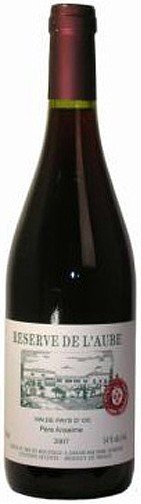
Wine of the week: P re Anselme Reserve De L’Aube 2011

pere anselmFlash back to the 1980s, to a time before California grocery store merlot, before livestock wines with cute labels, and even before U.S. wine was much appreciated in the U.S. What did we drink? Something more or less like the Pere Anselme ($8, purchased, 12.5%).

Those wines were notable for three things: They were French, because we were supposed to drink French wine in those days. They were cheap, because that’s all we could afford to drink (not yet having learned that cheap wine is worthy of a lifetime of drinking). And they were, to be kind, uneven in quality. Sometimes they were rough and tannic, other times green and unripe, and sometimes both. But what did we know? We were drinking French wine. In an era when women’s dresses had shoulder pads, that was pretty damned sophisticated.

The good news about the Anselm, a red blend with syrah and merlot from the Langeudoc in southern France and made by a leading producer of Rhone wines, is that it doesn’t have the technical flaws those older wines did. It’s ripe, it’s more or less in balance, and it even speaks to the terroir — some earthiness, simple black fruit, a hearty finish, and what the wine geeks like to call the smell of violets.

Serve this with any red meat; it does need food, another hallmark of those 1980s-style wines. The Anselm is not Hall of Fame quality, but it is the kind of wine you buy and drink and feel happy about. That’s not a bad recommendation for any wine, is it?

Expensive wine 58: M. Chapoutier Hermitage La Sizeranne 2007

Expensive wine 58: M. Chapoutier Hermitage La Sizeranne 2007Most of the time, for most of the wines we drink, it doesn’t matter if the wine is too cold. Or if you don’t open it ahead of time. Or decant it. We drink them, we enjoy them (or not), and then we move to the next wine.

And then there are wines like the La Sizeranne ($125, sample, 13.5%), which require all the care and comfort we can give it.

That’s because this is an exceptional wine; if you don’t fuss over it, it will be that much more difficult to discover how exceptional. At first glance, it’s a classic wine from the Hermitage in France’s northern Rhone — made with syrah, featuring red fruit, mushroom earthiness, and some peppery spice.

But take care with it, and you’ll discover the sophistication that only great wines have, and which makes them so difficult to describe to those who haven’t tasted them. It’s like reading Hemingway. The Nick Adams stories are wonderfully written, but you can’t feel them — the fish on the fire, the chill of the early morning river, the northern Michigan wilderness — until you read them.

I know this because I didn’t take great care with this wine, mostly just opened it and drank it, and I didn’t realize what I was missing until it was almost gone. One day, the La Sizeranne will be powerful and intense. Today, it’s young and controlled, like a boy at a school dance who is afraid to talk to girls. But the promise is there of what could happen in another three or four or five years, and of what it could turn into in its prime, for years and years after that.

Expensive? Certainly. But given how many expensive wines are so disappointing, it’s not much of a stretch to say this delivers value. Just remember to fuss over it.

Downton Abbey claret — wine merchandising for dummies

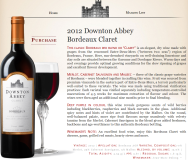
downton abbey claretLet’s get the review of the Downton Abbey claret ($17, purchased, 13%) out of the way first: I liked it. It’s a Bordeaux blend with some blueberry fruit and a rough, gritty style that’s typical of cheap French red wine, the sort of thing I’ve been drinking most of my life. In other words, plonk.

The catch, of course, is that it isn’t cheap, costing about twice as much as it’s worth. But that’s the point, isn’t it? That $17 pays for more than the wine. It pays for the experience, and that’s what Carnival Film & Television Ltd., the show’s producers, are counting on. That, and that wine drinkers are as stupid as we’re supposed to be.

This is not a rant about TV and movie tie-ins; I own a Captain Kirk action figure and two Star Trek coffee mugs, and I’m proud of it. Rather, it’s about the wine business and the way it insults the intelligence of its customers, something that we see all too often. Call it celebrity wine or cult wine or whatever, it’s based on the assumption that wine drinkers don’t know anything about quality. Flash a shiny object in front of us, and we’ll reach for the debit card every time. Which, as regular visitors here know, is an attitude that makes me crazy.

And I got crazier reading the claret’s back label and promotional material. To paraphrase Dashiell Hammett, “I was trying to count how many lies could be found in them, and had reached four, with promise of more. ?”:

? This “is an elegant, dry wine. … ” “… with a silky finish.” Dry yes, but about as elegant as a summer day in Dallas and as silky as late-night diner coffee.

? The wine is made with “grapes from the renowned Entre-Deux-Mers (‘between two seas’) region of Bordeaux, France.” Yes, Entre-Deux-Mers is in Bordeaux, but it’s hardly renowned for claret, or even red wine. It’s a bulk wine region with some decent, cheap whites, more or less the French equivalent of California’s Central Valley.

? The wine was put together by a negociant, Grands Chais de France, founded in 1979, hardly “one of France’s great Chateaux.”

? Perhaps the worst: that the claret is age-worthy. It will age about as well as any other $8 wine, which means not at all. Legitimate claret, writes British wine critic Tom Cannavan, “can be the epitome of fine wine. The best wines exhibit a wonderful complexity of aromas and flavours, great elegance and refinement and an ability to age gracefully — some for a hundred years.” This ain’t that.

All of this is about words and terms that most consumers expect from wine in the vague way we do, but know very little about (because, of course, the wine business doesn’t care about wine education). Great wine is supposed to age, but most of us have never had an aged wine and don’t know why it makes a difference. Great wine is supposed to be elegant, but how many of us could describe what an elegant wine tastes like? And to expect most of us to know Entre-Deux-Mers is cynical even for a TV tie-in. No doubt the marketing types figured it was French, and that would be enough for the stupid Americans.

If Carson served this wine at a Downton Abbey dinner, he’d get a proper talking to; Hudson never would have let it in the house. If you want quality claret-stye wine for about $17 while watching the fourth season, try Bonny Doon’s A Proper Claret or Hess’ Treo Winemaker’s Blend. Or, if you want to spend $8 or $10, there’s Little James’ Basket Press Red, the kind of wine that entitles you to giggle at others who spend more for lesser quality because someone flashed a shiny object in front of them.