Tag Archives: French wine

Wine of the week: Little James’ Basket Press Red NV

Little James Basket Press RedThe blog’s seventh annual birthday week begins on Monday, so what better preview for all the fun than Little James’ Basket Press Red ($10, purchased, 13.5%)? This is cheap French red wine that does everything that great cheap wine should do:

? Varietally correct. This is a red Rhone blend with lots of Rhone-style red fruit, It’s made with grenache, which seems to take on a different life every time I review it. This year, it was sweet cherries, and much less dark than last year. And it’s even different from the review two years ago.

? Tasty. The bottle was empty before dinner was over, which has turned out to be the best way to determine how much I like a wine. It’s not as spicy as years past and the funky aroma is fading, but the tannins and acid still balance the fruit. Think steak frites.

? Unpretentious. That means a screwcap, a clever front label, and a weird tasting note on the back label with the phrase “irresistible crunchy fruit.” I have no idea what that means, but it’s still infinitely better than the usual junk that passes for back label tasting notes.

? Non-vintage. The key to the Little James is a solera, in which old wine is mixed with new wine and vintage doesn’t matter. In fact, for a cheap wine, this often adds complexity that the wine wouldn’t have.

Highly recommended, and certain to return to the $10 Hall of Fame next year. The only drawback? The importer has been sold, and I’ve had difficulty finding the wine in Dallas. Thanks, three-tier system.

Wine of the week: Cave de Lugny La C te Blanche 2013

Cave de Lugny La C te BlancheThe Wine Curmudgeon reviews a proportionally larger share of French wines, and when I look at the numbers — which I do because I don’t want to go too far in any direction — I always wonder if I should try to do fewer French wines. Then I taste something like the Cave de Lugny La Cote Blanche ($10, purchased, 12.5%), and I understand why I do so many cheap French wines.
They’re that good, and especially if they’re from Cave de Lugny, a cooperative in Burgundy that somehow produces affordable red, white, rose and sparkling wines from that very expensive region. Unfortunately, we don’t get enough of them over here, but the Les Charmes is a $10 chardonnay well worth drinking, and the $10 Macon-Villages chardonnay is equally delicious.

The Cote Blanche, which seems to be a World Market private label, is yet another terrific effort from Cave de Lugny. It’s chardonnay from the Macon area of Burgundy, so that means no oak. a mineral finish, and some apple and lemon fruit. But there is also an almost rich mouth feel, which makes the wine more interesting and is not easy to do for $10. It’s a step up from the previously mentioned Macon-Villages — and for the same price.

Highly recommended, and a candidate for the 2015 $10 Hall of Fame. Serve this chilled on its own, or with roast or grilled chicken. It would also do nicely as the wine to cook with and to drink in a dish like braised chicken with mustard and garlic (and I would add lots of sliced onions).

Wine of the week: Moulin de Gassac Guilhem 2013

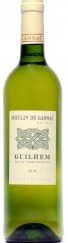
Moulin de Gassia GuilhemThe Wine Curmudgeon is a sucker for wines made with less known grapes from less known parts of the world. That’s because the revolution in winemaking and grape growing technology over the past 20 years has allowed these regions to improve quality with grapes that aren’t in great demand. Hence, a much better chance of quality wine for less money.

The Guilhem ($12, purchased, 12.5%) is a case in point. It’s a white blend from a little known part of the Languedoc in southern France, and the Languedoc remains little known itself. The wine is made with grenache blanc, terret blanc, and sauvignon blanc. Those first two grapes are obscure even for wine geeks, and it’s not like this part of France is famous for sauvignon blanc, either.

The result is a Hall of Fame quality wine that is just ?5 in France, and yet another example why so much of what we find on the Great Wall of Wine in the grocery store makes me crazy. The Guilhem bears some resemblance to a white Rhone blend, with white fruit aromas and some spiciness. But it’s not oily or heavy, instead featuring red apple crispness — almost juiciness — and just enough minerality to be noticeable. The bottle, chilled, was empty in a half hour, and I was irritated I hadn’t bought two of them.

In this, it’s the kind of wine that demonstrates the advantages of a quality, independent retailer. I bought it from Cody Upton, a long-time pal and one of the most knowledgeable wine people I know. Cody, who is working at Pogo’s in Dallas, asked me how much I wanted to spend — tongue firmly in cheek — and then walked right to this. Does customer service get any better than that?

Wine to drink when the power goes out, 2014 edition

three cheap wines
The Wine Curmudgeon has entirely too much experience cooking like this.

Who knew, after last December’s ice storm and four days without power, that the Wine Curmudgeon would get to do it again — and only nine months later? Ain’t electricity deregulation grand, TXU?

We lost power for 2 1/2 days at the beginning of October after 30 minutes of rain and high winds. The difference this time is that temperatures were in the 70s and 80s and not the 20s and 30s. Hence, when it was time to eat dinner, I felt like drinking wine (though I had to use ice cubes for the white instead of leaving it on the kitchen table to chill).

The wine, in fact, was one of the highlights of the blackout (along with the Dallas Public Library, where my branch — despite the outages and years of draconian budget cuts by the shysters who run the city — somehow had electricity and Internet service). Otherwise, the Wine Curmudgeon was even more cranky and irritable than normal; I’m tired of losing electricity the way the rest of the United States gets an annual vacation.

So what did I drink?

• Rene Barbier Mediterranean White NV ($4, purchased, 11.5%): My favorite cheap white wine was a godsend. When the power went off on Thursday afternoon, I screwed open a bottle, dropped in some ice, and tried to convince myself the lights would be back on that evening. The Spanish Barbier is made with the same grapes as cava and has many of the same flavors, though more lemon than apple. Very dry, very crisp, and always a terrific value.

• Cote Mas Blanc Mediterrannee 2012 ($10 for a 1-liter bottle, sample, 12.5%): This French white blend of grenache blanc, vermentino, chardonnay, and sauvignon blanc was almost $10 Hall of Fame quality. It really doesn’t need the chardonnay, which I assume was added to make it softer and more appealing to the mythical U.S. consumer who is supposed to need those things. Having said that, the first two grapes give it freshness and white fruit, and that’s really all it needs. Especially tasty with takeout from Cowboy Chicken, where they did yeoman duty dealing with the outage.

• Cote Mas Rouge Intense Mediterrannee 2012 ($10 for a 1-liter bottle, sample, 13.5%): This red, like the Cote Mas white, comes from Paul Mas, who knows a thing or two about quality cheap wine. Again, my only complaint is that there is merlot and syrah, neither of which does much except make the wine more chalky. Trust me — a red from southern France with grenache, carignan, and cinsault can be delicious without any help, as we have learned with this style of red blend in Texas. But the wine is still enjoyable, with lots of dark fruit and soft tannins.

Know what I was glad I didn’t have drink? The $3 wines I tasted at the end of September. Talk about adding insult to injury.

Wine of the week: Chateau Bonnet Rouge 2010

Chateau Bonnet rougeChateau Bonnet Rouge ($10, purchased, 14%) is the quintessential cheap red wine:

• It tastes of where it’s from, in this case the Bordeaux region of France. That means enough fruit to be recognizable (mostly red); some earthiness so that it doesn’t taste like it came from Argentina or Australia (almost mushroomy for this vintage); and tannins that make the wine taste better.

• Varietally correct, so that the merlot and cabernet sauvignon taste like merlot and cabernet sauvignon, and not some gerrymandered red wine where the residual sugar level was fixed before the wine was made.

• It doesn’t have any technical flaws or defects, and is consistent from vintage to vintage.

In this, it shows that simple wines can be enjoyable and that simple does not mean stupid or insulting. What more do wine drinkers need?

And if the Bonnet needs any more to recommend it, this was a four-year-old $10 wine. Too many four-year-old $10 wines don’t make it past 18 months before they oxidize or turn to vinegar.

Highly recommended (as are the Bonnet blanc and rose). The only catch is pricing. Some retailers, even for older, previous vintages like this, figure they can get $15 for it because it has a French label that says Bordeaux. It’s still a fine value for $15, but I hate to give those kinds of retailers my business.

Expensive wine 66: Guffens-Heynen Pouilly-Fuiss Tri des 25 ans 2005

Guffens-Heynen Pouilly-Fuiss  Tri des 25 ans 2005Great wines have great stories to go with them, even if the stories can be embarrassing. Such is the case with the Guffens ($80, purchased, 13%), although the story isn’t about the wine as it is the people involved.

Jay Biletti has been a long-time supporter of Drink Local Wine and an advocate for Arizona wine. I’ve judged with him many times, and he is a smart wine guy who is always fun to taste with. Several years ago, when Jay and I were judging the late Southwestern Wine Competition, we ordered a bottle of white Burgundy. It tasted and smelled quite funky. “It’s corked,” said Jay, who could plainly smell wet dogs and damp basements. “Oh no,” I said. “It’s just funky. White Burgundy can do that.” We went around with this for a bit, and Jay almost believed me. So we asked Diane Teitelbaum, whose wine knowledge is immeasurable and who was eating dinner with us. She took one whiff, and gave me a firm look. “Of course it’s corked, Jeff. What were you thinking?”

Hence the Guffens, which Jay brought to dinner in honor of that night when he was in Dallas this summer. Which was not corked. Really. It’s classic white Burgundy (chardonnay from the Burgundy region of France, in this case the Pouilly-Fuiss part of Burgundy). It’s still very young, and won’t reach its peak for at least another couple of years. The fruit (apple-ish?) is way in the back, and you’ll taste more white pepper and minerality than anything else. The oak is hovering over all, in exactly the way oak should hover.

Jay and I enjoyed the wine, and he was very nice when we told the corked story to the other guests. They didn’t even laugh too hard.

Four Arrogant Frog wines

Arrogant fron winesFinding quality cheap wine from France is not as easy as it used to be. The weak dollar is the main reason, but a change in focus for French producers, who price wine to sell to the Chinese because they can’t think of anything else to do, hasn’t helped, either.

Save for exceptions like the Lurton family’s Chateau Bonnet or my beloved Gascony, most cheap French wine knocks off $10 California wine; is junk foisted on U.S. consumers because we’re too American to know better; or is the same as it has been for years, like La Vielle Ferme — OK, but nothing more.

That’s why the Wine Curmudgeon was so excited by the recent Arrogant Frog Twitter tasting, where a dozen wine writers sampled four $10 French wines from the Languedoc in southern France and tweeted with winemaker Jean-Claude Mas. The good news is that the wines — a sauvignon blanc, chardonnay, pinot noir, and red blend — offer tremendous value for $10. If they’re not quite French enough in style for me (I would have liked more grip), they’re still well made and well worth buying.

Mas was candid and well-spoken: “You must convince people to buy your wine by being consistent. It’s easy to make great wine one year. Try doing it for 30 years.” Plus, he avoided winespeak, something that rarely happens at these things, and there was nary a mention of brix or canopy management.

• Arrogant Frog Sauvignon Blanc 2013 ($10, sample, 12.5%): How can the Wine Curmudgeon not appreciate a quality cheap wine with just 12 1/2 percent alcohol? Mas said the low alcohol was crucial to the wine’s quality; if it was any higher, the wine wouldn’t taste as fresh. Look for California-style grassiness in the front, a tropical middle, and a very crisp back. It’s not easy making sauvignon blanc in a region as warm as the Languedoc, but Mas has succeeded admirably.

• Arrogant Frog Chardonnay 2013 ($10, sample, 13.5%): The most intriguing wine, and not just because it had 15 percent viognier. At first, it tasted very California, and I was reminded of Bogle’s chardonnay. But after the bottle had been open, it had an almost mineral, Chablis-like quality. In all, a rich mouth feel, with bright lemony fruit and enough oak so you’ll know it’s there.

• Arrogant Frog Pinot Noir 2013 ($10, sample, 13.5%): It’s almost impossible to find $10 pinot noir that tastes like pinot noir, and even the best, like Cono Sur, have a fruity, Beaujolais character. This, on the other hand, may be the best $10 pinot I’ve ever had — not much red fruit, restrained tannins, and spice. And, believe it or not, the earthy note found in expensive pinot. The catch is that the wine needs to open up, and was better the second day. In this, it may be the first $10 wine I’d decant. Highly recommended, and a candidate for the $10 Hall of Fame.

• Arrogant Frog Cabernet Merlot 2013 2013 ($10, sample, 13.5%): The softest, most New World in style of the four wines, though still enjoyable. Look for ripe (but not sweet) black fruit, more well done tannins, and oak similar to the chardonnay.

Finally, an apology to Mas: I made a Monty Python joke during the tasting, based on the winery’s name and that would be familiar to anyone who has seen “Monty Python and the Holy Grail.” As in, “Ah’m French! Why do you think I have this outrageous accent, you silly king?” Unfortunately, he wasn’t familiar with the movie, and I may have embarrassed him.



