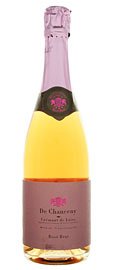
The De Chanceny Cremant Brut Rose is pink French bubbly just in time for Mother’s Day
The first time the Wine Curmudgeon tasted this French sparkling wine, it was apparently corked – flawed thanks to the chemical TCA, which muted the flavors and gave it the faint aroma of wet newspaper. Hardly pleasant at all.
But, since I am a professional, I tried another bottle a year or so later, and that’s why the De Chanceny Cremant Brut Rose ($15, purchased, 12.5%) is the wine of the week with Mother’s Day on Sunday.
The De Chanceny is made with caberent franc, a red grape, in the Loire region of France, using the same technique as much more expensive Champagne. It’s usually a value, about one-third the price of comparable Champagne, and that’s true here. Look for berry aromas, lots of ripe black cherry fruit mixed with some pleasant tartness, terrific, tight bubbles, and a crisp, clean finish. It’s not as luxurious or yeasty as Champagne, but it’s not supposed to be.
In this, it’s food wine – Mother’s Day brunch certainly, but also a bottle for mom to enjoy when all the celebrating is over and she’s on her own again.
Our Dallas Aldi wine road trip finds some cheap wine gems among the rows and rows of Winking Owl
The good news: Our Aldi wine road trip was not the disaster that I feared. Alfonso Cevola, the Italian Wine Guy, had scouted four other Aldi locations in our part of Dallas, and assured me we could find things worth drinking. And he was right.
We found four during our five-store visit. That was impressive, given that Aldi here has consistently fallen short of its effort in Europe and the United Kingdom. There, its private label wines (labels sold only at Aldi) are cheap and critically praised.
The wines worth buying again:
• Dellara Cava Brut NV ($7, purchased, 11.5%): The first bottle was flat, a worrisome trend I’ve experienced lately with sparkling wine costing as much as $20. But the second had the requisite character for a Spanish bubbly – tart lemon and green apple fruit and some minerality. A step up from other $7 cavas, especially since they’ve been dumbed down to taste like watery Prosecco.
• La Cornada Crianza 2015 ($5, purchased, 13%): This Spanish red made with tempranillo was this close to being a Hall of Fame wine. It has way too much oak for what it is; leave out the oak, and the acidity isn’t pushed to the back and the wine is in balance. Very nice cherry fruit and even a little Spanish orange peel aroma.
• La Rue Cotes de Provence Rose 2017 ($7.50, purchased, 12%): This looks like legitimate Provencal rose (a watery pink), and it smells like one, too (tart berries). The catch is that it finishes a little sweet, and legitimate Provencal rose doesn’t do that. But that might have been me looking for a flaw. Otherwise, it’s mostly what it should be a fair price.
• Bergeron Estates Reserve Icewine 2016 ($12/375 ml, purchased, 10.5%): Quality Canadian icewine should cost three or four times this, and no one will confuse the Bergeron with Inniskillin. But it does taste like icewine – a luxurious honeyed sweetness – and it does taste like the vidal grape it is made with. It needs more acidity to balance the sweetness, but well worth buying again for those who like dessert wine.
I didn’t buy two wines that Alfonso thought would be OK, a German pinot gris and reisling labeled Landshut, which may have been made by Dr. Pauly-Bergweiler, a top German producer. So I’ll try those next next – each was about $7. In addition, a Spanish garnacha, Vina de la Nieve from Catalonia ($6) looked worth tasting but wasn’t available for sale. It was on the shelf, but not in the system.
Having said that, there was still too much Aldi wine in the stores whose reason for being was that it cost $3. And too many of the $10 wines were advertised with 88-point shelf talkers, which is about as helpful as writing a blog post longhand and using magic to put it on the Internet. And there was an amazing lack of continuity between stores, where one store would have one wine, another wouldn’t, and third would have something else.
Still, as Alfonso kept reminding me, “Small steps, Jeff, small steps. Aldi is heading in the right direction.” Which I fervently hope.
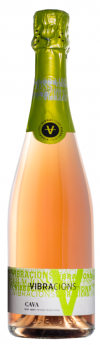
The Vibracions rose is $10 cava that will please even the most demanding significant other for the Holiday That Must Be Named
The Holiday That Must Not Be Named requires offerings as if it was a Greek god who must be appeased, else thunderbolts slam down from the heavens. Which is where the Vibracions rose comes in.
The Vibracions rose ($10, purchased, 11.5%) is cava, or Spanish sparkling wine, that offers amazing value, modern winemaking, and traditional cava style. In other words, a cheap wine to please even the most demanding Greek god – or even a significant other.
The key is a Spanish red grape called trepat, which was once common but now is too often passed over in favor of pinot noir. Trepat gives cava a berry-like brightness that pinot doesn’t always offer (particularly if the pinot is from Spain). That quality is on display in the Vibracions, which offers an almost dark, spicy aroma; bright, fresh strawberry fruit, though not too tart and with a hint of something darker; and the kind of tight, cascading bubbles that always denote top-notch sparkling wine.
Highly recommended – a Hall of Fame quality wine. Chill and drink it on its own, or pair with with almost any Holiday That Must Not Be Named dinner. It’s also the sort of thing for brunch, served with creamy, almost custard-like scrambled eggs topped with chives.
Forget scores: The Jean Vesselle Brut Reserve is amazingly wonderful Champagne
The Jean Vesselle Brut Reserve, as delicious and as well made a Champagne as I’ve had in years, shows once again why scores are useless. Its average on CellarTracker (the blog’s unofficial wine inventory software) is 88 points, or about what a quality bottle of $10 wine would get.
This is an exquisite bottle of Champagne, sparkling wine from the Champagne region of France. It has layers and layers of flavor, including some of the yeasty creaminess that most high-end bubbly drinkers require of Champagne. But it’s so much more than than: A completely unexpected burst of crisp, wonderfully ripe red apple fruit followed by an almost spicy finish and tiny, tight bubbles popping to the top of the glass. In this, it’s bone dry and certainly not your grandfather’s Champagne, and I’m almost certain that accounts for the crummy scores.
Highly recommended, and as enjoyable with food (eggs at brunch, certainly, but also roast chicken) as it is for celebrations. Which is how I drank it – honoring my long-time pal and colleague James MacFayden, who is returning to his native Britain after more than two decades in the U..S. James will be much missed – not only for his fine palate, but for his bounty of Monty Python references.
Reviews of wines that don’t need their own post, but are worth noting for one reason or another. Look for it on the fourth Friday of each month. This month: Maybe New Year’s wine, maybe not
• Mumm Napa Brut Reserve NV ($18, purchased, 12.5%): How the mighty have fallen, and how sad it is to taste. This used to be one of the best affordable California sparklers, with fresh fruit and lots of interest. These days, it’s soft and almost flabby, with gassy bubbles — just one more focus group wine.
• Boordy Vineyards Landmark Reserve 2014 ($44, purchased, 12%): Maryland red blend speaks to terroir and how distinctive regional wine can be when it’s not trying to imitate French or California wine. Soft tannins and a long finish, plus a little spice and ripe, but not sweet black fruit.
• Mommessin Beaujolais Nouveau 2018 ($10, purchased, 14%): This French red is better than what has passed for Beaujolais Nouveau over the past decade, with a little more acidity and not nearly as much banana fruit. But it’s still softish and too bubble gummy. Imported by Boisset America
• Pine Ridge Chenin Blanc Viognier 2017 ($12, purchased, 13.5%): This California white used to be one of the world’s great cheap wines, combining chenin blanc’s crispness with viognier’s stone fruit. Now, it’s just overpriced plonk, with acidity added to counterbalance all of that residual sugar. It’s awkward, unbalanced, and oh so disappointing.
New Year’s sparkling wine 2018 recommendations for those of us who want value and quality
The one thing I was reminded of during the blog’s Champagne boycott? That Champagne, the sparkling wine from the Champagne region of France, is not the be all and end all when it comes to bubbly. Yes, it’s some of the finest wine in the world. But it’s also some of the most expensive. And we demand value on the blog, even when it comes to New Year’s sparkling wine 2018.
• Carpenè Malvolti Rosé Cuvée Brut NV ($17, sample, 12%): Nicely done Italian rose sparkling that’s not actually Prosecco — it’s a little sturdier in style and has firmer bubbles, though still made using the charmat method, Plus, pinot noir fruit (cherry? strawberry?), though $17 may be a bit much for some. Imported by Angelini Wine
• Vibraciones Cava Brut Rose NV ($10, purchased, 11.5%): A Hall of Fame quality Spanish sparker made with the traditional trepat grape; no pinot noir foolishness here. Look for freshness, bright red berry fruit, and top-notch bubbles. Highly recommended. Imported by Winesellers Ltd.
• Jacquesson & Fils Champagne Cuvée No. 739 NV ($69, sample, 12%): Beautiful and fairly-priced Champagne that sits halfway between a more commercial yeasty, brioche cuvee and something that focuses more on fruit and acidity. Tight bubbles, a bracing finish, and tart green apple fruit. Highly recommended. Imported by Vintage 59
• Barcino Cava Brut NV ($15, sample, 11.5%): This Spanish bubbly is all one can ask for in a wine at this price, and then some. It’s taut, almost zesty, tart, and interesting. Look for lemon and apple fruit in wonderful balance. Highly recommended. Imported by Ole Imports
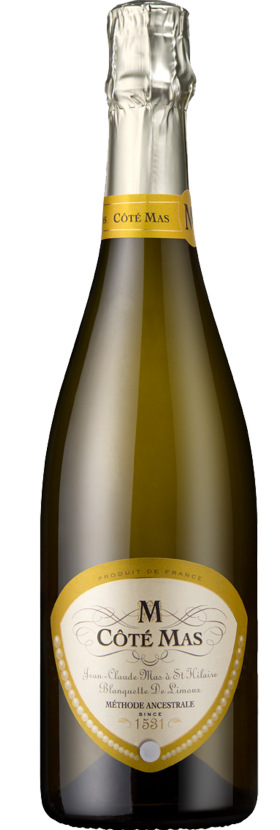
The Jean Claude Mas Blanquette de Limoux isn’t Champagne, but it’s not supposed to be — so enjoy the difference
The world does not revolve around Champagne, as I make mention of each year around this time. Sparkling wine is made almost everywhere that wine is made, and there are a variety of interesting, fairly priced, and quality labels. So know that the Jean Claude Mas Blanquette de Limoux NV does not taste like Veuve Clicquot or Nicolas Feuillatte, but also know that it’s not supposed to.
The Jean Claude Mas Blanquette de Limoux ($15, purchased, 12%) is a cremant, which is what sparkling wine from France not made in the Champagne region is called. A cremant from Limoux is made the much the same way as Champagne (the second fermentation is in the bottle and not a steel tank, as with Italy’s Prosecco), but there are a couple of differences. Hence, the production is called methode ancestrale to differentiate it from Champagne’s methode champenoise.
First, cremant de Limoux is made with different grapes, primarly mauzac, which is local to the region. Next, the second fermentation is unaided, so that the bubble creation doesn’t get a boost from the addition of more yeast, as in Champagne. These differences make for subtle, yet interesting changes from the sparkling wine most of us drink.
The Jean Claude Mas Blanquette de Limoux, thanks to the mauzac, is a very traditional blanquette, with a yeasty, brioche kind of finish. But unlike so many Champagnes that finish in that style, it’s also quite fresh and light, with barely ripe apple fruit. In this, it’s almost a food wine – New Year’s brunches, for example. What you don’t want to do is use it for something like mimosas, which would cover up what makes the wine interesting.










 by Wine Curmudgeon Posted On
 The De Chanceny Cremant Brut Rose is pink French bubbly just in time for Mother’s Day
 The Vibracions rose is $10 cava that will please even the most demanding significant other for the Holiday That Must Be Named
 Forget scores: The Jean Vesselle Brut Reserve is amazingly wonderful Champagne
 Reviews of wines that don’t need their own post, but are worth noting for one reason or another. Look for it on the fourth Friday of each month. This month: Maybe New Year’s wine, maybe not
 The Jean Claude Mas Blanquette de Limoux isn’t Champagne, but it’s not supposed to be — so enjoy the difference