



Category:Spanish wine

Wine of the week: Carro Tinto 2014

carrotintoThe Spanish Carro Tinto is a red wine that makes us realize not all wine should taste the way we expect

Patrick Mata of Ole Imports, whose company brings the Carro Tinto into the U.S., told me something recently that speaks to what so many others in wine don’t want to understand.

“The wines are what they are,” says Mata, “and they’re not supposed to be the same. They’re like people you meet, where everyone is different, and where you talk to one person differently than you do another person. What the wines are about flows from that. We don’t want them to all taste the same. That would be very boring.”

The Carro Tinto ($10, purchased, 14%) demonstrates exactly what Mata means. It’s a Spanish red wine, and my tasting notes make the point that “it’s not a wine one thinks of when one thinks of Spain. But it works.”

What do you need to know about the Carro Tinto?

• It’s a French-style blend with a little tempranillo from the Yecla region of Spain. But why not a different style, given that Yecla is small and little known?

• This is a previous vintage, which makes the quality even more remarkable given the price. There is no sign of age or that the wine is old and worn out. The 2016 should be spectacular.

• There is ripe and juicy cherry fruit, almost more California than Spanish, as well as an almost spicy character. But those are played off against a more traditional chalky earthiness, making the whole greater than the sum of its parts.

• Pair this with almost anything in the run-up to the holidays, be it a burger on the run or a beef stew for a family dinner. I’m thinking the Wine Curmudgeon’s infamous arroz con pollo.
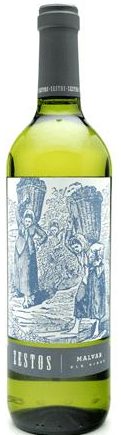
Wine of the week: Zestos Blanco 2016

Zestos BlancoThe Zestos Blanco demonstrates that $10 wine is not incompatible with subtlety and sophistication

One of the things that Big Wine strives for is consistency from vintage to vintage, so that the wine tastes exactly the same regardless of the year the grapes were picked. This can be an advantage, so you won’t be surprised if a harvest is off in some way.

But it can also lead to boring and inoffensive wine, which is where the Zestos Blanco ($10, purchased, 12.5%) fits in. It’s about as far from Big Wine as possible, and there is a noticeable vintage difference this time around.

Zestos is a Spanish label from the always dependable Ole Imports, and it has just three wines – a red, rose, and this white. And if that wasn’t un-Big Wine enough, it’s made with the malvar grape, about as geeky as Spanish grapes get. The Ole notes say malvar is somewhere between chardonnay and sauvignon blanc; given how different those grapes are, you can tell how difficult it is to describe.

This vintage, while still clean and fresh, is heavier than the 2015, so it’s not for porch sipping. It needs food – Thanksgiving would do quite nicely, but any roast poultry (or even salmon) would work. It’s also not as tart as 2015, which means less lemon fruit but more of something like kiwi.

Highly recommended, and just not because it’s so odd. The Zestos Blanco demonstrates that $10 wine can be just as subtle, sophisticated, and interesting as bottles that cost twice as much.

Mini-reviews 102: Saint-Cosme, verdejo, rose, Prosecco

saint-cosmeReviews of wines that don’t need their own post, but are worth noting for one reason or another. Look for it on the fourth Friday of each month.

• Saint-Cosme Côtes du Rhône 2016 ($14, purchased, 14%): Second ordinary vintage in a row of one of my favorite French reds. This one, too, doesn’t have enough grip (though there is more than in the 2015). It has quality Rhone cherry fruit and some pepper, but the middle is shallow. Maybe bottle age will help. Imported by Winebow.

• Real Compania de Vinos Verdejo 2014 ($10, purchased, 12.5%): This Spanish white is tired and worn out, with a little spice but not much else and none of verdejo’s wonderful fresh character. Beware older vintages of wine you’ve never heard of from producers you don’t know. Imported by Quintessential.

• Vignerons de Tavel Le Rosé des Acanthes 2016 ($7.50, purchased, 13%): This French pink isn’t especially crisp, the cherry fruit isn’t all there, and it’s a little stemmy. Having said that, it’s perfectly acceptable for the price. More important, this is the sort of ordinary rose we never saw when pink wasn’t popular. Now, these kinds of wines are all over the place. Imported by Fruit of the Vines.

• Cecilia Beretta Prosecco Brut Millesimato 2015 ($15, purchased, 11%): This Italian sparkler is bland and inoffensive, but sufficiently bubbly – about what I have come to expect from Trader Joe’s wines. Imported by Latitude Wines.

Wine of the week: Bodegas Virgen del Aguila Las Valles 2015

Las VallesWhat’s the best way to use Spanish chardonnay? As a blending grape, as in the $10 Hall of Fame worthy Les Valles
Spanish chardonnay is wine’s version of an oxymoron, the terms like military intelligence and Microsoft Works that are contradictions in themselves. So what’s the Les Valles – made with Spanish chardonnay – doing as the wine of the week?

It’s because the Les Valles ($10, purchased, 12%) uses chardonnay as a blending grape, which is about the only way Spanish chardonnay should be used. In this white wine, a little chardonnay is combined with viura, a traditional Spanish grape, to make a wine that is better than it would be as either of the two varietals.

The chardonnay softens the viura, which can be a very lemony grape, and makes the wine richer and more about white fruit than if it was just made with viura. But the viura lends its crispness and a floral aroma, and the combination is one of those great cheap wines that are my reason for being.

Highly recommended, and a candidate for the 2018 $10 Hall of Fame. Drink this chilled on its own or with roasted chicken or turkey.

Imported by Hand Picked Selections

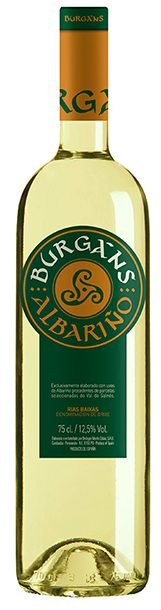
Wine of the week: Burgans Albarino 2015

burgans albarino$10 buys the top-quality Spanish Burgans albarino

This wine demonstrates once again why the wine business is so confusing and why so many of us give up. The Burgans albarino ($10, purchased, 12.5%) is made by the Spanish producer Martin Codax, which also makes an albarino for E&J Gallo. But the Gallo wine costs about one-third more than the Burgans.

And, not surprisingly, the Burgans is a more interesting wine. It’s more varietally correct, with more of the savory, almost salty flavor, that characterizes albarino. Plus, the lemon fruit is balanced by tropical fruit (a little banana?) and the minerality characteristic of that part of Spain. All in all, there is way more going on than there should be in a $10 wine that is a past vintage.

Highly recommended, and a candidate for the 2018 $10 Hall of Fame. Drink this chilled on its own on a warm fall day, or with grilled seafood or chicken.

Imported by European Cellars

Wine of the week: Muga Rosada 2016

muga roseThe Muga rose is top-notch again this vintage, but its price and its spotty availability present serious problems

The good news about the Spanish Muga rose, annually one of the best pink wines in the world, is that it’s well made again this vintage. The bad news? Availability will be a problem unless you live on the East Coast and there has been another price increase, bringing the Muga to $14 a bottle. That’s 40 percent more than when I started writing about it around the time of the recession.

The good news first. This vintage of the Muga rose ($14, purchased, 13.5%) is even more crisp this year, and the red fruit (wild strawberries?) is tart and refreshing. This is almost surprising, since the wine is made with garnacha, a grape that lends itself to fruitier wines. In this, it probably needs a little time in the bottle for the fruit to come through, another indication of Muga quality. The opposite – more time in the bottle equals less fruit – is true for almost every other rose.

The bad news, though, may offset the good. That I live in one of the top 10 wine markets in the U.S. and had to wait five months to buy the Muga rose speaks volumes about how troublesome availability has become. This has become a popular pink wine during the height of the rose craze, and much of it never gets past the East Coast to the rest of the country.

And, frankly, I’m not sure it’s worth $14. It’s not any better this year than the Charles & Charles, Boony Doon, or the Bieler. And there are a variety of Spanish and Italian roses that cost as little as $8 that are almost as good. Buy it if you can find it, but don’t be surprised if you’re disappointed.

Imported by Glazer’s Wholesale

Mini-reviews 100: Cerrosol, Hess, Parducci, Ecco Domani

Reviews of wines that don’t need their own post, but are worth noting for one reason or another. Look for it on the fourth Friday of each month.

• Cerrosol Esperanza Verdejo-Viura 2015 ($9, purchased, 12.5%): Spanish white blend that is showing its age, without the sparkle and tartness that a wine made with the verdejo and viura grapes should have. This is an example of retailers foisting older vintages off on unsuspecting wine drinkers, who have been taught that older means better. Be wary of white wines that are two or more years old unless you know the producer. Imported by Axial Vinos.

• Hess Select Chardonnay 2015 ($10, sample, 13.5%) Quality $10 grocery store California white for those who want a little toasty oak (and a lesson in how to use “oak adjuncts” correctly). Nice green apple and pear fruit, plus some tropical something or other in the middle, and just crisp enough to balance the oak.

• Parducci True Grit Reserve Red 2013 ($30, sample, 14.5%): If this California red blend is $30 worth of wine, I’m Robert Parker. And since I’m not, it has been found for as little as $18. At that price, it’s closer to the qualify it offers.

• Ecco Domani Pinot Grigio 2016 ($10, sample, 13.5%): This Italian white has a little more lemon fruit this vintage, but it remains thin and mostly resembles tonic water — wine for people who don’t like wine. Of which, based on its sales, there are millions. Imported by E&J Gallo.