

Category:Regional wine

Costco wine: Let’s drink local

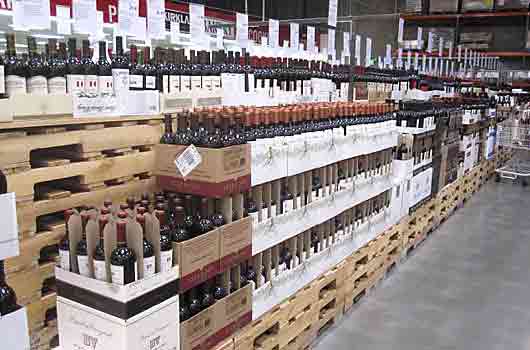
costco wineCostco, perhaps the most influential wine retailer in the world, wants to sell regional wine

How does Costco – perhaps the most influential wine retailer in the world – decide what to carry? It wants to drink local.

Annette Alvarez-Peters, who oversees the chain’s wine buying, said half of the its wine labels change regularly and that its 12 regional buyers look for local wine to help fill in those blanks. Or, as she told a California trade seminar: “It really has to be, ‘Why is your item so compelling, and why does your item fit in our section?’ ”

This is one of the few times that Costco and Alvarez-Peters have defined publicly what the chain is looking for; Costco has traditionally been reluctant to discuss its wine buying practices. This matters because it sells so much wine, almost $2 billion worth in 2015, equal to about four percent of the U.S. total – and in just 412 stores.

And that Costco wants to drink local is another reason to declare victory in the battle for regional wine recognition. The retailer can carry any wine it wants, and even the biggest producers make tremendous price concessions to get on its shelves. Which means that Costco is saving space for bottles not from Big Wine, but from small, local producers.

I learned about this recently when the Costco buyer for Texas approached one of the state’s wineries. The winery, its sales person told me, was flabbergasted. Why would Costco want to sell its wine? If nothing else, it didn’t make enough to fill one of Costco’s huge displays. But quantity doesn’t matter as much as quality, part of what the chain’s founder/guru Jim Sinegal told me years ago when I was lucky enough to interview him for an airline in-flight magazine. The retailer wants shopping to be like a treasure hunt, where its customers run across something they didn’t expect to find. In this case, quality local wine.

So pay attention, all those retailers and restaurants that don’t want to drink local. If Costco can do it, why can’t you?

More on Costco wine:
Costco wine and its retail domination
Costco and its role in the wine business

2017 Virginia Governor’s Cup

2017 Virginia Governor’s CupThe 2017 Virginia Governor’s Cup: Lots of quality and very few lousy wines

Seven things to ponder after judging the 2017 Virginia Governor’s Cup wine competition last week:

1. The quality of the wine was the best it has been since I started judging here almost 10 years ago. As I said to several panel members: “This was mostly like judging a California competition – no stupidly made wines, no obvious flaws, just competent and professional wine.” This is not often the case when judging regional wine, and shows again how far Virginia has come. Equally important: We did 100 wines over the two days, about 20 percent of the entries, so this wasn’t necessarily a small sample size. Are you paying attention, Texas?

2. The viogniers were amazing, as Virginia viognier usually is. I gave two gold medals in a flight of six, and all six were worth buying.

3. I was also impressed with the six roses – one gold, and the rest also worth drinking. This is quite a change from just a couple of years ago, when most regional pink wine was sweet and nothing else.

4. Virginia, like other regional states, is still grappling with the price/value dilemma. How can it make and sell wine and be competitive, given that it doesn’t have the economies of scale that California and Europe does? We didn’t know the prices when we judged the wines, but given that red blends and red varietals are usually the most expensive, most of the ones I tasted probably cost more than they were worth. This is not to say they weren’t well made, but that a similar wine made in a more established part of the world would be a better value.

5. There was a noticeable absence of oak, even in the wines that needed it. Was this because winemakers were – hopefully – embracing the idea of less oak and more balanced wine, or was it because oak is so expensive (as much as $1,000 a barrel) and they were forced to use less of it?

6. I’ve made my peace with giving scores. I still think it’s stupid, but if the competition requires it, I’ll do it. Having said that, I was generous with the best wines, and penalized the wines that weren’t very good. What’s the point of giving an 80-point bronze medal to a wine that I didn’t like?

7. Why do hotels ask you to save water by using the towels more than once, but then replace the towels after you have hung them up so you can re-use them?

Regional wine and the wine tourism conference

wine tourism conferenceDrinking local at the wine tourism conference

The Wine Marketing and Tourism conference was a revelation. I wrote in October, partly in jest, that we had won the battle for regional wine legitimacy because restaurants were marking up regional wine as much as they were marking up everything else. Why do that unless there’s a market for drinking local?

The conference, though, showed the truth in my jest. I tasted an amazing chambourcin red blend from New Jersey. I talked to the director of the Kentucky wine association, whose group has 70 members. I found out that a small north central Texas town, one more victim of rural flight, was trying to revive its economy around wine and wine tourism.

We’ve come a long way since the time only a handful of us wrote about regional wine, and the audience seemed even smaller.

Why the change? That too, was part of what I learned at the conference (where I moderated a couple of panels about promoting local wine):

• The idea that wine isn’t just for old white guys. The two generations younger than the Baby Boomers are finally moving to wine, and state and local tourism officials see an opportunity to reach these increasingly younger consumers through the idea that wine is local, in much the way the Gen Xers and Millennials see craft beer and spirits are local. This is a revolutionary change in approach, the idea that you should drink wine not because it’s wine, but because it’s made near you.

• The opportunity cost. Wine tourism as economic development isn’t as expensive as traditional economic development – no giant companies to steal from another state, no costly tax incentives, no wining and dining corporate executives. This means even smaller, less wealthy regions – and local wine is mostly found in less wealthy rural parts of the country – can do it. If you have a enough wineries for a wine trail, some hotel rooms, and a couple of restaurants tol work with you, you’re ready to go.

• The improvements in winemaking technology over the past two decades, so that it’s possible to make professional wine from odd grapes in non-traditional parts of the country. In the early 1990s, when I started writing about local wine, this wasn’t the case, and I’ve tasted the regional chardonnay to prove it. I had a pinot blanc from Michigan at the conference that was as good as any pinot blanc I’ve had from anywhere in the world. That wine couldn’t have existed 20 years ago, when no one was quite sure how to grow pinot blanc in Michigan, much less make wine from it.

Drink local: It’s time to declare victory

drink localWhen restaurants feel comfortable enough to gouge us for local wine, then drink local has arrived

Dinner Saturday night was at a trendy Dallas Southern comfort/farm to market restaurant, and it showed just how far drink local has come. Right there on the wine list, with all of the other overpriced and too much marked up wine, was Texas wine. Overpriced and too much marked up, too.

The McPherson tempranillo blend, $12 at retail, cost $34 a bottle. That was almost three times retail, jacked up like many other wines on the list, including the Juve y Camps cava and the Faiveley white Burgundy.

When restaurants feel comfortable enough to gouge us for local wine, then drink local has arrived.

Our waitress told me that Texas wine sells quite well. It’s not the best seller that pinot noir is, she said, but people like it and ask for it. Plus, she knew the half dozen or so Texas wines on the list and spoke knowledgeably about them. I can’t remember the last time that happened to me in a Dallas restaurant.

In this, it’s yet another sign that regional wine has entered the mainstream. The Virginia wine industry is enjoying record growth, up six percent between 2014 and 2015 and a 34 percent increase from 2010. That’s even more impressive given the overall flat growth rate for wine in the U.S. and that local wine is usually more difficult to buy and is more expensive.

Meanwhile, another member of the Winestream Media has discovered local wine. Brian Freedman, writing in Forbes, talks about the “misperceptions of less famous wine regions in the United States, but also in how, when experienced on their own merits, without the outside influence of geographical stereotypes to get in the way of the juice itself, wine from less-venerated places has the potential to surprise, charm, and ultimately win over otherwise skeptical consumers.”

So the work we started all those years ago with Drink Local Wine is done. We did our job, and U.S. regional wine is the better for it – and so are wine drinkers.

More on drink local:
Local wine matters — another hipster says so
The Texas wine revolution
8 things I learned during my Colorado wine adventure

For Sale in Texas Only: The lawyers strike back

fsoLawyers may know law, but they don’t necessarily know regional wine – and the FSO rule changes are good for regional wine.

When the federal government proposed rules to stop wineries from confusing customers by using the For Sale in Texas Only dodge, those of us who care about regional wine wrote glowing reviews of the regulations. Finally, producers would have to call a non-local wine a non-local wine, instead of using some fine print on the back label to get around appellation laws.

Now, though, the lawyers for the other side are taking shots at the proposal, and you’d think those of us who want Texas wine to be from Texas – or Virginia wine to be from Virginia, Missouri wine to be from Missouri, and so forth – were Commie pinkos trying to undermine the American way of life.

“… [C]onsumers right to know where the grapes in their wine come from is compromised,” says the blog post describing the proposal, written by two attorneys from the prestigious Hinman & Carmichael law firm in San Francisco, well known in liquor law circles (and who are not related to me, though one is named Siegel). The post says the rules are unfair and will penalize hard-working winemakers who genuinely want to make great wine using out-of-state grapes.

It also defends “small wineries in remote states” who “won’t be able to provide their consumers with truthful and accurate information about the wine they are drinking locally” if the rules are accepted. Which may be the first time in more than 25 years writing about regional wine that I’ve seen anyone in California take up the cause of small wineries in remote states.

The proposed regulations require wine that doesn’t meet appellation laws for local labeling to be labeled American, or else not list the vintage and the grapes the wine is made to be allowed to a For Sale in Only, or FSO, label. There is nothing onerous about that, and especially for producers who aren’t trying to pull a fast one by using the FSO rules to make wine drinkers think the wine is local. Because FSO rules allow wine that can be mostly out-of-state grapes to carry a label that makes it look like the grapes are all local. As I have written, “This is unfortunately common in regional wine, and has been an especial problem in Texas for the past decade or so.”

I would never try to explain law to a lawyer, and there may be something legal in the Hinman post that I’m missing. But I do know regional wine, maybe better than all but two or three people in the country. And to argue that this law penalizes well-intentioned winemakers is specious. Well-intentioned winemakers are already labeling their wine American, so this law won’t hurt them at all. It will hurt everyone who wants consumers to think a wine is local when it isn’t, and what’s wrong with that?

The Texas wine revolution

Texas wineTexas wine has changed so much in the past 25 years – and yes, usually for the better – that it’s sometimes difficult to believe how far we’ve come.

This story, The Vine Frontier, ran in the July/August issue of Texas Journey magazine, and it neatly sums my 25 years tasting and writing about Texas wine. As I wrote:

“What is a new, especially in the past 10 years, is the acceptance that Texas wine is not California wine or French wine or Italian wine. It is, as Greg Bruni, Llano’s long-time winemaker, says, ‘Texas wine. And Texas makes the best Texas wine in the world.’ … This has been a surprisingly difficult concept for many in Texas to understand.”

The first generation of Texas producers thought we had to be the next Napa Valley, and didn’t realize it was enough to be the next Texas and produce distinctively Texas wine. The current generation of winemakers has a better grasp of this, and we’re seeing better quality wine made with grapes better suited to the Texas terroir – grapes from Europe’s warmest regions, like the southern Rhone in France, Rioja and Rias Baixas in Spain, and central and southern Italy. That means tempranillo, a red grape famous in Spain; viognier, a white from the southern Rhone; sangiovese, the red used to make Chianti; and vermentino, a white best known along Italy’s Mediterranean coast.

All is still not perfect, of course. Quality can improve and prices are too high, as producers struggle with economies of scale and limited distribution. And we’re still fighting the battle over Texas grapes; that is, that the industry can only flourish if we make Texas wine with Texas grapes, and not wine in Texas with grapes from California.

Finally, I got a number of emails from wine drinkers saying the story was welcome news, given how much they didn’t like the Texas labels they had tried. Several of the emails came from Californians who had moved to Texas, and didn’t understand why the wine here didn’t taste like it did there. Now, they wrote, they did.

More about Texas wine:
Kerrville 2015: We don’t need no stinkin’ brose
Texas wine at the crossroads, one year later

8 things I learned during my Colorado wine adventure

Colorado wine
That’s Warren Winiarski of Judgment of Paris fame on the far left, Doug Caskey of the Colorado wine board, Colorado wine writer Dave Buchanan, California wine writer Mike Dunne, and the WC. I don’t know why Doug and I are the only ones with hats.

The eight things I learned during my Colorado wine adventure.

1. The wine quality at the Colorado Governor’s Cup was the best I’ve seen since I judged the first one seven years ago. In fact, the improvement in Colorado wine was hard to believe – there were almost no wines that were so awful that drinking them made you fear for the future of regional wine. The best wines, mostly red blends, cabernet sauvignon, and cabernet franc, were elegant, structured, and well made. The improvement in quality is something my friends in Texas should pay close attention to.

2. Warren Winiarski, who made the winning cabernet sauvignon at the Judgment of Paris, spent two days after the competition visiting Colorado vineyards. Watching him with the winemakers and growers taught me that canopy management isn’t as boring as I thought it was, and I learned a lot to bring back to my students. Also, not everyone is happy when someone with more experience and more knowledge and more skill tells you things you don’t want to hear about how you’re growing grapes and making wine.

3. Colorado’s new grocery store wine law – if it survives the upcoming legal challenges – may be the model used to bring grocery store wine law to the rest of the country. It tries to strike a balance between small retailers, the state’s biggest and powerful independents, and the grocery store chains that will eventually dominate the market.

4. Spotting the wine writers in the hotel lobby is easy. We’re the old white guys reading the newspaper while we eat breakfast.

5. Flying on the state plane (that’s the aircraft in the background in the picture above) made me wish I never had to fly commercially again. Ever.

6. So the less said about American Airlines the better.

7. The acceptance of regional wine by those who don’t taste it regularly is wonderful to see. Mike Dunne of Sacramento, one of the most respected wine writers in the country, and Alder Yarrow of Vinography judged the competition and approached the wines with an openness that too many of my colleagues still don’t have.

8. There’s something about being in a vineyard at 6,500 feet that makes you forget about all the aggravation associated with doing this. Or with life, for that matter.

Photos courtesy of Kyle Schlachter.