



Category:A Featured Post

The final scores rant

wine scores album cover
How could I not use a picture that combined scores with the Sex Pistols’ classic debut album?

Scores were useless when the blog started, and they’re even more useless now

The Wine Curmudgeon drank a couple of $20-plus wines recently that I’m going to use on the blog in the next couple of weeks. These are terrific wines and well worth the cost. But you couldn’t tell that by their scores on CellarTracker, the blog’s unofficial wine inventory app.

Each scored 87, which is about the same score that a crummy supermarket $15 pinot noir gets. Not surprisingly, neither were red wines.

And, to add insult to injury, a forthcoming wine of the week — an enjoyable but hardly spectacular French red — also scored 87 points on CellarTracker. In other words, a wine made for everyday drinking was rated as highly as a special occasion wine that was presumably made with higher quality grapes, better winemaking techniques, and more care and attention.

Which should tell you everything you need to know about how useless scores are, the disservice they do to to wine and wine drinkers, and why I have never, ever used them in more than 20 years of wine writing. Describe the wine, and let the reader decide if they want to drink it — just like a movie or book review.

I wrote my first scores rant in November 2007, shortly after the blog started, and very little has changed since. They’re still a crutch for lazy retailers, they still favor red wines from Napa, Bordeaux, and Burgundy, and they’re still dependent on the reviewer’s palate. So if the critic likes high alcohol wines, those will get 95 points and the stuff the rest of us enjoy drinking won’t.

But the worst thing about scores? They don’t let wine drinkers figure out what they like; instead they drink to scores, as I wrote in that 2007 post. And if you drink to scores and instead of what you enjoy, what’s the point of drinking wine?

Artwork: BlogYourWine.com
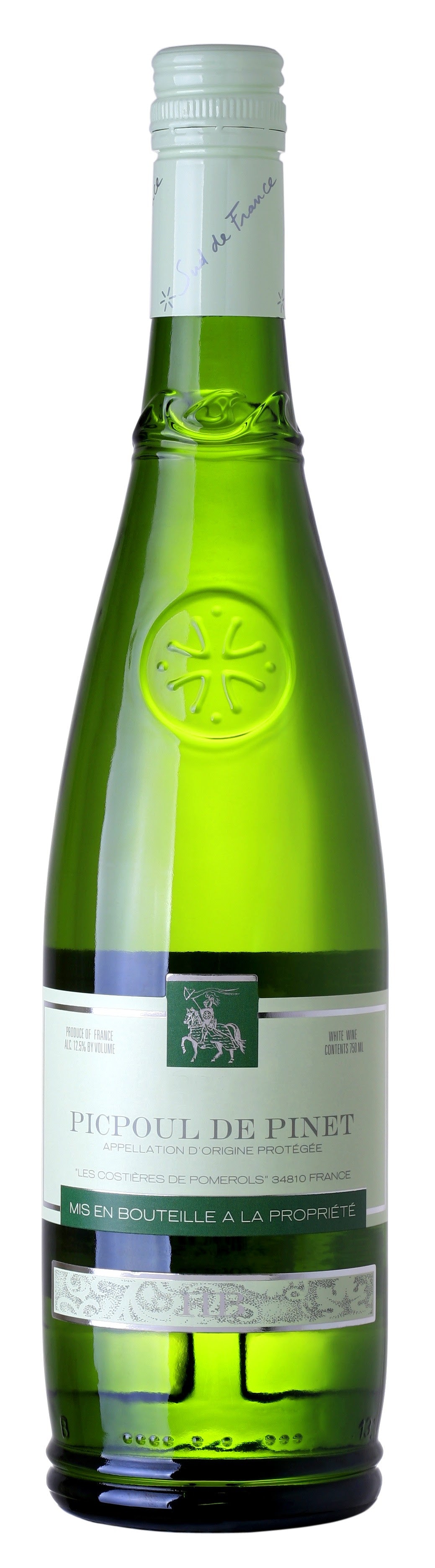
 

Wine of the week: Les Costières de Pomérols Picpoul 2022

Les Costières de Pomérols Picpoul bottle
Les Costières de Pomérols Picpoul 2022/$8-$16

This vintage of the French wine is different from the last, but that doesn’t make it bad

Wine is not necessarily supposed to taste exactly the same every vintage, no matter how hard Big Wine tries to make it otherwise. Because, as I learned a long time ago, vintage differences are one of the things that make wine wine.

Case in point: The Les Costières de Pomérols Picpoul 2022 ($12, purchased, 13%). Picpoul is a white grape that is known for the tart wine it makes — hence, lip-stinger. The 2022 is softer and not as tart as previous vintages of the Costieres de Pomerols, but that is neither good nor bad. It’s just different.

The 2022 has more golden delicious apple fruit (sort of geeky wine descriptor alert!) than the more typical lemon and citrus. But the other bits of a well-made picpoul are there, including a touch of green herbs and that classy, clean finish. Chill it and drink on its own, or with almost anything that isn’t big, red, meat.

It’s also worth noting that picpoul wines remains tremendous values, despite everything else going on in wine. I checked the Wine-Searcher list of most popular picpouls for this post, and 18 of the top 20 cost $15 or less.

A wine of the week doesn’t get much more curmudgeonly than that, does it?

Imported by Kysela Pere & Fils

Winebits 830: Wine consumption, Prohibition, wine retailing

Picnic Blanket Man Woman Wine
Is it possible that this picnic red wine could be replaced by white? Or, shudder, rose?

This week’s wine news: White and rose now account for more than half of global consumption, plus Prohibition’s lessons and another wine retailer is in trouble

• Say no to red: White and rose wine make up more than half of global consumption, says wine’s leading trade group. The International Organisation of Vine and Wine reports that white accounts for 43 percent of world-wide consumption, with rose at  10 percent, compared to 47 percent for red. White consumption has increased “at a relatively fast pace” since 2010, driven by demand for sparkling. Meanwhile, rose has been growing slowly, while red wine has fallen from its peak in 2007. The reasons for this? Consumers want lighter, fresher wines, and the report notes the change in “composition” of wine drinkers, which I assume means older, red drinkers are drinking less. Not to worry, though, Napa Valley: The U.S. remains the largest red wine drinker in the world, one of only two countries where red wine drinking has increased.

• Prohibition’s lessons: This is a weird item from something called Euractiv, in which a spokesman for a beer group suggests taxing spirits and wine more heavily than beer, since the latter  has lower alcohol and, thus, is less unhealthy. Apparently, it’s a paid post, so the point of view is not surprising. But I would be remiss if I didn’t point out that the book “Toward Liquor Control,” which forms the basis of U.S. booze regulation, takes a different view — that wine is the least evil of the three choices. And, of course, the post shows that instead of working together to fight the neo-Prohibitionists, a beer group is worrying about itself first.

• More retailer woes: First, it was the implosion of the legendary retailer Sherry-Lehmann. Now, another famed New York City wine shop may be in trouble. The New York Post, always tops on the wine beat, says that Chelsea Wine Co. “is facing off against panicked customers who claim that the shop’s storage service is dodging their calls and emails as they desperately seek the return of their prized vintages. … In a fermenting crisis that has sparked litigation including eviction proceedings, Chelsea Wine Storage, owned by the proprietors of the acclaimed Chelsea Wine Co. store, has been impossible to reach since the beginning of November, sources said.” In other words, customers can’t get their $1,000 bottles from storage at the Chelsea location and are afraid the wine has vanished. No word from the company about what’s going on, but I’m sure the Post will be hot on its trail.

Photo: “Picnic Blanket Man Woman Wine” is marked with CC0 1.0.

The WC’s career as the WC

Small boy making faces
Even then, the WC had no use for premiumization and overpriced wine.

A brief history of the blog, its origins, and all the rest

My career as the Wine Curmudgeon started more than 20 years ago. That’s when the food editor at the Star-Telegram newspaper in Fort Worth, Amy Culbertson, wanted to name the occasional wine column that I wrote. I offered the usual stupid suggestions — several of them used the word “grape,” if I recall correctly — when Amy came up with “Wine Curmudgeon.”

The rest is history.

Two points to note here: First, that was also the nom de plume of a renowned wine writer named Jerry Mead, who died around the time Amy named the column. However, Amy didn’t know that, and choosing Wine Curmudgeon was more about my approach to wine writing than anything else.

Second, many, many people have helped me over the years, not only teaching me about wine but offering wisdom and advice about the blog. Amy is the only one I‘m going to mention publicly, since most of the rest still work in the wine business and the last thing they need these days is a compliment from me. But they know who they are, and thank you.

So, the blog’s history and my career as the WC:

• There were actually three versions of the blog — the first, using a TypePad address (winecurmudgeon.typepad.com) and which still shows up every once in a while in a Google search; the free version at winecurmdgeon.com that ran from 2007 to 2021; and the Substack newsletter.

• I taught wine and beverage management at the Cordon Bleu in Dallas before the school went bottom up in the U.S., as well as at El Centro College in Dallas (now called the El Centro campus of Dallas College). I taught off and on five or six years; I loved teaching, and still miss it. The students, almost all of whom were fun and attentive, didn’t care much about the blog, which I never understood. And yes, I had to attend faculty meetings, which — as my mother warned me, having taught on the college level — were even worse than could be imagined.

• Wine talks at the State Fair of Texas. Yes, the WC was a draw, and people still ask me when we’re going to do them again.

• Two Wine Guys. My pal John Bratcher and I did home wine classes in the Dallas area, and we had a steady business before the recession. There was even a website, though it’s long gone.

• Consulting for the Private Label Manufacturer’s Association. I still run the video we made featuring holiday wine advice every year around this time. And there is a video or two of me somewhere doing a TV-style stand-up from the trade group’s annual convention: “This is Jeff Siegel, the Wine Curmudgeon, reporting for the PLMA.” We were going to change the wine world and convince supermarkets to sell quality cheap wine under their own label. But the group’s legendary president, Brian Sharoff, died and then the pandemic hit.

• Drink Local Wine. I was the president for a while, as well as one of the co-founders with Dave McIntyre. We did some of the best work anyone in wine has done in getting regional wine its due.

16 years on the blog, part II

reporter at desk
Who knew this guy wold morph into the WC?

These nine posts weren’t necessarily the most popular in the blog’s history, but they were among the best and most important

This is the second of two parts looking at some of the best posts that appeared during the blog’s 16-year history. Today, the best of the best. Part I: The posts no one appreciated, even though they should have.

Picking the best posts I wrote over the blog’s past 16 years and 4,700 entries was much more difficult than I thought it would be. Chalk that up to lots of quality content, right?

Or just a bad memory.

Nevertheless, these nine posts were among the best — as well as some of the most important, offering a perspective rarely found elsewhere and about as far from toasty and oaky as wine writing gets.

In no particular order:

• Wine writing accreditation. Yes, only people with “credentials” should be allowed to write about wine. You can imagine how I felt about that proposal. This 2011 post was one of the most popular in blog history; in those days, I could have written about wine writing every week and made myself a star.

• The red wine bias study, in which Neal Chaudhary and I showed — using math, even — that the Winestream Media and its 100-point scoring system favored red wine over white, regardless of quality.

• Convenience store wine. Yes, people buy wine at convenience stores. Shocking, isn’t it?

• Cooking shows and wine’s fall from grace. The Baby Boomers’ cooking shows — Julia Child, et al — featured wine with their recipes. Today’s video chefs — Alison Roman, Frankie Celenza, and so forth — rarely do. As I wrote: “Hence, the youngest generations have never learned that wine is just as much a part of dinner as plates and letting the pots soak.”

• Arty, the first AI wine writer. Quite brilliant, actually, foreshadowing the uproar over artificial intelligence five years before it happened — and quite funny, too.

• Welcome back, restaurants. This post spurred one of the most important members of the Winestream Media to write a not-so-nice rebuttal, taking me to task for suggesting that restaurants lower prices, offer BYOB, and write more interesting lists to lure diners back after the pandemic. How dare I?

• Cheap wine vs. wine made cheaply made. This concept plagued the blog for years, since most people assumed they were the same thing. I never really understood it until New Orleans’ Tim McNally explained it to me in 2014. So I wrote that cheap wine should be more than “Two Jack in the Box tacos for 99 cents. … [which] are both cheap and a value, but why would you eat them unless it’s 2 a.m. and you’ve been drinking all night?” Because the best cheap wine is more than fast food, as I like to think we’ve shown over the years.

• Ingredient labels. We’ve almost won this one — the first labels should appear in the next 18 months or so. The first mention of ingredient labels on the blog came in 2008, about six months into its existence.

• Iran and the neo-Prohibitionists. Want to know what Prohibition is like? Look to Iran, where alcoholism is rampant and there are AA chapters — even though booze is illegal and you can be flogged if you drink it. Ask the next Neo you meet if that’s what they have in mind.

16 years on the blog, part I

Dog on blanket
“I don’t understand why no one appreciated my talents.”

Some posts worked out, but some — surprisingly — didn’t

This is the first of of two parts looking at some of the best posts that appeared during the blog’s 16-year history. Today, Part I: The posts no one appreciated, even though they should have. Part II: The most important posts in blog history.

I wrote almost 4,700 blog posts over the past 16 years, and the one thing I was never able to make sense of: Why some posts didn’t do well with readers.

I knew that the technical and business stories, the things that needed to be written, wouldn’t necessarily have a wide audience. Instead, it was the posts that should have garnered thousands and thousands of views, but never did.

Such as:

• Giving away money. I gave away Wine.com gift cards during Birthday Week on the old blog ($100 cards the last several years). But, even though the blog went to more than 1,500 people each day, I never got more than five or six dozen entries — and sometimes less. What did you have against free money?

• The film and TV parodies. The WC as Shaft? Bruce Lee kicking the crap out of wine judges who don’t respect Drink Local? And, most depressing, the Planet of the Apes takeoff, which had actual dialog (the great John Bratcher as Charlton Heston). I mentioned this to a friend, and she said, “Wine drinkers have no sense of humor.”

• Churro, the blog’s associate editor. The wine business complains that young people and Hispanics aren’t interested in wine. So I appoint my dog, a Chihuahua mix, as the blog’s associate editor and do a podcast with him, and no one got it. No one. Several people — and I’m not making this up — said, “He’s a dog.”

• The podcasts. Apple has an entire universe devoted to podcasts, so they must be popular with someone. But the blog’s interviews — usually with damned interesting people, often recommending quality cheap wine — never garnered much of an audience.

• Rose reviews, especially in the blog’s early days. I’d like to think my readers were past that old and stupid aphorism, “Friends don’t let friends drink pink.” You are, aren’t you?

Wine of the week: Cellier des Dauphins Reserve Grenache-Syrah 2019

Bottle of Cellier des Dauphins Reserve Grenache-Syrah 2019
Cellier des Dauphins Reserve Grenache-Syrah 2019/$10-$15

A red Rhone that is both affordable and enjoyably rustic

The WC has often had a difficult time evaluating red wines from France’s Rhone region. Many of them have a quality that can be off-putting — an earthiness that can sometimes get out of hand, producing a rough and occasionally unpleasant wine. The catch is that earthiness is an important part of these wines, so how much is too much?

The Cellier des Dauphins Grenache-Syrah 2019 ($12, purchased, 14%) offers an example of the correct amount of earthiness. It’s just what one would expect from this sort of wine at this price — rustic and earthy, but not disagreeably so, and surprisingly balanced given its grenache-style red fruit, which can be too jammy. It’s not for all tastes — it’s hardly smoooth — but for those who want to see what the Rhone is like but don’t want to spend $40, this wine do the trick.

Which shouldn’t be surprising, since the Cellier des Dauphins wines usually provide value, and I’m especially fond of the rose.

The red is a food wine, and needs something substantial — takeout pizza perhaps, as the holidays get closer. Or even something beefy for an informal holiday dinner.

Imported by Monsieur Touton Selection