





Twitter tastings, wine marketing, and what comes next
 by Wine Curmudgeon Posted On

That ?s why I wanted to participate in the recent Don and Son ?s pinot noir Twitter tasting. The format ? a live webcast combined with a Twitter tasting ? sounded like it could take virtual wine tasting to the next level.
The wine was well done, and reminded me that California can produce quality pinot noir. The Twitter/webcast part, though, didn ?t quite do what I hoped it would, which says more about the wine business than the technology. More, after the jump:
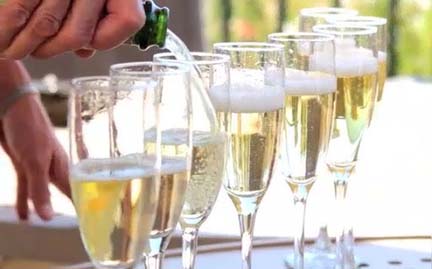
The wine, first. The tasting was a vertical, which means the same wine from several different vintages. In this case, the pinots were from 2008-2011. The 2009 and 2010 were exceptional, and especially for the price –around $20 (sample). The 2009 was my favorite, round and fruity and full, with bright berry aromas and very pinot-like in character. This matters to me, since too much inexpensive pinot tastes like grape juice and too much expensive pinot tastes like cabernet sauvignon.
The webcast, on the other hand, was more problematic. A Twitter tasting should be slapdash and unrestrained ? almost chaotic. That ?s its charm, that it isn ?t organized or controlled and that anyone tasting the wines can tweet whatever they want whenever they want and and that the tweets overlap and people argue with each other and someone chimes in here and someone else chimes in there. Call it stream of consciousness for a wired-in world.
That didn ?t happen here. We had a schedule and a format, and it resembled an on-line college lecture more than a Twitter tasting. That ?s understandable, given that the producer paid for the event and wanted to get its message across. But that ?s not the most effective way to do something like this. It shouldn ?t be top down ? it should be give and take between the hosts and the participants, and we didn ?t have enough of that.
The webcast itself wasn ?t the problem, and the technology was flawless. Sound and video were both excellent. Rather, it was the way the webcast was used — not to feed that stream of consciousness, but to limit it.
Finally, the word clone, used to describe different kinds of the same grape, as in clones of pinot noir, should never, ever be used outside of a classroom. And certainly not at a Twitter tasting ? talk about taking the air out of the room.
Hey Jeff, glad to see you coming out of your cave for fun twitter action 🙂 I see your point regarding clones but on the flip side learning can be fun and educational in the right setting, including a twitter tasting! http://enobytes.com/2010/12/28/comparing-pinot-clones/
My feelings are deeply hurt, Pamela. I leave my cave all the time. And I participated in what may have been the first-ever Twitter tasting in 2008 for Drink Local Wine.
My objection is not about wine education, which is one of my missions on the blog, but for the right time and right place. And clones and a Twitter tasting aren’t it.
I guess we can agree to disagree. I only mentioned the cave thing because I was told you disliked twitter wine events. For you, this particular event didn’t seem to hit the right balance in terms of education and chaos as you put it, but there are plenty of other events that do a pretty good job at it. I agree you loose some of the spontenaety when organized in a lecture fashion, but hopefully the organizers took something away from it and ask for feedback to better their next program. I usually don’t participate in events like this unless I have something to learn — I’m not necessarily there for the chaos.