


Tag Archives: wine tariff

Winebits 625: The Happy Holidays edition

gerrit cole
Gerrit, dude, think $10 Bieler Provencal rose.

This week’s wine news: A $900 wine helped the New York Yankees sign Gerrit Cole, the best free agent pitcher on the market. Plus, a couple of decidedly Bah Humbug developments about the wine tariff and distributors.

I’ll take two, please: The New York Yankees may not have signed top free-agent pitcher Gerrit Cole because they threw a record-setting $324 million at him. Rather, a couple of bottles of $900 Italian wine may have been equally as important. The Yankees gave Cole the 2004 and 2005 Massetto — made with merlot, of all things — and he practically melted. If I had known Cole was a wine aficionado, I could have helped my beloved Chicago Cubs sign Cole. Frankly, he would get a better deal with 180 bottles of the $10 Bieler Provencal rose than two bottles of an Italian merlot, no matter how good it is (and my Italian wine expert says it’s good, but not that good).

More tariff threats: The U.S. government is considering boosting October’s 25 percent tariff to 100 percent and including almost all beer, wine, and spirits produced in any European Union country. That would include those exempted in October. You can read the sad details at the link; why anyone would want to destroy the European booze business is beyond me. That’s just spite. I’ve talked to a couple of importers and producers, and they’re urging wine drinkers who think this thing is foolish to leave a comment with the feds. Go to www.regulations.gov, enter docket number “USTR-2019-0003” and click search. Then, click “comment now” and leave your comments/concerns. Comments are open until Jan. 13.

Not enough distributors? The WC has written quite a bit about distributor consolidation, and how it benefits no one but the distributors and their biggest customers. Turns out someone agrees with me. Cyrus Azari, writing for a trade blog, says there may not be enough distributors for all of the wine in the market, and this is a “huge pain point for wineries who get cut off from markets.” In other words, no distributor means the wine can’t appear on store shelves, since the law requires every wine to have a distributor. That sounds like a fair system, yes?

How do you write about quality cheap wine when the system is rigged against it?

Look out! They’re shelling us with premiumization and the wine tariff!

You keep a stiff upper lip, try to ignore the frustrations and complications, and soldier on – because quality cheap wine is worth it

How do you write about quality cheap wine when the wine industry and the federal government have gone out of their way to make quality cheap wine an anachronism?

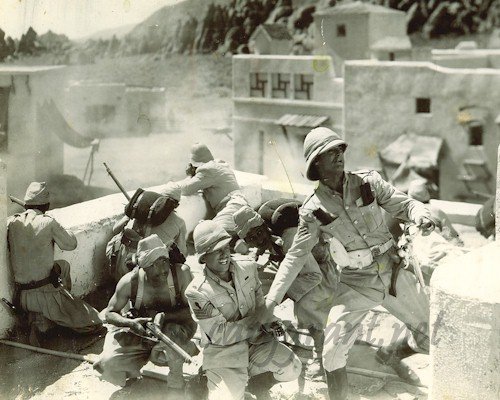
Because, as we celebrate the blog’s 12th birthday, that’s the situation I find myself in. Premiumization and the 25 percent European wine tariff have made it all but impossible to find the kind of $10 and $12 wine that’s worth writing about. I feel like a character in one of those British Raj movies where the garrison is stranded in a fort on a remote hilltop and we’re being picked off one by one and we know the relief column isn’t going to arrive in time.

Yes, there is still plenty of cheap wine on store shelves, but just because a wine is cheap doesn’t mean it’s worth drinking.

So what’s the Wine Curmudgeon to do? Carry on, of course. What else is a stiff upper lip for?

The irony here is that I seriously considered ending the blog after this final birthday week post (with a Hall of Fame wrap-up in January). And if I had known about the wine tariff when I was pondering the blog’s fate this summer, it would have been that much easier to close it after 12 years.

Changing my mind

But two things happened to make me change my mind: First, and most practically, the site’s hosting company charged me for another year in August. So, if I closed the blog with this post, I would have been stuck paying for nine months of service I didn’t use. Second, four people whose opinions I admire and respect pointed out that if I didn’t keep doing this, who would? And that despite my frustration with the blog, there is and will be a need for it.

For the frustrations have been endless. These days, it’s not just about paying homage to our overlords at Google or dealing with out-of-touch producers and distributors and too many incompetent marketers. Or fending off the sponsored content and the fluff pieces that so many others in the wine writing business have turned to in an attempt to make money at something where there is little money to be made.

These days, it’s about making sense of a business that is divorced from reality. Which, frankly, makes me feel like I’m using a croquet mallet to comb my hair.

Consider just these two items: A group of Washington state wine producers, faced with declining sales, say they aren’t worried since the wine they are selling is more expensive. Meanwhile, Italian pinot grigio producers, also faced with declining sales, want to know how to sell more expensive wine to make up the difference.

Making money the hard way

Am I missing something here? Aren’t declining sales a bad thing? Shouldn’t an industry do something to reverse the decline, instead of furthering it by raising prices?

But not, apparently, if it’s the wine business in the second decade of the 21st century. Because, of course, premiumization. I’ve probably written entirely too much about the subject, but mostly because I can’t believe anyone in wine still takes it seriously. Though, and this is welcome news, there are others who are beginning to question its validity. Damien Wilson, PhD, who chairs the wine business program at Sonoma State University, is blunt: Premiumization can be a path to ruin, since sales decline and higher prices scare off new wine drinkers.

The less said about the tariff the better. It’s as counterproductive as premiumization, and its adherents are blinded by politics to economic reality. That the tariff could forever wreak havoc on U.S. wine consumption is beyond their comprehension.

So let me shepherd my ammunition, keep my head low, and hope against hope that the relief column gets through. And keep a very stiff upper lip.

More Birthday Week perspective on the wine business:
Have we reached the end of wine criticism?
• 10 years writing about cheap wine on the Internet
• Premiumization, crappy wine, and what we drink

Ask the WC 22: Natural wine, wine tariff, wine scores

natural wineThis edition of Ask the WC: Why is natural wine so expensive? Plus, trying to figure out the European wine tariff and the basics behind wine scores

Because the customers always have questions, and the Wine Curmudgeon has answers in this irregular feature. You can Ask the Wine Curmudgeon a wine-related question by clicking here.

Hello Wine Curmudgeon:
Love, love, love, your blog! Also recently fell in love with natural wines, like Martha Stoumen, and I’m wondering if you think they will ever become affordable for the daily wine consumer? When I say “natural,” I’m speaking of the wines that use native yeast only to ferment and do not add sulfites. So far, the natural wines that I have found in the $10-$15 range are simply undrinkable.
Curious about natural wine

Dear Natural:
Thanks for the kind words. Natural wine, even though availability is limited, is probably the most contentious topic in wine today. And you’ve identified the natural wine conundrum – and why I haven’t written about it. It’s almost impossible to make a quality natural wine most of us can afford, given the process. Waiting on natural yeast to do the job is not cost efficient. The other interesting thing about natural wine is that its supporters say it should be expensive, so that its producers can make a living. One of their criticisms of Big Wine and “commercial” wine is that these wines don’t give the grape grower a fair return on their effort and time and cost.

Dear Wine Curmudgeon:
I’m confused about the new European wine tariffs. Why is there a dividing line at 14 percent alcohol?
Boozed and confused

Dear Boozed:
Don’t worry – we’re all confused. Most of it makes little sense. And the provision that French, British, German, and Spanish wines with more than 14 percent alcohol are exempt from the tariff is especially confusing. That means most whites will be taxed, but some reds won’t be. Maybe it’s the idea that higher alcohol is bad, and those wines should be punished. Or it may also have something to do with the way wine is taxed in the U.S. where higher alcohol wines pay higher excise taxes.

Hi, WC:
I know this will sound stupid, but I don’t understand wine scores or what they’re supposed to do. Why can’t someone just say if the wine is good or bad?
100 points

Dear 100:
The 100-point scoring system used to be the most contentious part of wine. It’s based on the system we know from school – 90 to 100 is an A, 80 to 90 is a B, and so forth. Its original goal was to expand on good or bad, so that you would know how good or how bad. But – and regardless of every other problem with the system – almost no wine gets less than 85 points any more. Which means one of two things: either no wine is badly made enough to warrant 82 or 79 or 64 points, or the system is so flawed that scores have become meaningless. I think it’s the latter, and that’s one reason why I don’t use scores.

Photo: “Great Sage – Bar” by ZagatBuzz is licensed under CC BY-NC-SA 2.0

25 percent European wine tariff went into effect today

European wine tariffLook for higher prices and less selection as the European wine tariff takes hold

Get ready to pay as much as one-third more for some of your favorite cheap wines – assuming you can still find them. That’s because the U.S.’ 25 percent European wine tariffs went into effect today.

I wish there was good news to report. But since the World Trade Organization approved the U.S. tariff this week, nothing good has happened. The Trump Administration, often reticent to actually impose tariffs, has not backed off this one save for vague hints. The European Union says it will retaliate, escalating the trade war between the U.S. and its best friends in the world.

One of the clearest analyses of what’s going on is here – the tariff covers French, Spanish, German, and British non-sparkling wine that is less than 14 percent alcohol. Italian and Portuguese wine isn’t included, nor is wine from South America, South Africa, Australia and New Zealand.

What can we expect to happen with the 25 percent European wine tariff?

• Higher prices almost immediately. Some retailers in Dallas have already hiked prices; the rest should go into effect over the next six months as the new vintages work their way into local retailers.

• Well-known and popular brands disappearing from store shelves. A French wine producer and an English wine business consultant both named La Vieille Ferme, the value-priced French wine, as one of the first to go. That’s because a price hike would take the 1.5-liter bottle from $12 to $16, “and what consumer is going to pay $16 for a $12 wine?” asked the producer. So stores will stop carrying the wine – and others like it, no doubt including many in the $10 Hall of Fame – once current stocks run out.

• Serious financial problems for some of the best and most interesting small- and medium-sized importers, the kind who bring in the wine that I write about on the blog. These problems could even lead to business failures. That’s because the 25 percent tariff is their profit margin. They can’t raise prices to recoup the margin, said the consultant, since the market won’t support those price increases. Plus, they’ll be squeezed by the biggest importers, who will absorb some of the price increase because they can afford to take less margin.

I’ll update this post if anything changes, but I don’t expect it to. That would require a miracle, and to paraphrase Sidney Greenstreet in “Casablanca,” “The Trump Administration has outlawed miracles.”

More about the 25 percent European wine tariff:
Preparing for the 25 percent wine tariff
Do new U.S. wine tariffs mean the end of most $10 European wine?

Image from akaratphasura via 123RF

Preparing for the 25 percent wine tariff

wine tariffFive ways to save money if and when the 25 percent wine tariff for France and Spain takes effect

So far, there’s been no sign that the 25 percent tariff on French and Spanish wine won’t go into effect at the end of the week. So those of us who are rightfully worried about all that quality $10 wine going away should act now:

• Stock up before prices increase. Last week, I bought what might have been the last seven bottles of Chateau Bonnet Blanc in Dallas, and also bought most of what was on the shelf of the Azul y Garanza tempranillo. The Bonnet, of course, is one of the all-time great cheap wines, but it almost certainly won’t be $10 after Oct. 18. The Azul, $11 for a 1-liter bottle, is not just a terrific value, but a quality wine as well – Spanish tempranillo that tastes like Spanish tempranillo.

• Look for closeouts and sales before Oct. 18. Central Market, the Texas version of Whole Foods, did a 20 percent French wine sale last week. So I bought a case of assorted $10 French rose for $8 a bottle; hopefully I can hold out for the first six weeks or so of the tariff.

• There is always Italy. The good news is that Italian wine was excluded from the tariff (though not its olive oil and some of its cheeses). The bad news is that this means that very ordinary $9 pinot grigio will become an even bigger attraction as retailers drop similarly-priced French and Spanish wine. But $10 Sicilian wines will still offer value, while regions in the middle part of the country like Umbria and Montepulciano d’Abruzzo have long been famous for price and quality.

• Sparkling is safe. One would have thought that if the U.S. really wanted to punish France, it would have taxed Champagne. Hence there should still be value in $12 to $15 cava, the Spanish sparkling wine.

• Think South Africa. South African wines haven’t been popular in the U.S. for almost 20 years, but this could be their time to shine, says James McFadyen, a long-time retailer and distributor on both sides of the Atlantic. Producers like Ken Forrester and Mulderbosch offer quality and fair prices for both red and white; the catch has been availability.