



Tag Archives: wine rants

The revolution in wine terms

wine termsWho knew wine terms had become more than they were? Certainly not the Wine Curmudgeon, who has been using words like sweet and dry and fruity for more than 20 years. But, apparently, I am not au courant, as a post at VinePair, describing “20 wine words most drinkers don’t know” reminded me.

My first question? Why, if these terms are so important and wine drinkers need to know them, how is it that most don’t? That would be like most food eaters not knowing what hot and cold means. “Hmmm, this soup is hurting my mouth. Is there a term to describe that?”

Second, one of the terms was hedonistic: “Robert Parker ?s favorite word. Wines that just blow you away. Parker likes hedonistic, but you can just say the wine is damn amazing.” Note to Adam Teeter at VinePair, who wrote the post and, save for an occasional lapse into cuteness, seems to know his business. Most wine drinkers don’t know who Robert Parker is and don’t care, so why do they need to know his favorite wine term? Plus, in 30-some years as a professional writer, wine and otherwise, I have never used hedonistic to describe anything. And I have had a fairly successful career.

Third, wine terms should be objective, like sweet and dry and fruity, and hedonistic (as well as ponderous, also on the list) isn’t. Parker may think those wines are damn amazing, but many of us don’t. We find them overblown and unenjoyable. What’s the point of using a term that tells someone they’re supposed to like something that they may not like?

Again, this is not to criticize Teeter, who is probably trying to help, but to point out yet again how most post-modern wine writing has little to do with the average consumer. It’s as if they’re writing a movie review that discusses camera angles and editing techniques instead of the plot, and then getting angry when someone asks them what the movie is about.

And what’s worse is that they call those of us — who want to write intelligently and clearly, who want to educate wine drinkers and not preach to them — a variety of not very nice names. I’m not going to link to them, because it’s not worth the aggravation and the Internet sniping that will ensue. But two prominent California wine writers have recently questioned whether people like me are competent to write about wine. Our sin? That we try to make it less intimidating and confusing, when real wine writers know wine is supposed to be intimidating and confusing. Otherwise, one of them wrote, what’s the point of learning about it?

How wonderfully self-absorbed and insensitive to the world around them they must be. Does this mean that we can’t enjoy wine unless we enjoy it exactly as they want us to? Nuts to that, and pass me some of that $10 Gascon white I like so much — the one that’s fruity.

Image courtesy of Westword.com, using a Creative Commons license

Texas wine at the crossroads, one year later

Texas wineAnd, apparently, not much has changed with Texas wine a year after I wrote: “Has Texas wine reached a plateau, where quality isn’t going to get any better given the state’s resources and climate? Or is something else going on?”

That was my conclusion after a couple of days tasting wine and moderating a Texas wine panel in the Hill Country last week. The day before I left, a Texas winemaker (who has told me I’m an idiot) took to the Internet to criticize almost everyone else who disagreed with him. During my visit, a winery owner told me I knew nothing about wine, Texas wine, and the ugni blanc grape, my Gascon favorite that is starting to be grown in Texas. And the wine during those couple of days? Mostly, and sadly, ordinary. At worst, it brought back memories of the bad old days in the late 1990s.

What’s going on? Why is this happening? Much of it has to do with the state’s wine success over the past decade — more wineries, better quality, and increased recognition here and elsewhere as part of the local wine movement. There are more wineries making better wine than ever before, using the grapes best-suited for the state’s terroir, and it’s easier to buy quality Texas wine than it has ever been — even grocery stores sell it.

But that success has led to other, less welcome, developments: First, people getting into the wine business not because they particularly care about wine, but because it’s a successful business and they don’t understand that wine is more than a business. Second, as the Texas wine business has changed, not everyone has changed with it, and many of those people are bitter and angry about the changes.

U.S. Hwy. 290 in the Hill Country had a couple of wineries when I started writing about Texas wine some 20 years ago. There are more than a dozen today, and applications for almost two dozen more. Ignoring for the moment whether there is enough business to support that many, we can’t ignore that there aren’t enough grapes. As Houston wine writer Ron Saikowski pointed out during the seminar at Boot Ranch, there are about 8,000 acres of grapes in Texas. We need 40,000 acres to meet the demand, which means we use all the grapes grown here, regardless of quality, and make up the difference with imports, mostly from California and Washington state, and also of varying quality. The irony? As Texas wine becomes more successful, and we get more wineries, the grape shortage becomes more acute.

Which is not to say there isn’t good news. The new vintage of Becker’s Provencal rose ($17, sample, 12%) may be the best ever, and it’s usually one of the best roses in the state (and which says something about how professional wineries can make quality wine). Consumers are more knowledgeable, and so are the people who follow Texas wine. The writers on the panel — Saikowski, John Griffin of SavorSA, and Austin’s Matt McGinnis — know their stuff, and are more than capable of tracking the changes in the business and holding producers accountable. And they’re far from the only ones, also much different from the early days when there were just a couple of us.

Because, frankly, this version of Texas wine has worn me out, and it’s why I’m not judging the Lone Star competition this year. I’ve done it every year but one since they invited me 10 years ago, but I don’t see the point this time. Too many Texas producers don’t want honest criticism; they want gold medals and parades in the street, because they know how much better they are than everyone else. That’s not the way I do business, and anyone who is honest with themselves shouldn’t, either.


Local wine, local food

local wineThe Wine Curmudgeon, despite his good intentions and his advocacy of all things local, is not perfect. Even the co-founder of Drink Local Wine sometimes forgets that local wine goes with local food.

Case in point: A recent dinner with pork shoulder rubbed with cumin and coriander, roasted with garlic. onions, and peppers, and served with guacamole and black beans. So, like the wine snobs and dilettantes that I spend so much time excoriating, I bought a French wine, a white from the Rhone, to drink with it.

What a maroon.

I live in Texas. I have been advocating Texas wine for Texas-style food for almost three decades. So why did I buy a French wine made with viognier when when we make some of the best viognier in the world in Texas?

Like I said, what a maroon.

It’s not so much that the white Rhone was overpriced and under-qualified. Even if it had been better made, it didn’t have the bright apricot and peach fruit to stand up to the pork the way a Texas viognier (Brennan, McPherson, and Pedernales among many others) would have. And it was heavier, as well, with an unpleasant oiliness, both qualities that didn’t complement the pork’s spiciness and something the best Texas viogniers don’t have. Ours are lighter and more crisp, which gives them an affinity for something as rich as the pork shoulder.

So the next time you opt for safe instead of local, know that you’re making the same mistake that I did. Just be willing to admit it, and do the right the next time.

Arsenic and cheap wine

arsenicDavid K. TeStelle may be a terrific trial attorney, a tremendous human being, and a snappy dresser. But he apparently knows little about logic and even less about wine.

“The lower the price of wine, the more arsenic you are getting,” said TeStelle, one of the lawyers suing Big Wine for knowingly selling arsenic-laced wine in the class action lawsuit that has the wine business all atwitter (pun fully intended).

The Wine Curmudgeon will assume that TeStelle was misquoted or taken out of context, since to assume that all cheap wine is stuffed full of arsenic and that all expensive wine is pure and virginal is silly. Logical fallacies, anyone? Did we stop driving cheap cars because the Yugo was a piece of junk? My Honda Fit certainly isn’t. Are Mercedes and BMW models never recalled?

The testing behind the lawsuit apparently didn’t check the arsenic level in any expensive wine, which takes the rest of the logic out of TeStelle’s argument. Maybe BeverageGrades, the lab that did the testing, didn’t want to to spend the extra money, and it was easier to buy Two-buck Chuck since there are three Trader Joe’s in Denver. Or that the Big Wine companies that make most of the cheap wine in the lawsuit have deeper pockets than a $40 brand that makes 25,000 cases. One can’t get damages out of a company that doesn’t have money to pay for damages.

Besides, and I can’t emphasize this enough, none of my wines — the three dozen or so in the 2015 $10 Hall of Fame — are on the arsenic list. This speaks volumes about the difference in quality in wine, cheap or otherwise, and something that I have repeated and repeated and repeated throughout my wine writing career. It’s not the price that matters — it’s the honesty of the wine. Does the producer care about quality and value, or is it just making wine to make wine? Which is just as true for $100 wine as it is for $10 wine.

That’s something that everyone who is being snarky about the quality of cheap wine in the wake of the lawsuit (including people I like and whose opinions I respect) should remember. Quality, as well as safety, isn’t something that can be measured by price. It’s something that depends on integrity, and no amount of money can guarantee that.

Will cheap wine kill you?

cheap wine arsenicYes, “Will cheap wine kill you?” is a great search engine headline. And no, it’s not a plot by the the Winestream Media to return us to the good old days before the recession, when they thought cheap wine was so bad that anyone who drank it deserved what they got.
Rather, it was the big wine news last week, based on testing by a Denver lab and carried on the CBS News website: Cheap California wine has lots and lots of arsenic, more than we should ingest. And it might kill you.

A few thoughts about the story after the jump, and why it reflects so badly — again — on the Fourth Estate: Continue reading →

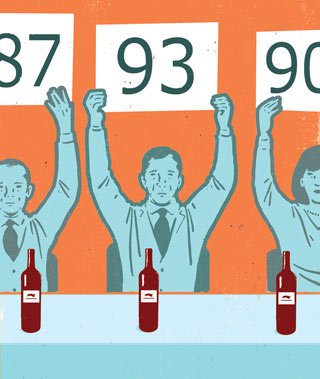
Chateau Bonnet Blanc and why scores are useless

Chateau Bonnet BlancChateau Bonnet is the $10 French wine that is one of the world’s great values and has been in the Hall of Fame since the first ranking in 2007. As such, it has always been varietally correct, impeccably made, an outstanding value, and cheap and delicious. The 2012 Bonnet blanc, which I had with dinner the other night, made me shake my head in amazement. How could a cheap white wine that old still be so enjoyable?

What more could a wine drinker want?

A lot, apparently, if a couple of the scores for the 2012 on CellarTracker (the blog’s unofficial wine inventory app) are to be believed. The Chateau Bonnet blanc scored 80 points from someone who said the label was ugly and 83 points from a Norwegian, and that a Norwegian was using points shows how insidious scores have become.

The irony is that the tasting notes for the low scores were quite complimentary. The 80-point mentioned “crisp dry tones and pleasant blend of melon flavours” while the 83 described herbs, minerals, and citrus, and neither noted any off flavors or flaws. Yet, given those scores, the Bonnet blanc was barely an average wine, hardly better than the grocery store plonk I regularly complain about on the blog.

Which it’s not. Those two wine drinkers are allowed to score the wine as low as they like, and they’re allowed to dislike it. That’s not the problem. The problem is consistency; someone else gave the Bonnet blanc a 90, citing minerality and lime zest — mostly the same description as the low scores. Yet a 90 signifies an outstanding wine. How can a wine that three people describe the same way get such different scores?

Because scores are inherently flawed, depending as they do on the subjective judgment of the people giving the scores. If I believed scores and I saw the 80 or the 83, I’d never try the Chateau Bonnet blanc, even if I liked melon flavors or minerals and citrus. Which is the opposite of what scores are supposed to do. And that they now do the opposite of what they’re supposed to do means it’s time — past time, in fact — to find a better way.

For more on wine scores:
• Wine scores, and why they don’t work (still)
• Wine competitions and wine scores
• Great quotes in wine history: Humphrey Bogart

Champagne Jayne and the new censorship

Champagne JayneOct. 21, 2015 update: An Australian judge has ruled that Champagne Jayne Powell can keep her name, ruling that the French Champagne trade group “did not do enough to compel him to order Powell to cancel her business name or withdraw her trademark.” It’s not a complete victory, though. The judge also said that Powell had engaged in misleading or deceptive conduct in her “use, reference to, and promotion of sparkling wines while also using the Champagne name in relation to some of her social media posts,” and that part of the case will continue. She could still be forced to pay damages or make some other restitution.

Censorship used to be easy to understand. The secret police came to the door in the dark of night and you were never heard from again. Which is what makes the Champagne Jayne case so terrifying — the secret police have been replaced by lawyers working within the legal system of a Western constitutional democracy, and what they’re doing is as legal as it is morally reprehensible.

The French Champagne trade group, CIVC, is suing Jayne Powell, an Australian wine writer whose specialty is Champagne and sparkling wine and who calls herself Champagne Jayne. The trade group claims that Powell’s name, because she writes and teaches about other sparkling wine, violates the European Union ?s trade agreement with Australia that defines what can be called Champagne. CIVC wants an Australian court to make Powell stop using the name and anything associated with it, like email addresses, Facebook and Twitter accounts, and domain names. In this, they would force her out of business.

And, in a touch I love, Powell would have to “destroy all material marked with the name ?Champagne Jayne ?, including brochures, pamphlets, and other goods.” In other words, burning books.

This must seem bizarre to Americans, given our right to free speech under the First Amendment. But it shouldn’t. Even though Australia’s free speech protections aren’t as strong as those here, this case is not about free speech as we understand it. It’s about intellectual property, and how post-modern business is using that concept to carve out an exception to our traditional free speech protections. First Amendment law in the U.S. focuses on preventing the government from censoring speech, but says little about groups that aren’t the government from doing it.

Case in point: The Cristal-Cristalino lawsuit, in which the luxury French Champagne won a judgment against the cheap Spanish cava and forced Cristalino to change its name. The federal judge who decided in favor of Cristal said the case seemed silly on the surface, but that she had to go by the law, and the law said any confusion about the name, no matter how small, must be decided in Cristal’s favor. Shortly thereafter, I got a letter from Cristalino telling me I had to obey the judgment by never referring to Cristalino as Cristalino and by replacing any reference to the old name on the blog.

In other words, I am being censored by a French wine company, regardless of the First Amendment.

This is why I have written this post, contributed to Powell’s defense fund, and urge everyone to join me in boycotting Champagne. Powell can’t speak for herself — she is under a court-mandated gag order. And if the CIVC gets away with this, and it seems like it will, then it sets a precedent for any business that doesn’t approve of what someone writes, wine or otherwise. Don’t like what I say about your wine? Then sue, claiming I used your brand name incorrectly. Don’t like what the New York Times’ Mark Bittman says about your fast food? Then sue, claiming Bittman infringed on your intellectual property. (Which is my hint to the Times — this affects all of us who practice journalism, just like Times v. Sullivan.)

Also depressing: The lack of outrage from the Winestream Media, few of whom have come to Powell’s defense. In one respect, this isn’t surprising, given that its business model is based on sucking up to the wine business. But one would think that someone would remember Martin Niemoller.