


Tag Archives: wine business

studio microphone

Winecast 61: Michael Wangbickler and what comes next for wine

michael wangbickler
Michael Wangbickler: Wine tourism looks like it’s back, but serious questions remain about wine demand.

Michael Wangbickler: The pandemic exposed a lot of a weaknesses in the wine business

Michael Wangbickler, who runs Napa’s Balzac Communications, is one of the most clear-eyed people in the wine business — no wishful thinking, no this is going to happen because we want it to, no rose-colored glasses. This is one reason why Balzac is one of the premier marketing companies in the wine business. So who else better to talk to about what comes next for wine in the post-pandemic, young people aren’t interested, and hard seltzer days we’re in?

I’ve known Mike for years; he was one of the people who made Drink Local Wine work when we changed the way the world thought about regional wine. And yes, I’m jealous of his beard. We talk about it, as well as the future of wine marketing and wine criticism, on Mike’s “Hit the Bottle” podcast — complete with production effects. It focuses on trends in the wine business, so our discussion is quite detailed for those of you so inclined. And, not surprisingly, I am critical of the Winestream Media.

In this podcast, we talked about the changes on the way for wine, good and bad. Plus, we learn I didn’t drink when I turned 18:

• The pandemic did spur innovation among many producers, who recognized they couldn’t sell wine the same way they had for years. For one thing, many have 21st century websites in the 21st century.

• Direct to consumer — buying directly from wineries — will continue to grow, and despite the legal difficulties. Mike thinks it’s one of the few ways smaller producers can replace the business they lost when restaurants shut down for a year. And he’s not optimistic about the return of the restaurant wine business.

• He also isn’t optimistic about big changes in three-tier, despite reforms made during the pandemic. Change will come gradually, depending on the political climate in each state. That has much to do with the biggest producers and the biggest wholesalers, who have the political clout to prevent wholesale changes.

• Don’t expect a wine boom coming out of the pandemic. People were drinking less before the pandemic, so why would they drink more now? Premiumization, though, will continue — younger consumers drinking more expensive wine as they drink less. They’re also going to drink so-called “healthy” wine — Mike thinks that’s a key trend.

Click here to download or stream the podcast, which is about 15 1/2 minutes long and takes up about 10 megabytes. Quality is excellent — have I finally figured out Zoom?

Is Gallo about to change the idea of winery tasting rooms forever?

Tasting rooms
Will wine drinkers soon be toasting each other with Gallo wine in company-branded tasting rooms?

Winery tasting rooms have traditionally been about Drink Local; Gallo’s plan could turn them into the wine equivalent of Disney stores

June 16 update: Bring on the Barefoot! The world’s biggest wine producer successfully negotiated the hurdles detailed in the first post and will build its warehouse, cannery, and bottling plant in rural South Carolina.

South Carolina Gov. Henry McMaster says the plan will hire almost 500 people over the next eight years, an impressive achievement for a county with around 1,000 residents.

The final agreement will allow Gallo to open three tasting rooms, but the company has not said where they will be.

Continue reading →

Big Wine 2021

big wine 2021Big Wine 2021 growth may have slowed, but the biggest companies still control U.S. wine production
A funny thing happened to Big Wine during the pandemic. It probably didn’t get that much bigger.

That’s one of the most interesting parts in Wine Business Monthly’s 17th annual wine industry survey, which tracks the ups and downs of the U.S. wine business and ranks the 50 biggest producers in this country. In the 2020 report, the top 50 produces of accounted for 90 percent of domestic wine sales, as they have done for years. But the 2021 number is about the same – despite early indications that that the percentage could be higher.

And it could be. Cyril Penn, the magazine’s editor, says the pandemic made it more difficult to gather data, both from producers and from trade groups that track wine sales.

But Big Wine remains dominant, even though there are some 11,000 wineries in the U.S.:

• E&J Gallo is still the behemoth of world wine production, accounting for 88 million cases last year. That’s more than the second and third biggest companies combined. In other words, at least one out of every four bottles of wine sold in the U.S. is a Gallo product (such as Barefoot, Apothic, and Louis Martini), and it could be as many as one out of three.

• The top three producers – Gallo, The Wine Group (Franzia boxes, Cupcake), and Constellation Brands (Mondavi) – totaled 158 million cases, about half of U.S. production. The top 10 accounted for about three-quarters, which is more or less the same as 2020.

• The biggest growth, save for Gallo, likely came in the middle tiers — 15 to 30 or so. A variety of producers in that range have been snapping up smaller companies over the past several years, furthering consolidation in the 1 million case range.

• Box wine soared during the pandemic, led by Bota Box – up almost 50 percent in 2020.

• National brands excelled, since consumers focused on supermarket labels during the panddemic. Josh Cellars’ sales increased 43 percent and Barefoot was up 18 percent. The latter is especially telling, since Barefoot growth has slowed in recent years. And, allowing for the statistical caveat mentioned above, Barefoot could account for as much as five percent of the sales of domestic wine — all by itself.

More about Big Wine:
• Big Wine 2020
• Big Wine 2019
• Big Wine 2018

Winebits 668: Fake wine, winery values, money-back guarantee

fake wineThis week’s wine news: Italian police bust up a fake wine ring, plus bad news for high-end winery profits and Hardys money-back wine guarantee
• Phony Sassicaia: Italian police seized almost 350 cases of fakes of one of Italy’s most famous wines, which can cost as much as $400 a bottle. Operation Bad Tuscan, reports Manchester’s Guardian newspaper, uncovered a ring that used cheap wine from Sicily to counterfeit Bolgheri Sassicaia, what the story called a “prestigious Super Tuscan wine.” The wine included fakes from the highly-praised 2010 and 2015 vintages. The wines, sold for two-thirds less than their usual price, were destined for Russia, Korea, and China. So far, 11 people have been arrested. Italy’s wine cops have been busy this year: They raided Sicily’s Feudo Arancio winery as part of a Mafia investigation into money laundering.

• No profit here: The Seeking Alpha financial website details just how difficult it is to make money in the wine business, even – and especially – if the company makes high end wine. Analyst Ian Bezek is frank about Crimson Wine Group, whose brands include $100-plus producers Pine Ridge and Archery Summit: “Simply put, if a company like Crimson can only earn 26 cents a share in the best of times, and outright loses money during industry downturns, the stock isn’t worth a whole lot on a P/E basis.” That an analyst outside the wine business has noticed what’s going on with wine speaks volumes about the problems the industry faces, and that hopefully the industry will address.

• Money-back guarantee: The Australians know how to sell wine: Hardys is offering its Aussie, British, and Irish customers a 100-percent refund if they don’t like the Hardys wine they bought. This is a brilliant idea, which is why (assuming it’s legal in the U.S.) we won’t see it in this country. The guarantee includes all the brand’s wines, from the US$80 Eileen Hardy Shiraz to the US$10 Nottage Hill label. Why brilliant? Because the biggest obstacle most consumers face with trying something new is that they don’t want to waste money on something they aren’t sure about. This promotion eliminates that uncertainty.

New study says we’ll be eating – and drinking – more at home, even after the pandemic ends

restaurant wine
USA Today reports that 2.3 million restaurant jobs have been lost during the pandemic.

As many as one in four say they anticipate forgoing restaurants – and restaurant wine – in the future

A Florida consultancy predicts that restaurant spending could fall by as much as one-half by the time the pandemic ends. Even more surprising, says its study: Consumers seem content to cook and eat at home. If true, this has tremendous implications for the wine business.

That’s because about 40 percent wine sold in the U.S., measured by dollar sales, is sold in restaurants. So if that market goes away, there’s going to be even more wine glutting the market – and there’s already a glut.

And if that happens, we could be looking at lower prices but also more winery failures – and especially on the high end, since that’s where much restaurant wine comes from. This might also lead to more winery consolidation, which means less consumer choice. The biggest wineries have the deepest pockets, and will be better able to survive a massive glut.

The results come from Florida-based Acosta, in a study called “COVID-19: Reinventing How America Eats.” It described what seem to be massive shifts in consumer eating habits: 44 percent report eating breakfast at home daily, compared with 33 percent pre-COVID. Similarly, 31 percent are eating lunch at home every day versus 18 percent pre-COVID, and one-third are eating dinner at home daily versus 21 percent pre-COVID. All of those people eating at home, says Acosta, translates into 31 to 50 percent less spending at midscale, casual and fine dining restaurants.

Don’t panic yet

But let’s look at the caveats:

• Acosta didn’t respond to a couple of requests for an interview. The study is based on “online surveys of Acosta’s proprietary shopper community” in early July, as well as industry data and “proprietary information sources.” Proprietary means the company doesn’t discuss how the survey works, which means it’s OK to be skeptical about the results. We know how Nielsen measures sales; we don’t know how Acosta divines its results.

• On the other hand, Acogta’s pessimism about the future of the restaurant business dovetails with most of the gloom and doom prognosticated elsewhere. USA Today reported in early October that 2.3 million restaurant jobs have been lost during the pandemic, while 12 percent of sit-down restaurant chain units that were open before COVID-19 had closed.

• The 40 percent restaurant wine sales number is misleading, since it’s measured in dollar terms. Given that restaurant wines tend to be more expensive, and that restaurant markups inflate that total, the amount of wine sold in restaurants in actual bottles is probably much less than 40 percent of the U.S. total. Hence, the loss of the restaurant market wouldn’t be quite as devastating, and it would also be mitigated by people buing less expensive wine at the supermarket.

• Some of the results in the survey require a second look. For example, “35 percent of consumers said they’ve discovered a new passion for cooking amid the pandemic.” Which is all well and good, but does it actually mean anything? And one-fifth to one-quarter of the respondents say they anticipate eating out less in the future, which is understandable in July but may not mean much next spring.

So, yes, more not good news for the restaurant and wine businesses. But maybe, given all the bad news we’ve had, not quite as bad as it seems.

Winebits 664: Fast food wine pairings, ancient wine, pandemic wine sales

Fast food wine pairings
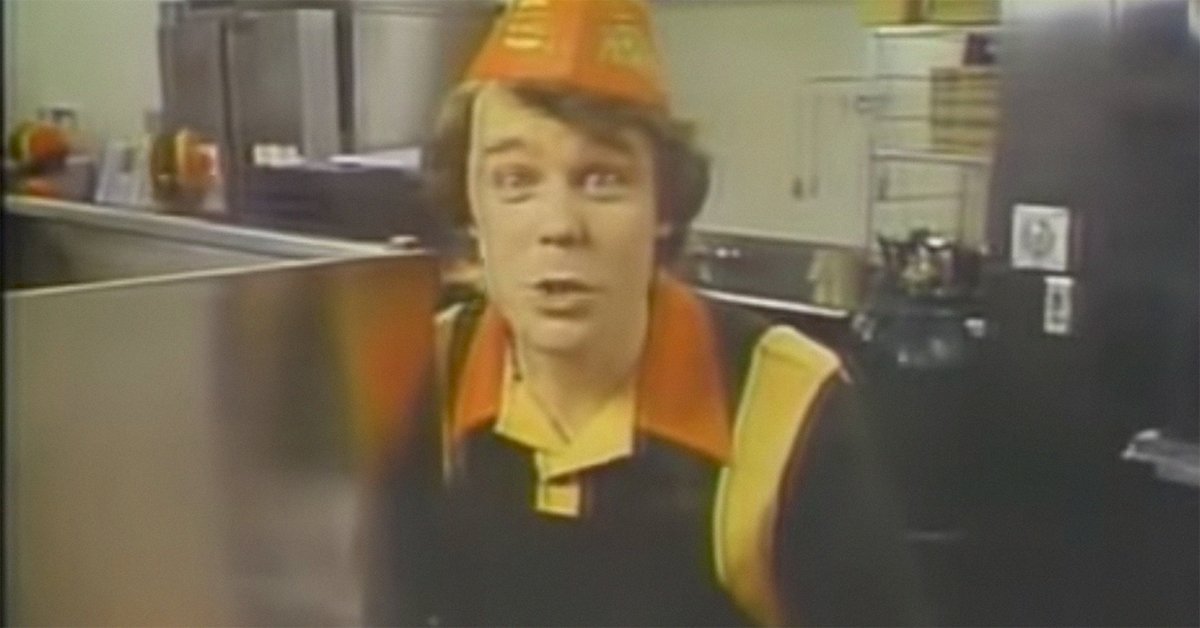
No, this was not the WC’s favorite hat of all time, though the uniform did turn me off polyester forever.

This week’s wine news: Are fast food wine pairings the next big thing? Plus, 7th century BC wine, and more confusing numbers about pandemic wine sales.

• Bring on the Whoppers: Who knew the Wine Curmudgeon would be able to discuss the fast food of his youth two weeks in a row? But Christine Struble, writing for the Foodsided blog, asks: “Are fast food wine pairings becoming the newest food trend?” Perhaps, but the concept isn’t new. I received a release in the blog’s early days from a brand called Fat Bastard touting fast food wine pairings; I’ve written about it here several times; and I taught them to wine classes at the late Cordon Bleu and El Centro. Because if you’re trying to reach people whose diet consists of fast food, what better way to teach pairings? Or, as I asked one group of Cordon Bleu students, “What do we pair with a Burger King cheese Whopper?” The consensus was supermarket-style merlot; plus, they got to hear about working the broiler at the Burger King on Skokie Road in Highland Park, Ill., resplendent in my polyester uniform and paper hat.

• 2,700 years ago: Archeologists have discovered the first Iron Age wine press in present-day Lebanon, reinforcing the idea that wine played a key role in the ancient world. They found the press, used to extract juice from grapes, during excavations at the Phoenician site of Tell el-Burak near the present day city of Sidon (an important trading hub in wine and other goods in the Mediterranean region). Grapes were grown in and around Tell el-Burak, which was inhabited from the late eighth to the middle of the fourth century BC. Researchers have also found amphorae, ancient wine bottles, in the area. But no one was quite sure how the grapes were turned into wine until this discovery.

• More conflicting statistics? Blake Gray, writing on Wine-Searcher.com, finds even more conflict in wine sales during the pandemic. He cites research from California’s Sonoma State University, which found that even though U.S. wine sales overall are up, 57 percent of U.S wineries say their own sales are down. Or, as we have noted here, there’s little sense in trying to make sense of any of the numbers. Ostensibly, “Big wineries are taking more market share at the expense of small wineries,” said the report. You will also be happy to know, according to one analyst at the same seminar, that Americans may have had more disposable income than ever, despite the pandemic. I wonder: What country is he living in?

Photo courtesy of MeTV, using a Creative Commons license

The WC wine business index: How much has the pandemic hurt the wine business?

wine businessThe statistics are all over the place; can we tell what’s going on in the wine business from the WC wine business index?

It’s a running joke among those of us who pay attention to the wine business that almost all the sales figures you read here and elsewhere are unreliable; the best numbers are educated guesses that have been fine tuned based on the data that is available.

There are many reasons for this, including the fact that lots and lots of wine is sold by lots and lots of independent retailers who aren’t tracked by companies like Nielsen. So why does this matter now? Because, according to one set of numbers, the wine business is in a pandemic-fueled crisis and things are going to get much worse before they get better. Or, if you believe these numbers, the past six months (as well as the past couple of years) are just a bump in the road and worrying about it is for small-minded people.

The reason for the discrepancies? Most agree that wine sales have declined since U.S. restaurants closed in March and April. What they can’t agree on is whether retail sales have made up most of the difference, so that the decline is insignifcant. Further complicating matters, based on yet more statistics, is that some insist sales are up for the year thanks to lots of foofry about the Internet, e-commerce, and wine delivery.

The WC wine business index

But no one has actually been able to figure out where we are seven months into the pandemic. Which is why the blog is unveiling the WC wine business index, where numbers aren’t the be all and end all. Instead, I’ve talked to retailers, producers, and marketers from around the country to see if I can sketch where the wine business is and what it means for consumers. Hence:

• There’s some desperate marketing going on in an attempt to boost sales. One major Texas wine event, forced to cancel, is trying to sell wine via email solicitations. Shudder. And one trade group wants you to buy its wine for the “iconic, uniquely-designed rose bottles that can be used for crafts and ingenious displays. …” Double shudder.

• Producer after producer, mostly smaller but also some larger, has told me that many of the 9,000 or so wineries that make up 90 percent of the U.S. total may be in danger of closing. The pandemic has shuttered their tasting rooms, and since most of them don’t sell much, if any, at retail, they depend on tasting room sales to stay in business.

• How about an Oregon pinot noir with a suggested retail price of $12.50? That means the street price is $10.99 or $11.99, almost unheard for Oregon pinot. In fact, most Oregon pinots that used to cost that little long ago went to $15 and $18. This points to way too much wine being made in Oregon, as well as slowing sales; the wine in question may be close to being sold at cost.

• The pandemic apparently clobbered the keg wine business, which has been a bright spot over the past couple of years. Wineries were putting their wine in kegs, just like beer, to sell to restaurants. But no restaurants means no need for keg wine. So keg producers are spending time and money to repackage their wines, often in boxes.

• Big Wine, save for a few glitches, seems to be doing better than most. One reason: It sells less wine, proportionally, to restaurants and more to supermarkets, which fits the pandemic consumer profile. In addition, consumers seem to be focusing on brands they know, and that fits the Big Wine product line.

And what about consumers?

Your guess is as good as mine. Most retailers tell me we’re trading down, and that Big Wine supermarket sales are OK speaks to that. And I’ve seen signs that some high-end wines, the $100 and up kind, are clawing for new business in a way they’ve never clawed before. That implies there is some trading down, though trading down from $150 to $75 isn’t exactly the traditional definition.

In this, there is still a lot of money in the hands of aging Baby Boomers, who will continue to buy their overpriced 92-point wine despite what else is going on. And the wine business will be happy to sell it to them to paper over any other problems.

So what’s the overall impression from the WC wine business index? That we’re in a holding pattern, though likely headed down sooner rather than later. Specific parts of the wine business are already suffering, and some are suffering badly, be it smaller producers or independent retailers.

But consolidation among producers and distributors has insulated the biggest companies from the worst of the pandemic. So expect to see two levels of pain over the next year or so: Something akin to an ankle sprain among the biggest companies, compared to a broken leg (or worse) among the smaller. And the consumer will get caught in the middle, which is exactly where the wine business likes us.

Photo courtesy of Philadelphia Inquirer, using a Creative Commons license