









 How frustrating is it to read about a wine you can’t buy? After all, how often do you read a review of a movie you can’t see?
Some of it, of course, is snobbery — and yes, Winestream Media, I’m talking about you. Some of it can’t be helped, thanks to the foolishness that is the three-tier system. In the last month, I’ve tasted a $10 Gascon white and had friends tell me about a $15 red Bordeaux and a $10 Sicilian red that would be perfect for the blog. But the first is only available in southern California, and the other two are only found in the northeast. Which means the wines don’t have distributors in any other part of the country, and don’t meet the generally available criteria I use for the blog.
But there are other, less obvious reasons why you read about wine you can’t buy:
• To create demand for the wine. I get a lot of emails from publicity people offering me samples of wine from regions unfamiliar to U.S. wine drinkers and that have limited, if any, distribution in this country. They do so in the hope that I’ll write about the wine, even if no one can buy it, so that my review will convince an importer or a distributor that there is demand for it. Yes, it’s a little backwards, but it’s one way to get around the restrictions of the three-tier system.
• Because it’s the next big thing. Wine recommendations are often driven by peer pressure, and if one hotshot sommelier or writer praises something, then everyone else has to do so as well. We’ve seen this for years with gruner veltliner from Austria, which is difficult to buy outside of the East Coast. The most recent next big thing is Greek wine, which can be well done and offer value but is even more difficult to find outside of the East Coast than gruner. In fact, during our recent podcast, that’s what Wisconsin retailer Nick Vorpagel lamented about Greek wine.
• Available wine is boring. I’m paraphrasing here, but I’ve heard and read this countless times: “Why should I write about a wine that anyone can buy in the grocery store?” This isn’t quite the snobbery practiced by reviewers who purposely write about wine no one can buy, but it’s almost as bad. Again, do reviewers not do movies because they’re in 5,000 theaters nationwide?
 ? The big get richer:
  Welcome to the 2015 Curmudgies, the fourth time we’ve given the awards to the people and institutions that did their best over the previous 12 months to make sure wine remained confusing, difficult to understand, and reserved for only the haughtiest among us. This year ?s winners:

 ? Lots of kinks to work out: Direct shipping, despite its successes over the past decade, is still a tiny part of the wine business, just single percentage points of the $17 billion in sales. One reason for that, of course, is three-tier, which makes it difficult for wineries to ship to consumers in different states. And three-tier has more to it than even those of us who think we know it can imagine; witness the
  This week, how grocery stores are changing the wine business:
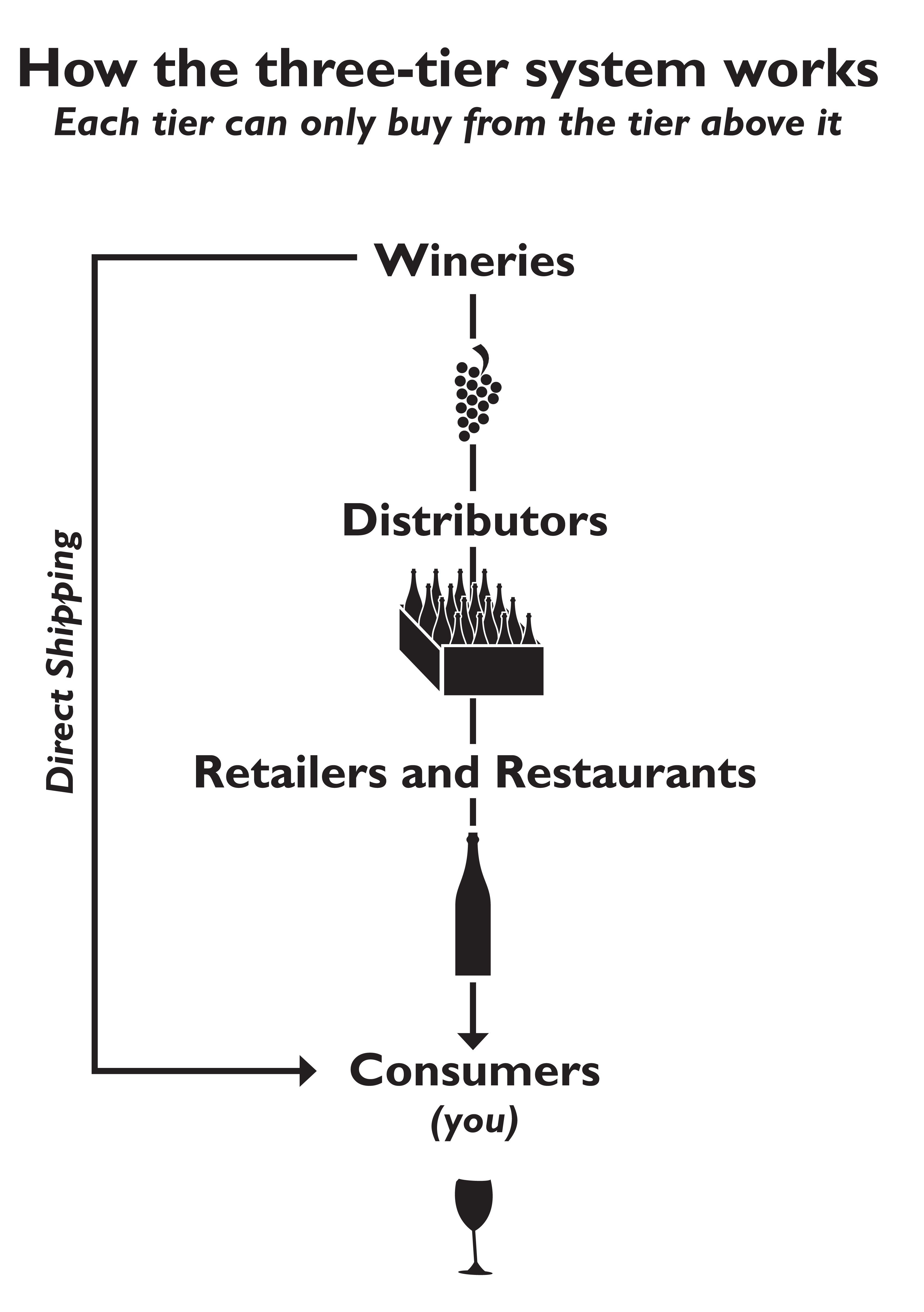 Paul Mabray, who knows this stuff better than almost anyone, says the end of the three-tier system is coming. It will probably be later rather than sooner, but Mabray is convinced that technology, combined with three-tier’s built-in inefficiency, will make the system obsolete.