Neither the pandemic nor the supply chain can stop this Spanish red from offering quality and value
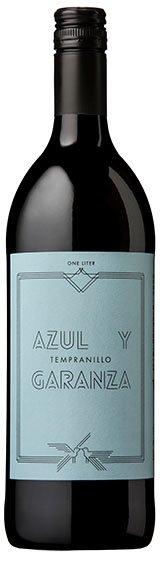
There are many things to like about the Azul y Garanza tempranillo. For one, it comes in a 1-liter bottle, so you get an extra glass for more or less the same price as a 750 ml. It’s made with organic grapes, for those who follow those things. And its importer, Valkyrie Selections, has a portfolio of terrific, inexpensive wines.
But the most important thing to like? This vintage of the wine ($15, purchased, 14.1%) continues the producer’s commitment to everyday wine that we can afford to drink and that won’t insult our sensibilities. The 2020 is a little more rustic and less fruity than previous vintages, while the alcohol is a touch higher than usual (no doubt an attempt to get around the Trump tariff’s 14 percent cutoff).
But the rest is as it should be. The wine opened up after about 20 minutes, showing dark cherry fruit and an almost peppery spiciness. The tannins are more upfront than usual, but they don’t get in the way. Serve it with anything meaty or Spanish, even a chickpea stew or lentils and sausages.
I’m not sure it will return to the Hall of Fame in 2024. Pricing has been all over the place, while availability has been spotty. But it’s still well worth drinking.
An enjoyable cheap Spanish red wine – a holiday gift for all of us
One of the first rules in this business – any kind of journalism, in fact – is not to get too friendly with the people you write about. What happens when you have to say something they won’t like?
But that’s really hard to keep in mind with Patrick Mata of importer Ole & Obrigador. Patrick is just not a nice guy, but polite and professional and I’ve quoted him in my wine writing, here and elsewhere, and he has made several podcast appearances.
Fortunately, his wines are usually so well made that there is rarely any need for harsh words. One of my favorites is the Flaco ($11, purchased, 14.5%). It has been featured here three previous times, and this vintage shows again that it offers quality and value.
In fact, the 2020 Flaco is terrific even though the listed alcohol is higher than usual. I suspect that’s a tariff maneuver; the wine doesn’t taste too hot or alcoholic. A friend of mine, who is even more alter to alcohol for the sake of marketing than I am, was shocked when I told her how high it was.
Otherwise, the Flaco is as it always is — simple, enjoyable and varietal. That means some spice, some black cherry fruit, and minimal tannins. It doesn’t taste like a fine, aged Rioja, but – all together now – “it’s not supposed to.”
You can even chill this a little; serve it with winter beef dishes.
The Wine Curmudgeon pairs wine with some of his favorite recipes in this occasional feature. This edition: three wines with my mom’s chicken parmigiana
My mom is a fine home cook, and one reason I write about wine and cook as much as I do is because she was so good. We even watched Julia Child together, in those long ago days when you had to keep a pad handy to write down the recipe.
Chicken parmigiana was always one of her best dishes, and my brother and sister would look forward to it as much as I did. In fact, I still have the recipe, written on a sheet of yellow legal paper, that I took to college with me.
Now, is this classic chicken parmigiana? Nope. Actual Parmigiano Reggiano was not easy to find then. But know that Mom never used the stuff in the green plastic shaker. And, frankly, sometimes classic is in the eye of the beholder. Food, like wine, is as much about who you enjoy it with as the dish itself.
I’ve tweaked the recipe a bit over the years, making the coating simpler and less thick; it’s parmigiana, not chicken fried steak. And I use a Julia Child tip for the cheese — vary it for more interest (but Reggiano, if I have it). One thing I haven’t changed: Serve it with green noodles, because we always did.
• Abacela Fifty-Fifty Tempranillo-Malbec 2017 ($32, sample, 13.8%): Lush, rich and full, showing off Oregon malbec and tempranillo — lots of dark fruit, red and black, a little spice, and fine tannins. Very nicely done.
• Renieri Rosso di Montalcino 2017 ($13, purchased, 14.5%): Polished, structured, and enjoyable Italian sangoviese blend that tastes like it costs much more than the $13 I paid for it. How often does that happen? Imported by Southern Glazer’s
• Gru Montepulciano d’Abruzzo 2017 ($11, purchased, 13.5%): Italian red that takes montelpuciano to a place I didn’t think it could go — earthy, funky, deep, dark, and black cherry fruit. Somehow combines all that is wonderful about Italian wine with modern winemaking techniques. Highly recommended. Imported by R.S. Lipman Company
The El Coto Rioja Crianza is one of the world’s great cheap wine buys
There’s a reason why the subhed on this post is so similar to the one on this post. Both are Spanish red wines from the Rioja region, and the El Coto, in its own way, may offer even more value than the CVNE Cune.
Sometimes, despite all going on around us, cheap wine truly is grand.
The main difference between the El Coto Rioja Crianza ($10, purchased, 14.5%) and the CVNE Cune is price. For some reason, and even before the Trump wine tariff, El Coto had raised its prices into the premiumization tier, $15-$18 (destroying the value of its otherwise excellent rose in the process). So when I found this for $10 at Total Wine, I bought it. Should have bought a case.
The wine offers spice, earth, cherry and raspberry fruit, a touch of oak, and muted acidity. The high alcohol is not noticeable, and may be well a tariff accounting trick. And, that it tastes like this at this age, is beyond me. A value at $15, and a steal at this price.
Some wine geek stuff for anyone who missed the CVNE Cune post: Crianza is the most basic of the three kinds of Rioja, which means it gets less aging, sees less oak (if any), and costs the least compared to reserva and gran reserva. There are also requirements for which grapes can be used, so most of the wines are mostly (if not all) tempranillo.
Drink this with almost any simple red meat, roast chicken, or the blog’s couscous jambalaya. Certain to return to the Hall of Fame in 2022 and will likely be on the short list for the 2022 Cheap Wine of the Year.
CVNE’s Rioja Crianza remains one of the most dependable cheap wines in the world
The Wine Curmudgeon was concerned when I checked the alcohol on this Spanish red from the Rioja region, since it was about a point higher than usual. That’s hardly elegant and classic, which is what this wine – even at this price – is supposed to be.
But there was no reason to worry.
That’s because CVNE’s Cune Rioja Crianza ($10, purchased, 14.5%) is as dependable as the moronic management of my once-beloved Cubs. You can always count on the Cubs’ bosses to ruin the team, just like you can always buy this wine and know exactly what you’ll get.
That means a fair price for tempranillo from Rioja that tastes like tempranillo from Rioja: A bit of cherry fruit, maybe some orange peel or spice, a touch of tannins, and balanced acidity. And I didn’t detect the higher alcohol. In this, the Cune could be the definition of a simple, but not stupid, wine. Which, around here, is high praise.
Some wine geek stuff: Crianza is the most basic of the three kinds of Rioja, which means it gets less aging, sees less oak (if any), and costs the least compared to reserva and gran reserva. There are also requirements for the grapes that can be used, so most of the wines are mostly (if not all) tempranillo.
Chill this a touch and drink it with almost any simple red meat, roast chicken, or the blog’s pork shoulder. Certain to return to the Hall of Fame in 2022.
This vintage of the Flaco has a little more structure and more oomph in the back; it’s not as soft or as fruity as some of other others. That means a touch more spice, juicier cherry fruit, and more noticeable tannins.
Highly recommended, and certain to return to the 2022 $10 Hall of Fame. Drink this with almost anything beef or pork, and it would complement roast chicken as well.
This vintage of the Spanish Azul y Garanza tempranillo isn’t as interesting as the past couple, but still delivers quality and value
This is the fourth vintage I’ve tasted of the Azul y Garanaza tempranillo, a Spanish red. And each year has been different from the others. That’s incredibly refreshing in our post-modern, all wine must taste alike world.
This time, the Azul y Garanza tempranillo ($13/1 liter, purchased, 14.1%) is a little more rustic and tannic than past vintages, with less cherry fruit. In this, it’s about the opposite of the first vintage I tasted, the 2016, which was softer and fruitier than I normally like. The Azul probably isn’t Hall of Fame quality this time, like the 2017 and 2018. But, like the 2016, it is perfectly enjoyable to drink.
And it remains a fine value, and not just because it’s a liter, with the extra glass and a half of wine. (And, in four vintages, this is the fourth different price I’ve paid – all bought from stores in Texas).
One other thing: Don’t worry about the 14.1 percent alcohol, which is likely a little sleight of hand to get around the 25 percent Trump wine tariff, which applies to Spanish and French wines less than 14 percent. This “adjustment” is happening quite a bit, and it really doesn’t affect the quality of the wine.