
Tag Archives: Rhone wine

Wine of the week: Ortas Cave de Rasteau Le Grand Jas 2014

Rasteau Le Grand JasThe Ortas Cave de Rasteau Le Grand Jas is Hall of Fame caliber wine, but don’t count on being able to buy it – unless you live in Dallas or Brazil

There are two things to know about the Rasteau Le Grand Jas. First, it’s one of the best cheap reds from the Rhone that I’ve tasted in years, a potential Hall of Fame wine. Second, that you probably can’t buy it.

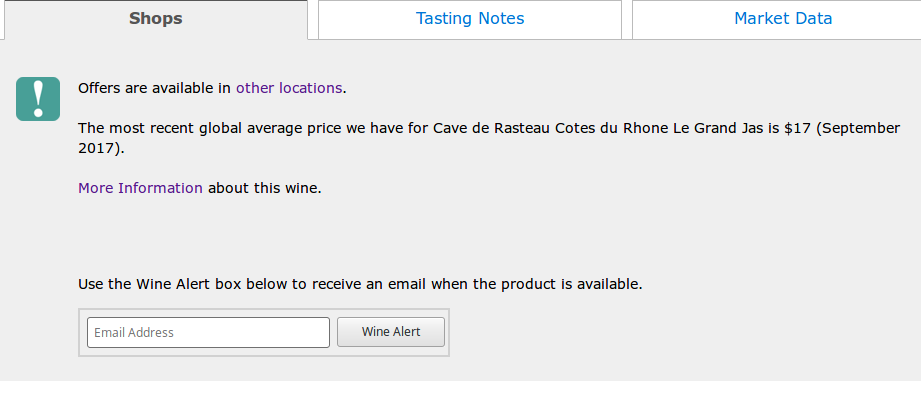
Which, in my frustration, is why the Rasteau Le Grand Jas ($11, purchased, 13.5%) is the wine of the week. Even though I bought it at a large regional specialty grocer, Wine-Searcher’s exhaustive database says it’s only sold in Brazil.

How is this possible? It’s all about private labels and exclusive brands, the new consumer wine scourge. They have made availability an even bigger problem than it has traditionally been – and it has always been a big problem. Increasingly, just because I buy a wine in Dallas – or you buy one in your part of the country – there’s no guarantee anyone else can buy it in anywhere else unless it’s a Big Wine label.

Hence, the Rasteau Le Grand Jas. It’s an exclusive brand, where the wine is only sold by one retailer in this country (or, in some cases, one retailer in each part of the country). The best-known of these are Trader Joe’s Two-buck Chuck and Costco’s Kirkland private labels; you can’t buy them anywhere else. The idea behind private label and exclusive brand is to offer consumers something they can’t get anywhere else to ensure their loyalty and to enjoy higher profit margins than with national brands like Kendall Jackson or Barefoot.

Private label and its like have become so common in wine that Nielsen wants to track them, but they’re so difficult to identify that the company – which has been tracking retail sales for decades – can’t always tell which wines to count. And, if you look at the Rasteau Le Grand Jas, there’s no indication it’s only sold in the store where I bought it. Or in Brazil.

Compare this to private label peanut butter or ketchup, where it’s obvious what you’re buying. This makes knowing whether I can write about a certain wine even more difficult. How can I tell if it’s exclusive or private or sold throughout the U.S.? One of the only clues for foreign wines is the importer; there are a handful that specialize in private and exclusive labels. But not even the geekiest among us knows all of them. In this case, it’s Sabaca Beverage Group in suburban Chicago (which apparently doesn’t have a website — talk about not attracting attention).

Know, too, that private label and exclusive wines inhabit a very gray area under the three-tier system. In most states, distributors aren’t allowed to offer a wine to just one retailer or restaurant, but must make it available to everyone in their market. So how does Two-buck Chuck end up only in Trader Joe’s? Somehow, all the wine is always sold to Trader Joe’s before anyone else has a chance to buy it. In other words, there’s a gentleman’s agreement, where I won’t complain about your private label if you don’t complain about mine.

So here’s what you need to know about the Rasteau Le Grand Jas, in case you’re in Dallas or Brazil: It’s a grenache blend that speaks to the Rhone, with grip and punch and terroir, as well as black pepper and deep, dark black fruit. Highly recommended, and just the wine for fall beef and chicken braises.

Mini-reviews 102: Saint-Cosme, verdejo, rose, Prosecco

saint-cosmeReviews of wines that don’t need their own post, but are worth noting for one reason or another. Look for it on the fourth Friday of each month.
• Saint-Cosme Côtes du Rhône 2016 ($14, purchased, 14%): Second ordinary vintage in a row of one of my favorite French reds. This one, too, doesn’t have enough grip (though there is more than in the 2015). It has quality Rhone cherry fruit and some pepper, but the middle is shallow. Maybe bottle age will help. Imported by Winebow.

• Real Compania de Vinos Verdejo 2014 ($10, purchased, 12.5%): This Spanish white is tired and worn out, with a little spice but not much else and none of verdejo’s wonderful fresh character. Beware older vintages of wine you’ve never heard of from producers you don’t know. Imported by Quintessential.

• Vignerons de Tavel Le Rosé des Acanthes 2016 ($7.50, purchased, 13%): This French pink isn’t especially crisp, the cherry fruit isn’t all there, and it’s a little stemmy. Having said that, it’s perfectly acceptable for the price. More important, this is the sort of ordinary rose we never saw when pink wasn’t popular. Now, these kinds of wines are all over the place. Imported by Fruit of the Vines.

• Cecilia Beretta Prosecco Brut Millesimato 2015 ($15, purchased, 11%): This Italian sparkler is bland and inoffensive, but sufficiently bubbly – about what I have come to expect from Trader Joe’s wines. Imported by Latitude Wines.

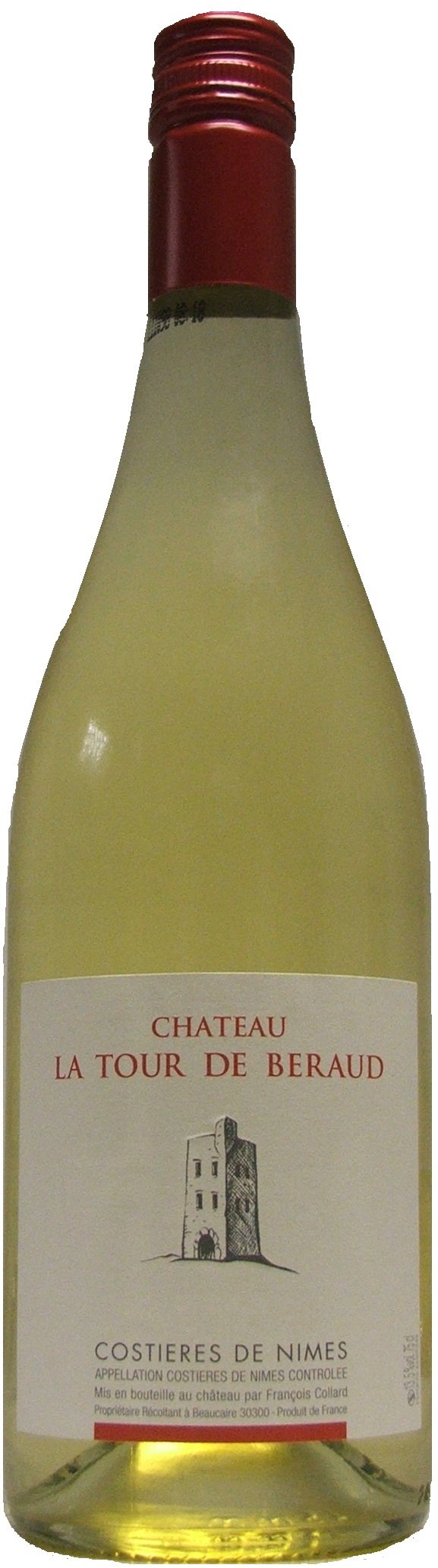
Wine of the week: Château La Tour Beraud Blanc 2015

beraud blancThe Château La Tour Beraud Blanc is a touch pricey, but still a fine white Rhone value

Know first that a couple of years ago, the Chateau La Tour Beraud Blanc would have been $9 or $10 and been in the $10 Hall of Fame. But the P word has kicked its price up, and so I can’t wax quite as poetic about it as I would have.

Still, the Beraud Blanc ($13, purchased, 13.5%) is a value, and especially for white wines from the Rhone region of France. That’s an area where quality has always been iffy for less expensive wines, and premiumization has made the situation that much worse.

This is a delightful, fresh, and zippy white blend (mostly grenache blanc, but also roussanne and marsanne), with juicy, soft lemon fruit – a white Rhone blend the way it should be, without any off-putting oiliness or that uncomfortable heaviness in the back. All in all, I’m glad I bought it, even though it was one-sixth of the cost of my $83 case of wine.

Yes, a Thanksgiving wine, but also something that will pair nicely with all that leftover turkey over the next week.

Wine of the week: Saint-Cosme Cotes du Rhone Rouge 2012

rhone_sud_saint_cosme_cotes_du_rhone_rouge_2012The Wine Curmudgeon has long been a fan of Saint-Cosme’s cheapest wines, the wonderfully-named Little James Basket Press red and white (and I can’t believe I haven’t done the white as a wine of the week yet). So I had high expectations when I stepped up a notch to the winery’s basic Cotes du Rhone red ($13, purchased, 14.5%).

These hopes were not disappointed. The rouge, made of syrah, was full of dark fruit (currants?), some earthiness and even a touch of licorice, which seemed like a lot to get from something at this price. Best yet, the high alcohol — about a point more than I expected — doesn’t get in the way of the wine. The higher alcohol seems natural, and not forced on it to get more fruit flavor and higher scores, as often happens in California. I don’t think it’s a coincidence that the tasting notes are almost apologetic about alcohol level.

Highly recommended, and another example of what a French wine can be that hasn’t sold its birthright to the International Style of Winemaking. This is a winter wine for stews and soups and strong cheeses after tramping snow and ice off at the front door.


Wine of the week: Domaine de la Janasse Terre de Bussiere 2009

Just when the Wine Curmudgeon thinks that he can ?t be surprised by wine any more, I taste something like this. Is it any wonder that this is the best job in the world?

My reaction to the first sip was ?Wow! ? ? for just that reason (and because, in my notes, wow stands for a possible wine of the week). The Janasse ($15, purchased, 15%) is a red blend from the Rhone in France, but with some very un-Rhone-like merlot added to syrah and grenache. I don ?t pretend to understand what ?s going on here, but I didn ?t need to understand to enjoy it.

This is an earthy and fruity wine (black cherries?), if not especially complicated, and another example of the fine values that are available from the Rhone. It ?s an end of the summer barbecue wine, perfect for the porch.

And don ?t worry about that 15 percent alcohol level; frankly, I don’t believe it (though 2009 was a very warm vintage in the Rhone). The wine wasn ?t hot or overdone in the way that so many California 15 percenters are, and I only realized it was so high in alcohol when I did my notes.

Wine of the week: Domaine de Cabasse Les Deux Anges 2009

cabasse-deux-angesRhone wines remain a mystery to most American wine drinkers, and not just because they have very French names and are often difficult to find on store shelves. It ?s also because they ?re made with grapes that aren ?t cabernet sauvignon and merlot; for most of us, that difference is enough so we ?ll buy something else.

Case in point is the Deux Anges ($10, purchased, 13.5%). It ?s made with grenache, syrah, and carignan, and the name ? along with the almost Baroque-like angels on the label ? is enough to turn off any U.S. consumer who expects to see a cute animal or marketing-driven name.

The wine itself, like so much cheap wine from the Rhone, is a revelation. It ?s accessible, yet still tastes like the Rhone — juicy red fruit from the grenache, lots of peppery spiciness, noticeable tannins, and a bit of a finish. But it isn't too rough, which is often the case with this style of wine ? call it rustic, the kind of wine someone in a Van Gogh painting would drink. How often can you say that about California merlot?

It ?s a grilled meat or cheese kind of wine; highly recommended, and a candidate for the 2014 $10 Hall of Fame.

Wine of the week: Little James’ Basket Press NV

This bottle could well be the future of the much-troubled French wine business. If so, the future may not be as dire as so many fear.

The Little James ($12, purchased) is a red blend made by Chateau de Saint-Cosme, a 450-year-old Rhone producer whose offerings include several $100, high-score wines. It ?s not exactly like Silver Oak or Screaming Eagle doing a $12 wine, but it ?s close enough.

How do they do it? By mixing current vintage wine with older wine, which is less expensive than using all current vintage juice. This version of the Little James is about half from 2011, and the rest comes from wine as old as the 1999 vintage.

Why do they do it? Because the French wine market, save for the most expensive wines, has been slowly vanishing for the past two decades. There are dozens of reasons, but the main one is that the rest of the world makes cheap wine just as well, if not better, than the French, and their unsold wine sits on store shelves or in warehouse vats until it ?s thrown out.

The Little James is part of the attempt to recapture that market. It ?s 100 percent grenache, a sturdy Rhone grape, and it smells and tastes of the Rhone. There is barnyard and bacon fat on the nose, and earthy, black fruit that gives way to a darkish finish. All in all, it ?s an impressive effort that would pair with pizza, roast chicken, and almost anything with roasted mushrooms. It ?s certainly not what I expected given the cutesy label and name (and a tip o ? the Curmudgeon ?s fedora to Eddie Eakin at Dallas ? Veritas, who told me about this).

One caveat: Prices for the Little James are all over the place; I ?ve seen it for as little as $10, and as much as $17. At $17, it ?s not that great a value, and I suspect those retailers are trying to capitalize on St. Cosme ?s reputation.