Tag Archives: local wine

Is Texas wine at a crossroads?

Texas wineTexas wine may be approaching a crossroads, something that was evident during the 31st annual Lone Star International wine competition this week. That’s because some of the best wines at the competition weren’t Texas, but included California wines sold by Texas producers. Which is not supposed to be the point of what we’re doing here.

Years ago, when a lot of Texas wine left much to be desired, what happened this week wasn’t unusual. Or, as I told the competition organizer when I first judged Lone Star in 2005, “Give us better wines, and we’ll give you gold medals.”

Given the revolution in Texas wine quality and production over the past decade, I had hoped those days were gone. But the uneven quality of many of the wines I judged, this year and last, has me wondering. Has Texas wine reached a plateau, where quality isn’t going to get any better given the state’s resources and climate? Or is something else going on?

After the jump, my take on what’s happening: Continue reading

Oregon’s example for the regional wine business

Oregon's example for the regional wine business
Christopher Mazepink: “It’s all about Brand Oregon.”

Those of us who care about regional wine are often frustrated by its “me first” approach, the way too many wineries act like little kids who hog all the toys. It’s always about what they want, even when that’s not what’s best for regional wine.

That’s why it was so refreshing to Oregon winemaker Christopher Mazepink talk about how far Oregon wine has come in the past 15 years, and why it has come so far so quickly. Fifteen years, given the centuries-long history of wine, is hardly any time at all.

“We put Oregon’s wine industry out front, before the individual brands,” says Mazepink, the winemaker at Archery Summit who was in Dallas for a big-time wine tasting. “It’s all about Brand Oregon. That’s pretty unique in the wine world.”

That approach, he says, has paid off in Oregon’s popular and critical acclaim. Yes, it’s important that the state’s wine quality has improved over the last decade and a half, and that it has become one of the world’s great producers of pinot noir. But it also matters that Oregon winemakers work together, help each other, and generally avoid the sniping and backbiting that plagues much of the regional wine business. It’s something I saw all too often during my time with Drink Local Wine.

“When I travel with Oregon winemakers, we don’t throw anyone under the bus,” says Mazepink. “We understand that what’s good for one winery is good for all of Oregon wine. It is Brand Oregon, and that’s what we talk about before we talk about our wineries.”

Would that more people in regional understood that approach — that it’s not wineries or even regions within a state that matter in the long run, but the entire state and everyone who makes wine in it. After all, it’s not that don’t have an example, because Oregon has demonstrated that it works.

Cheap wine, regional wine, and the typical wine consumer

Don-Quixote-Windmill
Maybe tilting at windmills is beginning to pay off for those of us who want wine to be more than scores and toasty and oaky.

Those of us who tilt at wine’s windmills — scores, snotty wine drinkers and critics, and the Catch-22 that is availability — sometimes wonder if anyone cares.

So when we find out that people do care, even the crankiest of us get big smiles. That was the case at the American Wine Society conference last month, where 500 or so of the 25 percent — the wine drinkers who consume 93 percent of all wine in the U.S. — were on hand for seminars, presentations, and the like. The people I met were open, curious, and interested in new approaches to wine — far from what I expected, given how all that tilting reinforces my natural cynicism.

What happened and what it means, after the jump: Continue reading

el centro wine class

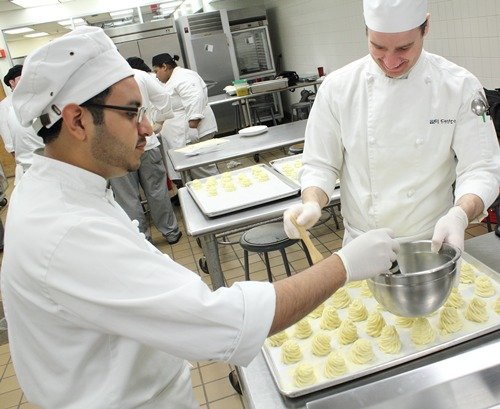
A college enology class gets its fill of the Wine Curmudgeon

The video in this post was part of my appearance on Oct. 3 at a viticulture and enology class at Dallas’ El Centro College, which has one of the best culinary programs in the southwest. I offer wisdom on how to learn about wine, the idea behind cheap wine, and the joy of regional wine — all in less than eight minutes. I also managed to plug The Cheap Wine Book.

The class took 90 minutes, and at the end we tasted six Texas wines. The students were mostly pleased with what they tasted, though there was the usual disagreement that occurs at these sorts of events. One group would like a wine because it was fruity, while another wouldn’t like the same wine because it was fruity. This, as I always point out, is just one reason why wine is so much fun. One can argue and drink wine while arguing.

One other point worth noting: The students were fascinated by the idea of $3 wine, and we spent a fair amount of time discussing whether they were worth drinking. Many of them, as it turned out, were big fans of Aldi’s $3 wines.

El Centro College’s Alex Curran shot and edited the piece, and did a terrific job working with a very awkward Wine Curmudgeon. And did I really say I was one of the leading wine writers in the U.S.? Unfortunately, given when we did the video, he had to use the old website in the montages.

And why don’t I have a hat on? It was raining the day we shot the video, so I didn’t wear one. The legendary Gus Katsigris, who teaches the class and helped start the El Centro culinary program, was very disappointed with me. Gus served Texas wine at his Dallas restaurant in the late 1970s and is one of the true standup guys in the food business, so I should have worn a hat. What are a few water stains among friends?

Texas and Drink Local Wine’s sixth annual Regional Wine Week

Texas drink local wineRegional wine week started yesterday, and what kind of co-founder and past president would I be if I didn’t participate? So here are my links for this year’s effort, focusing on the changes in Texas wine since I started writing about it:

? How much more accepted is Texas wine than just five years ago? The culinary students I spoke to on Thursday night at Dallas’ El Centro College were interested not because they were supposed to be, but because they really wanted to know about Texas wine. Contrast this with the culinary students I taught at the Cordon Bleu, whose main interest in Texas wine came when I drew my not very accurate map of Texas on the board.

? Not only has Texas wine changed, but so have the people drinking Texas wine — the focus of a story I wrote for the Texas Wine and Trail website. The new generation of Texas wine drinkers I talked to this fall were not “the older Anglos who have powered the local wine movement in the state since the 1990s, and doing yeoman work in the process. Rather, they were younger and, at Grapefest and especially at its People ?s Choice wine tasting and competition, less white. I talked to a Chinese husband and wife who asked such detailed questions about what was going on and which wineries to visit that I couldn ?t answer all of them.”

? A French producer made sparkling wine in the state 30 years ago, though the winery eventually failed. Still, one has to admire the effort: “Texas-made sparkling wine is rare, even today. Thirty years ago, when there were only a handful of wineries in the state, it was much less practical. Sparkling wine is difficult, costly, and time-consuming to make, requires top-notch grapes, and needs an established market for its products.”

? The Hill Country is the focal point for Texas wine for most consumers, and it has undergone huge changes, too — not only in the number of wineries and quality of the wine, but in how the region sees wine in terms of tourism and its economy. Ten years ago, wine was an afterthought; today, Highway 290, with its dozens of wineries, could be a wine trail in California.

? And what would a Texas wine post be without reviews of Texas wine?

One more sign local wine has made the mainstream

If this wasn ?t enough, or even this, there ?s this ? that 11 regional winemakers made Michael Cervin ?s list of the 100 most influential winemakers in the United States.

Frankly, I was shocked, and had not even looked at the list when it came out. Cervin is a California wine writer who didn ?t ask me for recommendations, so I figured this would be another Winestream Media glorification of California cult wine.

Shows how much I know, and that I always end up breaking the first rule of wine writing, no matter how hard I try not to ? taste the wine before you judge it. Or, in this case, read the list before you judge it.

?We have to stop being so myopic in our choices about where wine comes from, ? says Cervin. ?This is a big deal that there are so many regional winemakers on the list. There ?s a paradigm shift underway, and it has been going on for a while. ?

The top-ranked regional winemaker was Texas ? Kim McPherson of McPherson Cellars at No. 20, and other notables included Andrew Meggitt of Missouri ?s St. James Winery at 64 and Fred Frank of New York ?s Konstantin Frank at 52.

Two things impressed me about the list ? that Cervin had done his homework, and knew who people like Missouri ?s Tony Kooyumjian of Augusta Cellars (89) and Kris Kane of Brix 21 in New York (88) were, and that his methodology was sound. Cervin just didn ?t rank winemakers based on his opinion, but got suggestions from retailers, sommeliers, and other wine professionals. This included Doug Frost, who knows more about regional wine than almost anyone else in the country, myself included. Cervin ?s standard for ranking: The winemaker had to make a range of great wine, and had changed the perception of wine made in his or her region.

?It ?s important that every state is given its due, ? says Cervin. ?If you dismiss them because of what they are, you ?re doing a complete disservice to wine as a whole. ?

Hear that, Winestream Media?

In fact, the list was so well done that it invites comment. Noticeably missing were Colorado ?s Guy Drew (and no one from Colorado made the list) as well as Luca Paschina of Barboursville Vineyards in Virginia. I was also surprised that one of New York ?s top riesling winemakers, like Fox Run ?s Peter Bell, wasn ?t included. And yes, Cervin said with a sigh, he had heard about names left out, and especially Paschina.

Which is just one more example of how many people care about regional wine. Why else would they complain?

The New York Times gives its seal of approval to regional wine

So now we can all take a deep breath, pat ourselves on the back, and enjoy the warm glow of a job well done.

Probably not. But we ?re a lot closer to that point then we were when Drink Local Wine took its first steps almost six years ago. That ?s what happens when perhaps the world ?s most important news operation writes this in a front page story in Sunday ?s business section:

As American palettes have evolved from Budweiser to Brunello di Montalcino, wineries have popped up in all 50 states, from the shores of Lake Michigan to the Texas Hill Country. While California dominates, accounting for 90 percent of the country ?s production, state governments nationwide are looking to wine to drive tourism and bolster agriculture.

Even more important is that the story was in the business section, with its hard news slant. This was not a ?Gee, isn ?t it cute, someone is making wine outside of California and France ? story, but a money-focused, results-oriented piece in a part of the paper where Gretchen Morgenson (who deserves about 20 Pulitzer Prizes for her work) tell us how Big Banking is playing fast and loose with our tax dollars. Can ?t get much better validation than that.

And the Times ? piece will make it OK for editors at newspapers, magazines, TV stations, and other news outlets to do regional wine stories ? even, and especially, if they had dismissed them before. That ?s the way the news business works: If the Times says something is a story, then it ?s a story. I can hear assignment desk bosses now: ?Say, isn ?t there a winery around here we can do something on

Yes, it would have been nice if Drink Local Wine had been mentioned, but who am I to quibble at a time like this? This spread, combined with Times wine guru Eric Asimov ?s enthusiastic endorsement of New York wine in 2011, reinforces what we have been arguing since 2008: That regional wine is both economically and critically viable, and that the wine business and its consumers ignore local wine at their own risk.

Like Texas, where the Perry administration sacrificed wine (as well as education and highways and green energy) to the governor ?s presidential ambitions in 2012, slashing the budget to establish his conservative credentials. We saw where that went. Hopefully, it ?s not too late for the state to restore the pittance it spent on wine research and marketing so that Texas isn ?t left behind as regional wine joins the mainstream.