

Tag Archives: Gallup poll

Gallup alcohol survey 2023

woman in coffee shop
“You know, maybe I will give spirits a try.”

We’re drinking less, and wine remains something for women and the wealthy, neither of whom are young

The good news for the wine business in Gallup’s 2023 alcohol survey is that things aren’t much worse than they have been – so no horrible new results, just the same old bad news. American are drinking less and wine remains something only women and the wealthy like. And, of course, wine drinkers aren’t young.

Which, given the continuing bad news for wine, is actually, sort of, almost, kind of, a shot in the arm. It is worth noting that wine dropped to third behind beer and spirits in preferred alcoholic beverage; wine and spirits have been about equal in preference since 2019.

John Gillespie, who oversees the Wine Opinions consultancy, says the survey does offer “more of the same.” The growth of spirits, with the caveat that he hasn’t looked at all of the data yet, “spirits is the interesting factor – and has been for a few years.”

Among the survey highlights:

• Abstention increased from 33 percent to 38 percent, while “overindulging” remained at near historic lows. Don’t make too much of the rise in abstention; it has stayed in the same narrow band, between 35 and 40 percent, since 1982.

• Women are about three times as likely as men to say wine is their preferred beverage. Men choose beer over wine by about the same margin. However, more women than men prefer spirits. That number was about equal last year, and may indicate women are trending away from wine to spirits.

• Beer is the most preferred among all age groups, but spirits — again — are gaining on it among those 18 to 34. And wine is second to beer even among those 55 and older.

• And, if you want something to really worry about: Even among the wealthiest Americans, those with household incomes of more than $100,000, wine holds only a one-point advantage over beer. That difference was six points in 2021.

Follow-up: Gallup alcohol survey 2022

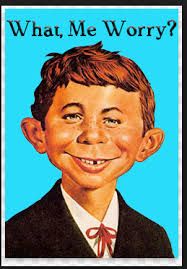
Mad magazine's A;fred E. Neuman
Alfred E. Neuman, the poster boy for the post-modern wine business

Another study that cries gloom and doom? Who cares?

Last year, when the Gallup survey about U.S. alcohol consumption showed that no one who wasn’t an older, college educated woman much cared about wine, the wine business was in an uproar. I even sold two freelance pieces about the reaction to the survey.

But what happened this year, when the survey showed mostly the same thing — as well the even more worrisome continuation of the drinking less trend?

The reaction was the opposite: What, me worry?

In other words, the wine business has made peace with declining sales, less alcohol use, and its generation gap. It is banking on premiumization, even though there are signs that that premiumization is wearing itself out, and what the blog’s official wine marketer calls “consolidation to grab market share;” that is, when sales decline, just buy another company to paper over the problem.

Obviously, this is not a long-term solution. But as wine has demonstrated over the past decade, long-term solutions are for suckers. The mantra these days is short-term profits, and the rest will work itself out.

Hardly a sound business plan, but what do you expect from a business that still acts like it’s 1995?

The other intriguing bit about the survey? There didn’t seem to be any difference in alcohol preferences based on politics. That’s a change from previous studies, including one I noted when I wrote the alcohol piece for the late American Demographics magazine. That showed a relationship between wine and more conservative voters; that doesn’t seem to be the case here.

Gallup alcohol survey 2022

Man holding bottle of beer
“I’m going to get wasted, but it sure won’t be with wine.”

We’re still not falling down drunk, and older, college educated women are still carrying the wine business on their back

The good news in this year’s Gallup survey about U.S. alcohol consumption is that wine – which got a kick in the teeth last year – doesn’t seem to be any worse off. Which, given how badly it did in the 2021 survey, is very good news.

And we still don’t drink very much, despite all the scare mongering over the past couple of years. Abstention remains around one-third, where it has been for decades, and those of us who do drink are still drinking less: “3.9 drinks in the past seven days, which is roughly in line with the readings historically. In 2003 and 2004, the average was around five drinks a week.”

In other words, a 20 percent decrease. Now how are we going to pass out on the sofa every night with those numbers?

Briefly:

• Wine, beer, and spirits are split, each around 30 percent, as the alcohol of choice. The big loser is beer, which apparently lost share to spirits and continues its decades-long decline as our favorite alcohol.

• Just 17 percent of men say they prefer wine, compared to 49 percent of women. And that’s not as bad as last year, when the numbers were 15 and 49.

• Wine’s age gap is still with us – about one-quarter of those younger than 39 say they prefer wine; the number is 39 percent for those 54 and older.

• My favorite? Wine is ever more bougie – it’s preferred by those who have attended college by a 2-1 margin over high school graduates.

Finally, Gallup included some silliness about how we perceive alcohol; was a respected multi-national trying to appease the neo-Prohibitionists? Not surprisingly, about three-quarters of us say alcohol has some sort of negative affect on society and on drinkers. What did they expect to find? I’d have answered the question the same way, and I write about alcohol for a living.

Photo: Tobias Tullius on Unsplash

The wine diet will solve all of wine’s problems

wine dietThe wine diet is my mea culpa for suggesting that a Gallup Poll about wine’s decreasing popularity might be accurate

The Wine Curmudgeon stands properly chastised after this week’s post asking whether Americans are turning away from wine. My tiny part of the Internet went crazy – two-thirds more visitors to the blog than normal, comments and emails, and posts on other websites questioning my credulity and sanity.

Because, of course, Americans love wine. What does Gallup know about polling?

So I must hang my head in shame. Who cares that one visitor emailed, “You hit the nail on the head regarding why wine sales have slumped. I never was a beer drinker until all these great craft beers began appearing on the scene and the price of a ‘good’ glass of wine at restaurants kept going up. Why should I pay $12-$14 for a glass of wine when I can have a really good craft beer for $6?”

Or that another left a comment, saying, “A lot of people are turning away from activities, purchases, and lifestyles that seem to be an integral part of anything associated with snobs and pseudo wealth. Wine falls into that category.”

Because, of course, Americans love wine, and anyone who disagrees with that isn’t a real wine drinker. As one very critical visitor suggested recently, I am entirely too negative about wine, as well as a coward. That the visitor apparently used a fake name is probably my fault, too.

Hence this post about the wine diet, which is my way to make amends for any damage I have done by writing honestly and sincerely about the wine business. Because, of course, Americans love wine, so what need is there for me to do what I do?

Women’s Health magazine reports that “Any diet that tells women to eat chocolate and chase it with wine certainly has our attention. … That pretty much explains why the ‘sirtfood diet’ is blowing up right now.”

So forget about varietal correctness or value or quality or fake oak or Mega Purple or letting us know what’s actually in the wine we drink. That’s all curmudgeonly foolishness. All we need to know is that drinking wine will help us lose weight, and we should spend as much money as possible to buy all the wine we can so we will lose lots and lots of weight.

Sigh. And even writing that probably won’t be enough to please the wine business, which considers anything other than Winestream Media-style affection for its products to be disloyal and subversive. Because, of course, Americans love wine, and who am I to argue with that?

Are Americans turning away from wine?

wine preferenceThe number of of us who prefer wine over beer and spirits is at a 14-year low

Unwelcome news for those of us who care about wine: The number of Americans who say they prefer wine over beer and spirits is at a 14-year low.

A July Gallup poll found that 40 percent of us who drink alcohol prefer beer, while 30 percent prefer wine and 26 percent like spirits best. The 30 percent figure is the lowest since 2003, and approaches the historical lows of the 1990s. The trend has continued downward since its peak of 39 percent in 2005, when wine passed beer as the most popular alcoholic beverage in the U.S.

So what’s causing this?

Premiumization, in which we’re paying more for wine that isn’t especially better. Higher prices almost always have something to do with how we decide what we buy. The downward trend, which started in 2009, almost exactly coincides with premiumization.

The decline in restaurant wine sales, again thanks to higher prices. Those of us who might have a glass or two when we eat out may have given that up to save money.

• The craft beer movement, as well Big Beer’s panic-fueled marketing to regain the favor of U.S. drinkers.

• An uptick in the number of Americans who say they don’t drink, at around 38 percent from 35 percent in 2005. My guess is that many of these people are wine drinkers who drink only on birthdays, anniversaries and holidays, but have given up alcohol for health or pricing reasons.