
Tag Archives: Eric Asimov

Winebits 763: Robert Parker, glass bottles, wine history

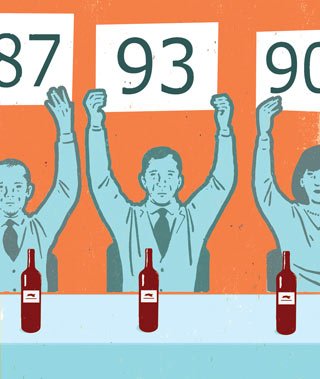
Judges giving wine scoresThis week’s wine news: Robert Parker’s legacy, one more attack on glass bottles, and drunk monkeys as part of the history of wine

Parkerization: John McCarroll, writing in Punch, looks at the legacy of Robert Parker, the most famous critic and perhaps the most influential person in wine since the end of Prohibition. He’s mostly spot on, though he does take a while to make his point: That Parkerization is still with us, even if Parker isn’t. Parkerization is the idea that producers made – and still make — wines to conform to Parker’s palate to get a higher score. McCarroll also argues that the idea of Parkertization is about more than the big, over-ripe, alcoholic wines that Parker liked, but that the system is set up to deify one critic, regardless of that critic’s preferences, to make it easier to sell wine. In other words, if the WC somehow became winestream, producers would make wines to conform to my palate. Which, of course, is hard to believe. In this, McCarroll overlooks that Parkerization is about prices and premiumization, and the idea that the best wines cost more money — and that we need a deity to convince us to spend $40 on an otherwise ordinary wine. Because what’s the point of deifying a critic who says drink what you like, but be willing to try something else?

Duck! Eric Asimov, writing in the New York Times, unleashes another attack on glass bottles, and he’s getting almost as cranky as I am about the damned things. “Yet glass bottles have never been more of a problem than they are today, at a time of global trade disruptions and climate crisis.” Crash. Smash. The rest of the story gets even more gloomy – the failure of two companies that tried to re-use wine bottles, the lack of a decent alternative to glass, and all the rest. His best hope? Boxed wine, which for all its ecological flash, has never made much of an inroad.

Drunk monkeys: Christopher Howard, writing for the Genetic Literacy Project, looks at the history of wine and finds that “the evolution of wine precedes agriculture and the domestication of grapes. The genesis of wine may even predate our species.” The piece is an excellent overview of grapes, wine, and how we got to where we are today. The bit about the drunk monkeys, and how evolution and genetic changes made it easier for primates to process alcohol in their bodies, is fascinating.
Winebits 693: Wine marketing, wine lawsuit, Big Beer wine

cheap wine
“Where are those $10 wines that Eric Asimov wrote about?”

This week’s wine news: Retailer takes New York Times’ Eric Asimov cheap wine recommendations to the next level. Plus, Jackson Family sues Gallo in what could be a lawsuit for the ages and Anheuser-Busch announces wine deal.

Cheap wine from Asimov: New York Times wine critic Eric Asimov is the best wine writer in the word, even though he regularly downgrades $10 wine. So imagine my shock — and pleasure — to see a couple of quality $10 wines in a recent column. Asimov cited the La Vielle Ferme red and Masciarelli Montepulciano d’Abruzzo, both of which I drink regularly, as well as the Las Vascos cabernet sauvignon. Hopefully, Asimov will take a look at the Hall of Fame and find others he can recommended. Equally as impressive? An e-mail from retailer Saratoga Wine Exchange touting the wines and offering a mixed case for $120. Wine marketing comes in for a lot of criticism on the blog, but this is one case where a retailer has figured it out.

Bring on the process servers: I’ll just quote this, since not even I can think of anything to add: “Jackson Family Wines, the ninth largest wine company in the U.S., filed a lawsuit last month accusing [E&J] Gallo, the world’s largest wine company, of infringing on Jackson Family’s copyright for La Crema with a new Gallo wine called Cask & Cream.”  Jackson sued Gallo in the 1990s, claiming the latter’s Turning Leaf infringed on Jackson’s flagship chardonnay and lost. So quickly, from a couple of Google searches: It costs more than $1 million to defend this kind of lawsuit, or about 12,000 cases of Gallo’s Barefoot wine. The cost of filing the lawsuit is more or less the same, which works about to about 7,000 cases of Jackson’s chardonnay. Which, when you think about it, isn’t all that much to a Big Wine company.

Bud Wine? Again, so damned weird all I can do is quote: “The Wine Group and Anheuser-Busch continue their collaborative partnership with the release of 101 North which is now available nationwide. A popular-priced wine brand inspired by its California roots and the iconic U.S. Highway 101, the brand celebrates the spirit of adventure and discovery. The approachable, new collection was made to explore with rousing blends of richness and bold fruit flavors in every varietal. At launch, 101 North Wines are available in Cabernet Sauvignon, Chardonnay, Pinot Grigio and Moscato.” Wine from the company that makes Budweiser? And if Churro, the blog’s associate editor, had written a post as poorly as that news release is written, I would have fired him. Is it any wonder I worry about the future of the wine business?

Winebits 669: Halloween wine, expensive wine, intellectual property

halloween wine
“Trick or wine?”

This week’s wine news: Dress up like a box of wine for Halloween. Plus, Eric Asimov on why we can’t afford the world’s great wines and intellectual property rights vs. the First Amendment.

The right costume? Want to be a box of wine for Halloween? A Detroit radio station reports that Franzia is making that possible. “The Francia boxed wine costume is only $25 and comes in two flavors, Chillable Red and Sunset Blush.” There is also a wine backpack, so you can drink wine while you look like it. No word on how many points the costume gets, though I wouldn’t be surprised if someone, somewhere, gave it a score.

No great wine for us: The New York Times’ Eric Asimov rants about one of the Wine Curmudgeon’s favorite topics: The ridiculous prices of the world’s great wines. “Among the many ways the rich are different from you and me: Only they can afford grand cru Burgundy. That wasn’t always the case. … For example, back in 1994, a bottle of Comte Georges de Vogüé Musigny 1991, a grand cru, retailed for $80 (the equivalent of $141 in 2020, accounting for inflation). Today, that bottle costs about $800.” The piece is well worth reading, and speaks to a post I’m working on for next week about the absurdity — and even obscenity — of expensive wine prices.

Nuts to the First Amendment: Because, of course, there’s money involved. The Libation Law Blog reports that “Beer, wine, and liquor trade groups are coming out of the woodwork” to support an appeal by Jack Daniels whiskey against a parody dog toy called Bad Spaniels, which looks like the Daniels bottle. Their support comes despite long entrenched and well-established First Amendment protection for parody, satire, and the like that made it possible for me to write this. Or this. Or this. But in the second decade of the 21st century, getting rich trumps all. Sadly, this is not the first time we’ve seen the wine business throw its weight around, spouting intellectual property. So nuts to you, beer, wine, and liquor trade groups. I’m going to look for one of these for Churro, the blog’s associate editor. Then he can write a post about playing with it.

Winebits 638: Michael Broadbent, drinking alone, expensive wine value

Michael Broadbent
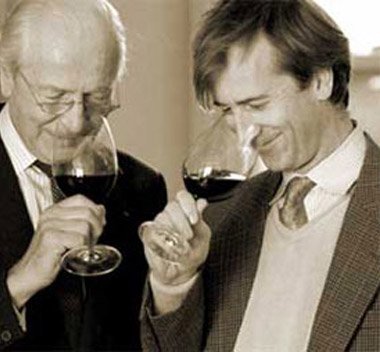
Michael and Bartholomew Broadbent

This week’s wine news: Michael Broadbent, a leading English wine writer and critic, has died at 92. Plus, is it OK to drink alone and does expensive wine offer value?

Michael Broadbent: Broadbent, to quote his obituary on thedrinksbusiness trade site, “was a towering and influential figure in the wine trade.” He was a master of wine, wrote two books about wine that were considered standard texts, and was a wine columnist for Decanter magazine for almost 50 years. And that was after he pioneered fine wine auctions for Christie’s. The family business, Broadbent Selections, which is run by son Bartholomew, is one of the finest small importers in the U.S.

Drinking alone? The New York Times’ Eric Asimov asks: “But what if social distancing means you are actually by yourself? Is it all right to open that bottle?” His answer? “If you do have a problem with alcohol or issues with depression, drinking alone is not the responsible choice. But otherwise, why shouldn’t we enjoy the beauty of wine, especially if it is augmenting a meal? If we are going to take the loving step of cooking for ourselves, I believe we should absolutely make the experience even better by enjoying a glass or two of wine as well.” I couldn’t have said it better myself.

Value for money? David Morrison at the Wine Gourd blog looks at the Wine Spectator’s annual top 100 list, which has few inexpensive wines, to find out if it offers value for money. The result? Mostly, though his analysis does rely on points: “yes, good value-for-money can be found in this Top 100 list — go for the highest-scoring wine at $20, or the cheapest wine at your favorite score.” The finding that most interests me is that the best price for value is around $20, since those are among the least expensive wines on the Spectator list. And, as Morrison notes, there is “some very poor value-for-money, but in those cases you are getting vinous excitement, instead.” I’ll settle for the value, thank you.

Winebits 573: Sweet red wine, pension plans, Barefoot

sweet red wine
Eric Asimov is not a fan of Big Wine

This week’s wine news: The New York Times’ Eric Asimov takes on sweet red wine, plus wine helps a pension plan go belly up and Barefoot reaches 20 million cases

An unlikely review: The Times’ Eric Asimov, who makes no secret of his disdain for Big Wine, discusses three top-selling Big Wine products in a recent Times’ wine school column. His comments about E&J Gallo’s Apothic and Constellation Brands’ The Prisoner and Meomi are almost as priceless as as the comments readers left. It’s also worth noting that the wines are sweet reds – Apothic more or less labeled as such, and the other two hiding sugar behind a dry red wine label. As such, there are three of the most contentious wines among those of us who do what Asimov does.

How to make a million in the wine business: Dallas’ police and fire pension fund almost went broke last year, and only tremendous sacrifices by the cops and firefighters – who weren’t responsible for the collapse – saved the system (which is a story for another day). The point for the blog? The pension system was so badly mismanaged that it had investments in wine real estate. How is that mismanagement? Because the first rule of the wine business is this very old joke: How do you make a million in the wine business? Start with two million.

Only 20 million cases: Barefoot, also an E&J Gallo brand, has grown to 20 million cases – or about one bottle for every drinking age adult in the U.S. That’s a mind-boggling statistic. The story from the Shanken trade news site is mostly puff (boxed wine is hardly an innovation in 2019), but it’s worth reading to note how important $7 Barefoot is to the health of the U.S. wine business. We can talk about premiumization all we want, but if Barefoot was a winery, it would be the fourth biggest producer in the U.S.

Winebits 551: Eric Asimov, Belgian wine, and the new international wine style

This week’s wine news: Eric Asimov on the role of the critic, plus Belgian wine and less alcohol, fruit and oak in wine

The role of critics: The New York Times’ Eric Asimov, perhaps the best wine critic in the world, shows why: “Why is wine so regularly singled out in the United States to be assailed as something of a con game? And what is it about wine critics that invites such gleeful dismissals of their knowledge and judgment? One reason … is that [these claims] all contain elements of truth. While it may be ridiculous to assert generally that expensive wines are no better than cheap wines, it is absolutely true that many expensive wines are not as good as many cheaper wines.” It’s an intelligent, well-thought essay taking into account the role of critics, the history of wine snobbery in the U.S., and what Asimov calls industry complicity in making wine snotty and the idea that those of us who are better at it are also better people.

Even in Belgium: Yes, there’s wine in Belgium and just not beer. The industry is not big by European standards – just 110,000 cases or so, a decent-sized U.S. winery. But it’s growing, and there are more producers and grapevines than ever. How is quality? Says one distributor: “Everything has been progressing, everything has been going well.”

Call it international: For the past couple of decades, the International style of wine has been know for its high alcohol, over-ripe fruit, and overdone oak. That’s changing, reports the Italian Wine Guy: “There was less talk of fruit and oak and power and alcohol. And there were people crooning over acid, and cement, restraint of fruit (and alcohol) and less about power. And more about grace. And just like that, a schism rent asunder, regarding the interpretation of international style.” I don’t know that I’m quite as optimistic about these changes (ask me about 14.8 percent California chardonnay samples), but regular visitors here know how welcome that change is, the idea that wine is more than a cocktail.

Winebits 529: The making wine easier and more fun edition

making wine easier
“I wish I had sound advice about how to make wine easier.”

This week’s wine news: How to make wine easier and more fun, including a terrific rant from Dave McIntyre of the Washington Post

You’re not stupid: This column from the Washington Post’s Dave McIntyre is brilliant, and I’d say that even if we weren’t long-time friends. “Are you tired of being wine shamed? There are plenty of people who will tell you what you’re doing wrong with wine. … Who needs that sort of criticism? We are judged on so many things in life. Wine should not be one of them.” Or, as regular visitors here know, drink what you like, but be willing to try different kinds of wine. Dave offers three pointers to help you do that: Quality glasses, the correct serving temperature (with an aside to restaurants and their propensity to do this so wrong), and learning how to tell flawed wine. All sound ideas, and not one revolves around price, varietal, or appellation.

Death to scores! The Wine Curmudgeon is always happy to pass along another indictment of wine scores, and this is one of the best. Writes Katie Finn on the Coachella Valley Independent website: “Your house is lovely, but there’s no pool, so you get an 83.” Which I wish I had written, and will use from now on. Finn’s point? That scores make wine more intimidating and more difficult, instead of easier. Which is their reason for being. “Points give consumers the false idea that there is such a thing as a ‘perfect’ wine,” she writes, as accurate a criticism as possible.

Everyday wines: Eric Asimov, writing in the New York Times, laments the difficulty in finding quality everyday wine amid wine’s confusion: “As much attention as is paid to the rare and profound bottles that fire the imagination, far less is devoted to the sorts of wines that people might actually consume at any given weeknight meal.” Guess he needs to spend more time on the bog, yes? Asimov’s advice is spot on, and especially in finding a good wine shop – which we’ve always advocated here.