
Tag Archives: Eric Asimov

Winebits 522: Cheap wine 2018 edition

cheap wine 2018This week’s wine news: We survey cheap wine 2018 wine developments

The best cheap wine? My pal Dave McIntyre, showing his heart is as big as his talent, reviewed 29 grocery store wines in the Washington Post. Is it any wonder we’re friends? Dave’s conclusion? The best were the Woodbridge and Robert Mondavi chardonnays and the Santa Rita, Cousino-Macul, and Los Vascos cabernet sauvignons. What struck me, other than Dave’s endurance, was that he thought that many of the 29 wines were as poorly made as I do. Would that the wine business did, too.

Cheap sparkling wine: Eva Moore, at the Free-Times weekly, does another great service: ranking nine sparkling wines that cost $10 or less. Her conclusions are about the same as mine, too; what does that man, wine business? Her top-rated bubbly is German, and not easy to find, but an old favorite is also highly-ranked, the legendary Cristalino.

Bad wine is bad wine: Eric Asimov, writing in the New York Times,also understands what the wine business doesn’t: “Few things have been as damaging to the American wine industry as its homogenization.” And this, too: “Anyone who is in the business of examining wine critically needs to actually be critical, not simply validate consumer choices, and looking at wine critically means understanding the chasm between mass-produced wine products and wines that are an expression of a place, a people and an aesthetic.” Is it any wonder I consider Asimov to be the best wine writer in the country?

Winebits 513: Marijuana, direct shipping, wildfires

marijuanaThis week’s wine news a day early, to make room for tomorrow’s annual Halloween post: A Canadian province takes over marijuana sales, plus a direct shipping lament and good news out of wine country

State control: New Brunswick won’t allow retailers to sell marijuana when the Canadian province legalizes dope sales in July. Instead, the provincial liquor store system will set up “a network of of tightly controlled, stand-alone stores.” The Canadian Broadcasting Corp. reports that as many as 20 stores will open, but weed products will only be displayed under glass and customers will need to show identification to prove they’re of legal age before they can even get in. The story is worth reading, even if it’s not strictly about wine, because the politicians in New Brunswick are using many of the same buzzwords to justify the system that elected officials in the U.S. use to justify three-tier and state control of liquor sales – starting with protecting young people.

More woes for direct shipping: Eric Asimov, perhaps the best wine writer in the world, has discovered that it’s not easy to buy wine over the Internet. “But now, states — urged on by wine and spirits wholesalers who oppose any sort of interstate alcohol commerce that bypasses them — have stepped up enforcement efforts. Retailers say that the carriers began sending out letters to them a year ago saying they would no longer handle their shipments. For consumers who live in states stocked with fine-wine retailers, like New York, the restrictions are an inconvenience. For consumers in states with few retail options, they are disastrous.” Welcome to the middle of the country, Mr. Asimov – as we recently noted on the blog.

Little vine damage: California grape experts say the grapes and vineyards should not suffer much from the recent wine country wildfires, reports a trade magazine for growers. The analysis says only a small percentage of the 2017 grape harvest might have been harmed by the fires and smoke, but most of the harvest was done before the fires started. In addition, the grapevines acted like firebreaks, preventing the flames from spreading as they moved through vineyards.

Dueling columnists: The Times’ contradictory rants about wine

dueling columnistsWhen happens when two articles in the same paper argue for two opposite things?
One of the silly joys during my newspaper days were the dueling columnists – when two of our top writers wrote about the same subject, but did it in completely opposite ways. In other words, the Dallas Cowboys’ coach could be both a genius and an idiot in the same paper on the same day.

So imagine my glee when these two stories appeared in the New York Times. First, Eric Asimov, perhaps the best wine writer in the world, argued for ingredient labels so consumers would know if their wine used what he called artificial or suspect ingredients. A couple of weeks later, though, guest columnist and author Bianca Bosker argued for just the kind of wines Asimov was ranting about.

Can’t you just hear the dueling banjos?

The point here, aside from my giggles, is that they’re both correct. We need ingredient labels for wine, and it’s a pleasure to see Asimov supporting something I’ve been writing about for years. But Bosker’s point (despite her infatuation with Big Wine) is also well made: Thanks to technology, the “gap between fine wine and commercial wine is shrinking. ….”

But because this is wine, we get the either/or – either one is right or the other is, there is no middle ground, and never the twain shall meet. But that doesn’t have to be the case. Why can’t we have both? Why can’t we have ingredient labels, which would help us get more honest and well-made cheap wine?

Isn’t that what I do here? And isn’t that best for everyone?

sweet red wine

Eric Asimov and the dilemma of wine availablity

Eric Asimov and the dilemma of wine availablity
Eric Asimov loves wine, but not the dilemma of wine availability

The Wine Curmudgeon sometimes feels alone and overwhelmed in the middle of the country, battling away at the nefarious forces that confuse and confound wine drinkers. But on one crucial topic, I am not alone — even the great Eric Asimov of the New York Times, perhaps the best wine writer in the country, must contend with the dilemma that is wine availability.

“I fervently wish all drinkers could find what they want,” he wrote in Tuesday’s Times. “I sympathize with those who can ?t. But the simple solution ? choosing only wines that are easy to find ? is worse than the problem.”

Which is the exact same problem the rest of us have. Get two wine writers together (and sometimes it doesn’t take that many), and the topic that comes up over and over is availability. As in, “I really want to write about this wine, but it’s not for sale in my area. Damn you to hell, three-tier system.”

And somehow, as Asimov notes, the problem — despite technology and the Internet — never seems to get any better. I received an email the other day from a reader in a Dallas suburb, who buys wine at the same two chains where I buy wine. But he shops at different locations, which don’t carry the same wines that the stores near me carry. How much more screwed up can the system be?

Asimov describes the availability nightmare well, from why it exists — the 50 laws in 50 states forced on us by three-tier as well as the whims and wishes of retailers — to why most of the obvious solutions for those of us who write about wine aren’t obvious or solutions. And he realizes that consumers, so used to being able to buy anything else anywhere and at any time, don’t understand why wine is different — and maybe don’t want to understand.

So know this, everyone who has ever been overwhelmed in their search for a specific wine: If someone in Manhattan, the center of the universe, can’t find a wine that Asimov writes about in the Times, which caters to the center of the universe, then what hope is there for the rest of us? That’s the dilemma of wine availability.

More about the dilemma of wine availability:
? Wine availability: Whose fault is it anyway?
? Wine availability: How to find what you ?re looking for when it ?s not on the shelf
? Wine availability, and why it matters to you

Winebits 254: Wine prices, French wine, Asimov

? Aussie harvest: I suppose I ?ll have to stop trying to teach journalism to the wine business one of these days, but one more lesson: The wine business in Australia is still in the tank (no pun intended), but a good harvest has increased the supply of grapes. The Aussies have cut the number of acres of vines by six percent, but production still increased three percent in the last harvest. And, given that the wine business is worldwide, more grapes in Australia helps offset shortages elsewhere. Without taking demand into account.

? Changing habits: Simon Kuper in the Financial Times looks at the changing role of wine in French culture, in which they are drinking less but apparently enjoying it more. And, lest anyone forget the paramount role the French play in wine, he writes: ?In drink as in other domains, France still shapes global tastes. Around the world, wine has become the upmarket drinking option ? the opposite of earthy, proletarian or peasant beer. Soon middle-aged male ?wine bores ? will be as much a Chinese affliction as a French one. ?

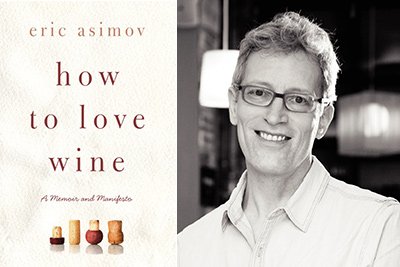
? ?How to love wine: ? Eric Asimov, one of the few members of the Winestream Media who understands what ?s going on, has a new book. In it, he demonstrates that insight: ?Uncertainty [in wine] means that you can say, ?I don ?t have to tell you precisely what you should taste in this wine or how many points it should score. There is something more ambiguous about this wine and I can ?t really grasp it and I am okay with that. ? ? Would that more people who profess to be wine experts understood that concept.

Winebits 241: Wine reviews, wine prices, wine blogging

? Jonathan Swift? Mike Veseth at the Wine Economist, citing the precedent set by Anglo-Irish satirist Jonathan Swift 283 years ago, suggests ?Instead of asking critics to score the wines on a quality scale, let ?s ask them how much they are worth! How much should someone be willing to pay for this wine Which the Wine Curmudgeon wholeheartedly agrees with, and has been part of the blog since its inception. Imagine the fun: Suggested retail price, $15. What it ?s worth price: $5. That would get everyone ?s attention, no? Besides, who wouldn ?t want to be in the company of Swift, who wrote ?Gulliver ?s Travel ?s ? and fought the good fight against the 18th-century British bosses and elite?

? What should wine cost? Eric Asimov at the New York Times says $20, for at that price it ?s possible to find something where ?the odds swing decidedly in your favor. With a little experience, you can find dozens of joyous bottles, plucked carefully from the ranks of the routine. ? He lists 20, mostly very nice bottles. though availability outside of Manhattan may be a problem. What intrigued me the most, though, was Asimov ?s discussion of price, which is something he doesn ?t do much. He acknowledges that $20 may be a lot of money for some of us, and that there are perfectly acceptable bottles of $10 wine for sale. When Eric Asimov says things like that, the wine world has most definitely changed.

? Oops: The Wine Blogging Awards, which recently announced its finalists, made a mistake in the Best New Blog category, where one of the finalists wasn ?t supposed to be one of the finalists. Something about a math error. It ?s pretty much a mess, and involves separate voting in that category. I suppose I could write something snarky here, like a wine blogger should, but I like to think I ?m better than that. Besides, the awards have enough problems of their own.