



Tag Archives: drink local

Winebits 681: Ed O’Keefe, Internet wine, pandemic wine

ed o'keefeThis week’s wine news: Drink Local pioneer Ed O’Keefe has died, plus a study says consumers may be wary of Internet wine and a French producer addresses the pandemic

• Ed O’Keefe has died: Ed O’Keefe Jr., who started Michigan’s Chateau Grand Traverse winery in 1976, has died, aged 89. I was lucky enough to interview O’Keefe several times over the years, and he was featured in a 1995 American Way story about U.S. wineries that weren’t in California. It was my first piece ever about regional wine. The story in the link, from the Detroit Free Press, tells O’Keefe’s story, but what impressed me was that he always ignored everyone who said regional wine didn’t matter. And he was right.

• Internet wine: Some of us may want to buy wine over the Internet, but a surprising number of aren’t interested. That’s the result of a study by the Wine Intelligence consultancy, which found that only 58 percent of “regular” U.S. wine drinkers would buy wine on-line. The number, given all the time and effort so many of us have made to make Internet wine possible, reminds us how traditional – and resistant to change – that wine drinkers are in this country.

• Call it “Vaccs’vin:” A French producer has released a wine called Vaccs’vin– perfect for the pandemic, since its goal is “just to make people laugh” – and it’s sold without a prescription. Sadly, the wine, made with merlot, won’t be available in the U.S. We could use some giggles these days, yes?

Winebits 680: Drink Local, pandemic wine, wine tariffs

drink localThis week’s wine news: Supermarkets embracing Drink Local during the pandemic, plus one more study about pandemic drinking and wine tariffs
• Drink Local thrives: Supermarket News reports that “Retailers deepened their relationships with local beer brewers and winemakers in 2020 to satisfy customers and support their local economies.” Which, of course, is something those of us who have long believed in local wine are very glad to see. The story looks at one California grocer, where virtual tastings with local wineries have far exceeded expectations.

• One more study: The Wine Curmudgeon has been keeping close track of the various pandemic drinking studies, if only because the results show hat we’re drinking less, drinking more, and passing out in front of the TV set – or all three.. The latest study comes from a browser app that offers retail discounts; its findings seem just as reliable as any of the others, which is to say not necessarily reliable at all. There’s no methodology in the release, for one thing, and it claims rice wine sales have increased 37 percent – more than any other kind of wine, more than most spirits, and more than something called “imported craft beer.”

• Whoops: About 10 days ago, U.S. trade officials said they would extend and increase tariffs on a variety of French products, including much wine that had not been taxed in October 2019. Then, at the end of last week, they said they wouldn’t up the tariff, after all. And then maybe they did, depending on news reports this week. Don’t worry if you’re confused. So am I, and even the normally reliable BBC seems confused in the story in the link. Just know that the situation remains the seem as it was before the end of the year, awaiting the new administration.

New Year's sparkling wine 2019

New Year’s sparkling wine 2020

New Yea's sparkling wine 2020New Year’s sparkling wine 2020 recommendations, because value and quality matter

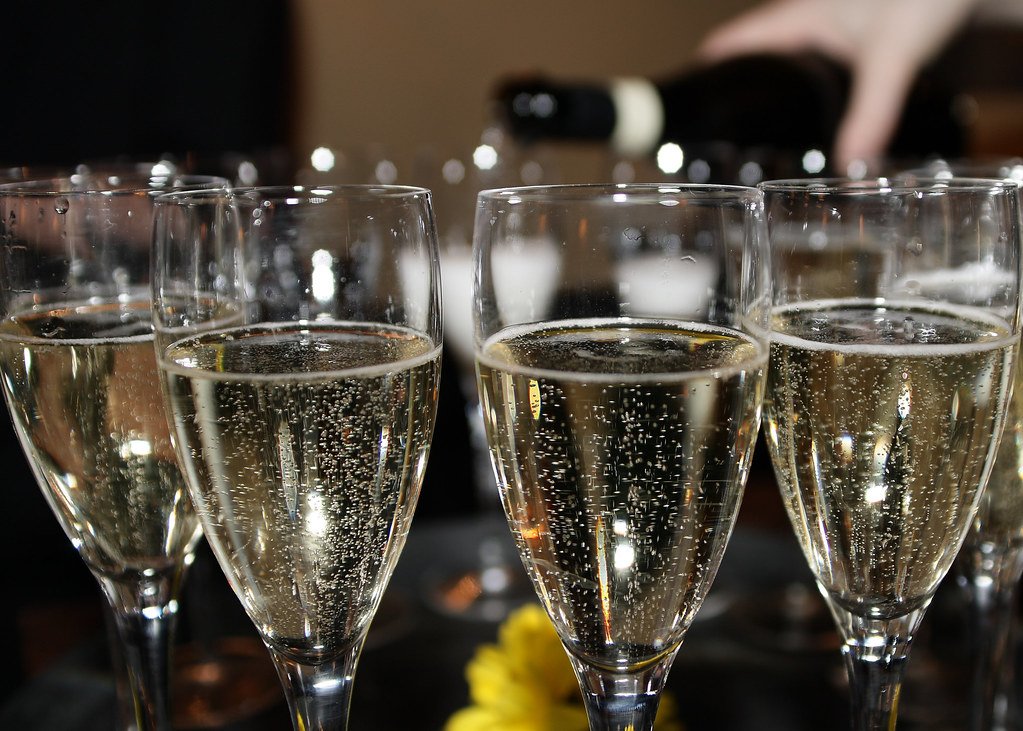
Once again, the blog focuses on value and quality for New Year’s sparkling wine 2020. Consider these wines for toasting, dinners, or just because you’re in the mood for bubbly. Also handy: The blog’s annual wine gift guidelines and the sparkling wine primer.

• Dutcher Crossing Blanc de Blancs 2016 ($45, sample, 12%): California sparkler is top-notch and, given bubbly prices, a fair value. Look for crisp, green apple-y fruit, with some brioche in the background to remind you this is a high-class wine. Very tight bubbles. Highly recommended.

• Bouvet Brut NV ($12, purchased, 12%): This French sparkler from the Loire does not taste like Champagne. Does it taste like quality bubbly, with tight bubbles,a  zingy mouth feel. and lemon apple fruit? Yep. Would that all sparkling wine at this price was this well made. Highly recommended. Imported by Kobrand

• Empire Estate Blanc de Blancs NV ($19, sample, 11.9%): Price may be a problem, but this New York riesling sparkler, made with the charmat method, is quality wine — soft bubbles, some green apple fruit, decent minerality, and a long finish.

• Casteller Cava NV ($12, purchased, 11.5%): This Spanish bubbly is among the few remaining great cheap Spanish sparkling wines, which have been devastated by consolidation and premiumization. Apple and pear fruit, tight bubbles, and a marvelous wine all around. Highly recommended. Imported by Ole & Obrigado

More on New Year’s sparkling wine
• New Year’s sparkling wine 2019
• New Year’s sparkling wine 2018
• New Year’s sparkling wine 2017
• Expensive wine 111: Pehu Simonet Champagne Face Nord Extra Brut NV
• Enough with the Champagne glass conspiracy already – can’t we just drink and enjoy?

Photo: “Sparkling wine” by tristanf is licensed under CC BY 2.0

studio microphone

Winecast 53: Doug Caskey and Drink Local during the pandemic

doug caskey
Doug Caskey and his spiffy Colorado wine Zoom background.

“The situation isn’t good, but it’s difficult to make a monolithic assessment. The situation depends on where you are, and it can be all across the board.”

Colorado’s Doug Caskey has been one of the leaders in the local wine movement for almost as long as there has been one. He has been the executive director of the Colorado Wine Industry Development Board since 2000, and has served in a variety of roles with the Wine America trade group. As such, he is well-placed to discuss how the pandemic is clobbering regional wine.

Perhaps the biggest problem, Doug said, is that state laws classify wineries as bars. This means they suffer from the same restrictions as places people go to pick up girls and boys and to get drunk. Which, of course, is hardly the case with a winery tasting room. In addition, local wineries depend on events like weddings and concerts to stay in business, which are also limited by pandemic bar restrictions.

Among the topics we discussed:

• The recent spike in coronavirus cases doesn’t bode well for Drink Local, since wineries that have been able to re-open their tasting rooms may not be able to keep them open.

• The pandemic hasn’t been a boon for Drink Local at retail, despite all the glowing sales numbers. Consumers seem to be buying the best known brands instead of trying lesser known regional labels.

• The Trump wine tariff, advertised as a help to Drink Local, has actually been a tremendous hindrance. It has wreaked havoc on the wine supply chain, making it more difficult for local wines to get on store shelves.

• Yurts, as a solution to outdoor winter dining. Yes, yurts.

Click here to download or stream the podcast, which is about 13 minutes long and takes up almost 9 megabytes. Quality is mostly excellent. And yes, I was able to post Doug’s Zoom background.

Wine review: Six white wines from New York’s Fox Run

fox runThese six white wines are some of the reasons why New York has come so far in wine quality

One of the great successes in Drink Local over the past 15 years has been New York state, which has grown, thrived, and earned rare critical acclaim. In fact, one of my great regrets with Drink Local Wine is that we never held a conference in New York’s Finger Lakes, home to some of the world’s best rieslings.

Fortunately, I’ve been able to taste New York wine regularly since the blog started, and so have been able to follow the Finger Lakes’ success. One recent example: Six white wines from Fox Run Vineyards, which was founded in 1984. Winemaker Peter Bell and co-owner Scott Osborn have long been ardent supporters of Drink Local, and I used to judge with Peter at the old Eastern International in upstate New York. His rant while we were tasting supermarket zinfandels one year has stayed with me since.

Each of these six wines are worth drinking, and several are even better than that (and most of the prices aren’t bad, either):

• Fox Run Silvan Riesling 2018 ($25, sample, 12.5%): This riesling shows why the Finger Lakes has earned its reputation. It’s long, complex, and intriguing, but also terroir-driven. That means it’s rich and full, but without the petrol or honey of a similar German riesling. Instead, there is zesty lime fruit and lots of minerality. Sill very young and probably needs a couple of years to open up. Highly recommended.

• Fox Run Dry Riesling 2018 ($15, sample, 11.7%): Very New York in style – oh so crisp, an echo of sweetness, a little lemon, maybe some oiliness (or maybe not), very long, and very clean.

• Fox Run Semi-Dry Riesling ($13, sample, 11.4%): This is exactly what an off-dry riesling should taste like — the sweetness is part of the wine, and not glopped on. This might have been my favorite of the batch, and I don’t go out of my way to find off-dry wine. Look for a bit of petrol and a bit of lime, both of which balance the sweetness. Highly recommended.

• Fox Run Traminette 2018 ($15, sample, 11.2%): This is a well made traminette, something never easy to do with this particular hybrid grape. There’s some spice, some tropical fruit, and noticeable (but not annoying) sweetness.

• Fox Run Chardonnay 2018 ($15, sample, 12.4%): One of the best domestic chardonnays at this price I’ve tasted in years — crisp green apple, clean, no hint of sweetness or the cloying tropical fruit that so many similarly priced wines have. If there is any oak, it’s hiding in the background where it should be. Tremendous value and highly recommended.

• Fox Run Kaiser Chardonnay 2018 ($15, sample, 12.5%) This tastes like Peter Bell’s take on all those fake, over-oaked, $12 to $18 supermarket chardonnays that make me crazy. Which, of course, it didn’t. Yes, the oak is pronounced, but the vanilla is balanced against the pear and apple fruit. If you like this style of wine, this will make you very happy.

More regional wine reviews:
• Michigan wine 2019
• Beard award semifinalists: One more victory for regional wine
• Regional wine update: Virginia, Texas, Lake Erie

studio microphone

Winecast 52: Jessica Dupuy, The Wines of Southwest USA

Jessica Dupuy
Jessica Dupuy

Her new book, “The Wines of Southwest USA,” is a candid look at wine in Texas, Colorado, Arizona, and New Mexico

Jessica Dupuy, through her work with media outlets like Texas Monthly, has been fighting the good fight for Drink Local for more than a decade. Her latest effort: “The Wines of Southwest USA” ($40, Infinite Ideas). It’s a candid assessment of regional wine in Texas, Arizona, New Mexico, and Colorado. We’ll give a copy of the book away during the blog’s 13th annual Birthday Week, beginning Nov. 16.

Overall, she says, wine quality is much improved — but that is still much room for improvement. “We’re still not at the point where people see local wine the same way they see local spinach from the farm down the road, or peaches or whatever. So in that respect, we still have a lot of work to do.”

Among the topics we discussed:

• Arizona may offer the highest upside among the states in the book, thanks to a core of impressive young producers.

• Colorado remains one of the most fascinating states in the country, since so much of its grapes are grown at altitude.

• The pandemic has hit regional wine hard, and there remains doubt about how well it survive when things return to normal.

• And finishing a book during a pandemic, with home schooling, is not the easiest thing in the world.

Click here to download or stream the podcast, which is about 16 minutes long and takes up about 11 megabytes. Quality is mostly excellent.

Winebits 652: Restaurant carryout booze, local rose, cheap local wine

carryout boozeThis week’s wine news: More restaurants opt to sell carryout booze, plus Illinois wineries embrace rose and local wine needs to be more affordable

• Restaurant carryout booze: More restaurants see carryout booze, including wine and cocktails, as a way to help the weather the duration. Which is pretty damned amazing, since this was illegal in most of the country before the pandemic. In Texas, for example, the governor has signed an order allowing restaurants to sell to-go cups, just like New Orleans. This is mind-boggling; most of Dallas was dry in some way until a decade ago, and the state is still famous for its dry counties. Perhaps even more amazing? A suburban Chicago restaurateur is selling wine at retail for carryout and not phony restaurant prices. She hopes to make up the difference in volume – an amazing concept, yes?

• Local rose: Just when the WC gets all flustered about the future of Drink Local, I read this in the Southern Illinoisan newspaper in downstate Carbondale (where, a long time ago, I was a general assignment reporter). The Illinois Grape Growers and Vintners Alliance launched an aggressive and seemingly expensive marketing campaign this spring to make rose Illinois’ official state wine, and “unite” the industry with a common product. Give the WC’s enthusiasm for Drink Local and pink wine, what could be a better idea?

• Not just in England: Oz Clarke, one of the patriarchs of modern wine writing, says English wine won’t become more successful or more popular until more people can afford to buy it. This is a lesson that emerging wine regions, whether in the U.S. or elsewhere, never seem able to understand. It’s one of the biggest problems with Drink Local, where producers don’t understand that people are more likely to buy $15 wine than $30 wine, no matter how noble the $30 wine is. Clarke told a wine seminar that it was crucial to get “really good bottles of still wine in front of people for the same price as, say, New Zealand.” Wise words, indeed.