Tag Archives: $10 wine

Wine of the week: Villa Farnia di Farnese Trebbiano d’Abruzzo 2010

Farnese

This wine cost nine bucks. How do the Italians do it? Their economy is in shambles and the euro is killing the dollar. If this was French wine, it would cost $15 or $18. The Wine Curmudgeon is not complaining, of course. I'm just continually and pleasantly surprised by the quality and value so many Italian wines offer.

The Farnese (purchased) was exactly what I was hoping for when I bought it. There is soft white fruit in the middle (an English critic described it as "gently fragrant," which is why Engish wine writing is so much fun), low alcohol (12 percent), not a lot of acid, and a kind of stony finish. In this, it's a wonderful antidote to all the mass-produced, turpentine-like pinot grigio that we're told we're supposed to like and that everyone seems to be making these days. Right, Drew B.?

Pair this not only with seafood, but spicy food. That's what I did (chicken tamales with green sauce), and it worked wonderfully. And, for those of you keeping track of grape varieties, there is apparently a difference between the trebbiano grape and the grape that is called trebbiano in the Abruzzo region of Italy. The former is more or less ugni blanc, one of the Wine Curmudgeon's old pals, while the latter is something called bombino bianco. Maybe I can get the Italian Wine Guy to explain the difference.

Wine of the week: Columbia-Crest Grand Estates Cabernet Sauvignon 2009

image from featherfiles.aviary.com

When I told a friend I was going to taste this for a possible wine of the week, she said, "Good luck. I've had it more than a few times, and I don't remember it fondly at all."

Which is understandable. Columbia-Crest makes the kind of wine that gets sold in national chain restaurants, where the staff's lack of wine knowledge is matched only by the managment's lack of concern about the staff's lack of knowledge. So if a bottle sits open for a couple of days and oxidizes, no one cares that the wine they serve to the customer is more or less undrinkable. It's also a grocery store wine that gets sold to grocery stores that don't sell a lot of wine, so if it sits in a hot warehouse and turns to vinegar, no one is any the wiser.

Which is why I wanted to try it. Just because a wine is sold in a chain restaurant or grocery store is no reason for the Wine Curmudgeon to write it off without tasting it. And, in fact, the cabernet ($10, purchased) is — if not a great wine — certainly better than my friend remembered. In this, it's a not only a value, but a big, hearty wine for those who like that sort of thing.

The cabernet has Washington state terroir, oddly enough, which you don't find in most mass-produced wines (and Columbia-Crest is owned by the same company that owns the even more massively-produced Chateau Ste. Michelle). That means it's got that dark, fruity, earthy cabernet flavor, as well as the tannins, that typify Washington state. California winemakers, on the other hand, go for a more rich and juicy approach.

The wine is a bit overwhelming at first, but let it sit for a few minutes — something else you don't have to do with most grocery store wines — and it opens up sufficiently. It's definitely a food wine: red meat certainly, and I drank it with Friday night take-out pizza, and that almost wasn't enough for it.

Happy birthday, Two-buck Chuck

Happy birthday, Two-buck ChuckThis year is the 10th anniversary of one of the most important developments in the U.S. wine business, almost as important as Robert Parker and the 100-point scoring system. Two-buck Chuck made its first appearance in a Trader Joe’s store in 2002.

Why important? Because Two-buck Chuck was the first cheap wine sold as something better than cheap wine. Before it, there were two kinds of wine — cheap wine, which tasted crappy, had screwcaps, and was sold in big jugs to people who didn’t know anything about wine; and good wine, which wasn’t cheap, had a fancy label and a cork, and was sold to people who figured good wine couldn’t be cheap.

That all changed with Two-buck Chuck, which got its nickname because it was made by a company called Charles Shaw and it cost $1.99 a bottle. The wines, though annoyingly inconsistent in quality, offered a lot more value than their $2 cost. More importantly, they weren’t flawed or too tannic or unripe; in this, they were more or less the first cheap wines that were professionally made that U.S. consumers could buy.

And, as George Taber has pointed out in “A Toast to Bargain Wines,” the world has not been the same since.

Before Two-buck Chuck, cheap wine options were limited. I started drinking wine regularly in the 1980s with something called Avia, which cost $7 for three bottles and tasted like it was made in the former Yugoslavia by the state-owned wine company. Which it was; call it Communist plonk designed to keep the masses tipsy. Drinking better wine, but still affordable, meant buying something like Barton & Guestier. It was French, $6 or $7 a bottle, and not as offensive as the Avia. It wasn’t especially well made, either, but what did I know?

So it’s not surprising that Two-buck Chuck, which is owned by the Bronco Wine Co. and controlled by the infamous Fred Franzia, has had such an impact. Trader Joe’s has sold more than 50 million cases in the last decade, which would probably make Charles Shaw one of the 30 biggest producers in the country if it was an actual producer. More importantly, it has spawned dozens of imitators across the country, including E&J Gallo’s Barefoot, and similar private labels from national retailers like Aldi, 7-Eleven, and Whole Foods.

Equally as important, as the Wine Market Council recently discovered, consumers “are largely content with the lower-priced wines they switched to during the recession” — and many of those lower-priced wines were made possible by the success of Two-buck Chuck.

Intriguingly, the label’s success may hamper its future. One reason why Two-buck Chuck is stil $1.99 in California (shipping costs raise the price to as much as $3.50 in other parts of the country) is that Bronco controls more than 40,000 acres of vineyards, as well as the wine’s production, like a massive bottling plant near the Napa airport.

The always savvy Paul Franson wonders: Will the end of the California grape glut, which has raised bulk grape prices, give Bronco the chance sell its grapes to others for more than it would make by using it to produce Two-buck Chuck? Will this mean less Two-buck Chuck in stores? And will this mean the beginning of the end of the brand?

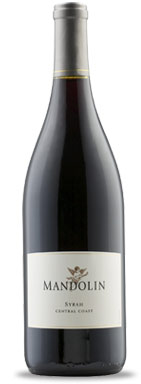
Wine review: Mandolin Syrah 2009

image from www.mandolinwines.com

This is a good news and bad news wine. The good news is that it’s a tremendous value, another Mandolin wine that is much better than its price. The bad news? Availability, of course. It’s not sold in the Dallas area, and its Texas distributor is small with limited capabilities. And, given the way the wine world works, if that happens in a market as important as this one, that means the Mandolin is likely to be difficult to find elsewhere.

Which is wrong. The syrah ($10, sample) is a wine that deserves to be in lots and lots of stores. It’s impressive — balanced and varietally correct, with just enough berry fruit to be fruity but not to be annoying. In this, there is acid to balance the fruit, which almost never happens with this style of wine, as well as a touch of oak and even some tannins, both of which provide even more balance.

Which, again, are two items that are rarely done well in wine from this part of California that costs $10. There is either way too much oak, to cover up a flaw or to give it a fake-y chocolate taste, or no tannins, to make the wine “smooth” and to appeal to people who don’t like red wine. In fact, one reason why I don’t drink much of this kind of wine is that it doesn’t taste like wine, but something designed by a focus group.

Serve this wine on its own or with a weekend or holiday meal featuring beef or roast chicken (and yes, even for the holiday that must not be named). Highly recommended, and a candidate for the 2013 $10 Hall of Fame.

Wine of the week: Ch teau Font-Mars Picpoul 2010

The Wine Curmudgeon has always enjoyed picpoul, a white wine from southern France made with the picpoul grape that is grown, believe it or not, in the Picpoul region. Which is a weird naming convention even for the French. Picpoul is cheap and food friendly, one of those wines that you can keep around the house in case you want a glass of wine and don’t want to have to worry about what you’re drinking.

The catch, of course, is that it’s difficult to find quality picpoul in Dallas. Those that I’ve had have mostly disappointed — either sweet or too citrusy or overpriced. Hence my delight in finding the Font-Mars ($10, purchased), which is everything picpoul is supposed to be. And I did I mention that it’s only $10?

It’s a simple wine, but not in the way that too many cheap wines are simple, with one flavor or characteristic dominating all. Look for apricot and stone fruit in the front and a very nice stony finish with acid to balance all. I drank it over the New Year’s holidays when I wanted something for dinner that wasn’t overwhelming, and I was truly surprised at how well made it was. It’s one of the early contenders for the 2013 $10 Hall of Fame, and highly recommended.

A personal note: The Wine Curmudugeon does not write about politics here; that’s what political sites are for. But I do want to mention the controversy surrounding two proposals in Congress that would limit Internet speech, the SOPA and PIPA legislation. Copyright is one thing, and as a writer I certainly understand that. But free speech is even more important than copyright, especially as the Internet changes the way the world communicates. The New York Times explains what’s going on today here. If you’d like to support those of us who believe that SOPA and PIPA are wrong-headed, you can sign this on-line petition.

Wine of the week: Coltibuono Chianti Cetamura 2009

image from www.coltibuono.comThe Wine Curmudgeon has always wondered how to approach Chianti, which is not only the one Italian red wine that most Americans know, but the one Italian red wine that wine snobs turn their noses up at. If I review it, I run the risk of alienating both groups — a neat trick, of course, but right up my alley. The former would think the wine was too obvious for them, and the latter would think I was naive.

But that hasn't stopped me before; there are handful of reviews and a variety of references to Chianti on the site (and, quickly, Chianti is the region in Tuscany where the wine is made, using mostly the sangiovese grape). And it won't stop me now, because the Coltibuono ($10, purchased) is well-made wine that offers lots of value.

In this, it's a simple, young, lighter Chianti with big dollop of cherry fruit (which apparently comes from a small percentage of the canaiolo grape, which also softens the wine). But there is still the telltale Italian acid, which means the wine cries out for tomatoes, pork and cheese. Or, in other words, pizza. I drank it with olive and tomato bruschetta, and that was terrific, too.

The 2012 $10 Wine Hall of Fame

image from www.winecurmudgeon.comYes, wine prices may be in flux, and the wine world may resent cheap wine more than ever. But that didn't stop the Wine Curmudgeon from adding a near-record number of wines to the 2012 $10 Wine Hall of Fame. Eight wines were inducted, and only four dropped out. Click on the link above for the entire list, or the $10 link on the upper left of this page.

In fact, I was pleasantly surprised with the quality of cheap wine last year, and there were some dozen wines that almost made the Hall. Two in particular are worth mentioning — the Picada 15 red blend from Argentina, which was delightful but doesn't seem to be available in much of the country, and the Montecillo crianza, also wonderful and also limited in availability.

Call this year's Hall the world tour — wines from Washington state, Italy, France, Argentina, Spain and even California made it. I was especially pleased to see California in the mix, given last year's California disappointment. One other disappointment: The Toad Hollow pinot noir rose dropped out this year, the first time it hasn't been in the Hall since I started it for a Dallas magazine 10 years ago.

The ground rules for this, the sixth annual, Hall of Fame: The wines have to cost $10 or less (Dallas prices, though I will make an exception if prices seem to be higher here) and be generally available. That means no wines like Trader Joe's Two-buck Chuck, which are only sold at one retailer. The final decisions are my own, and take into account what I think wine should be: varietally correct, balanced, and interesting enough to buy again.

I do take suggestions and input from dozens of people — blog visitors and wine drinkers (who sent more suggestions than ever this year), people I know in the wine business, and other wine writers. Thank you for your help.