





Has the wine establishment turned its back on wine scores?
 by Wine Curmudgeon Posted On
 The Wine Curmudgeon writes stuff like this all the time: “Why the 100-point system of rating wine is irrelevant.” In fact, I write about the foolishness of wine scores so often that you’re probably tired of reading about it. But what happens when a member of the wine establishment, someone who uses the word “somm” in everyday conversation, says “the future of wine ratings and recommendations will rely largely on friend recommendations and approval.”
It means wine scores are one step closer to going to where they deserve to go.
Jonathan Cristaldi, who wrote all of that, is about as wine establishment as you can get — an instructor at the Napa Valley Wine Academy and deputy editor for The SOMM Journal and The Tasting Panel Magazine. In other words, he does not espouse the wonders of $5 wine at Aldi or complain about the Winestream Media.
So when Cristaldi says the 100-point scale and wine scores are increasingly irrelevant, it means something. How many of the old white guys who keep defending points were once called a new ?Wine Prophet ? by Time Out New York magazine? Writes Cristaldi:
More and more people will learn of wine ?s complexities through social engagement. Friends and confidants (trade and non-trade) will replace the lone critic and his bully pulpit. Wine drinkers will realize the power and worth of a discerning palate because of the value their friends place on such expectations.
The key here is that Cristaldi isn’t writing for consumers, the 95 percent of us who will never spend more than $20 for a bottle of wine and don’t care one way or the other about scores when we buy Little Black Dress or Cupcake. He is writing for the elite, including the five percent who buy high-end wine; everyone who has helped to make scores part of selling wine over the past four decades and has helped it become the shell game that it is today.
There won’t be a need for wine scores as we know them, says Cristaldi, because of that social engagement. This is more than the social media that the old white guys like to make fun of because they just know that Facebook and Twitter are stupid, but a fundamental change in the way the wine supply chain works. Today, when a retailer or restaurateur buys wine, the distributor’s sell sheets — a handout they give customers — include Parker and Wine Spectator ratings and other wine scores. Because, as one top Dallas chef-owner told me, if the wine gets 95 points in the Spectator, he has to have it, whether he wants it or not.
But in Cristaldi’s future, retailers and restaurateurs will buy wine because someone they know and respect recommends it, and the score will be just one part of that. And, given social media, they can check those recommendation in seconds, whether with a text, a tweet, an Instagram picture, or in apps like Vivino, Delectable, or CellarTracker. He calls this new breed ?social sommeliers, ? because they participate in “the social conversation about wine.”
These people, who are younger and include women and people of color, aren’t waiting for the distributor’s sell sheets with wine scores; they’re already talking about the wine with their colleagues around the world long before the distributor arrives. This is something that has never happened before in the history of wine, and it’s something the old white guys can’t even begin to understand. They think sell sheets are still the cutting edge.
And, finally, if you still think this is all silliness, know about a conversation I had with a 20-something wine drinker during a cheap wine book appearance. Why should I buy your book, he asked me? Who needs it? I can do this — and he twiddled his phone with his thumb — to find a good wine to drink.
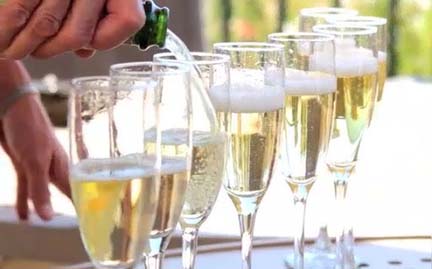
Image courtesy of Jacksonville Wine Guide, using a Creative Commons license
We all have a tendency to believe the rest of the world would share our perspective if they only knew what we did. So, Cristaldi’s vision of the future is likely more a reflection of his (own bucolic little corner) of the present than anything broadly applicable.
Sure, an increasing number of purchasing decisions are driven by trusted peer recommendations. This is offsetting some critics’ relevance, but I’d argue that it’ll never be enough to significantly diminish their influence. The problem with the maxim that “retailers and restaurateurs will buy wine because someone they know and respect recommends it” is two fold:
First, commerce trumps all. A retailer who intends to be in business next quarter will stock what they can sell, regardless of what their respected colleagues recommend. How the hell else can moscato be explained? Second, there’s a finite number of reference points a consumer can/will use in their decision-making. Here’s where the 100 point system and the mainstream critics have an enormous advantage – for all its considerable flaws, it is an easily understood currency and short cut upon which consumers can transact their purchase decisions.
By contrast, imagine a restaurant somm telling a customer that “Raj Parr just loves this place-driven pinot”. That’s going to resonate with about .0001% of the public, 99% of whom are in the wine trade. A passionate somm will take the time to wax poetic on how the gravelly loam in a cold, dry-farmed hillside vineyard translates into a wine characterized by vigor and tension. But it’s a hell of a lot quicker to say 95 points, which is what plenty of retailers and restaurants actually do.
I don’t argue any of those points, Steve (though I have explained moscato on the blog). Rather, that most of the anti-score sentiment has traditionally come from outside the wine establishment, and this guy is far from that.
This may not happen soon or at all. But that someone besides me and us other “they must be crazy types” sees it happening is big news.