Category:Wine trends

SVB wine forecast 2018

SVB wine forecast 2018SVB wine forecast 2018: This will be a good year for the U.S. wine business. But what the wine business does next could determine the health and success of wine in the U.S.

The first thing that Rob McMillan said at yesterday’s videocast for the SVB 2018 wine industry report was a warning. How seriously the ostriches in the wine business take his prediction could determine the fate of the U.S. wine business over the next decade.

“I look at the horizon, what’s going to happen,” said McMillan, Silicon Valley Bank executive vice president and the founder of its wine division. “Some people would say that’s a negative way to look at it, because business is good, and 2018 will be a good year. But what’s on the horizon?”

And the answer to that question, as I have written many times, may not be what the wine business wants to hear. It has focused on short-term growth, premiumization, consolidation, and wringing out profits at the expense of value and quality. And guess what McMillan said consumers, including and especially Millennials, are looking for in the wake of those developments?

“Value,” he said, “even at premium prices. It’s what I call the frugal hedonist.”

Where have we heard this before?

In other words, unless the wine business once again embraces value, trouble is looming. Here are some of the numbers in the SVB wine forecast 2018 that led to this perspective:

• Sales growth in the U.S., measured by volume, has been flat since 2013. This has not happened since the early 1990s.

• The high-powered growth rate for wine costing more than $9, which has been the highlight of premiumization, is starting to slow. This is especially true for wines between $9 and $15, which has been among the fastest growing price ranges.

• The bank’s clients, many coming from California’s top wine regions, have seen sales stall after a string of 10 percent annual bumps almost since the end of the recession. This is especially worrying, said McMillan, and nothing like this has happened since the early 1990s.

• Consolidation among distributors, which has been on hyper-drive for the past 18 months, seems to have hurt retail sales, funneling more business toward the biggest retailers.

• Traffic to tasting rooms in Napa, Sonoma, and Washington state has declined. Which, frankly, is inconceivable to anyone who came of age drinking California wine.

Finally, one bit of good news: Drink local seems to have become an established part of wine, said Mary Jo Dale, the marketing director, Americas, for Vinventions/Nomacorc, and one of the videocast’s panelists.
Wine prices 2018

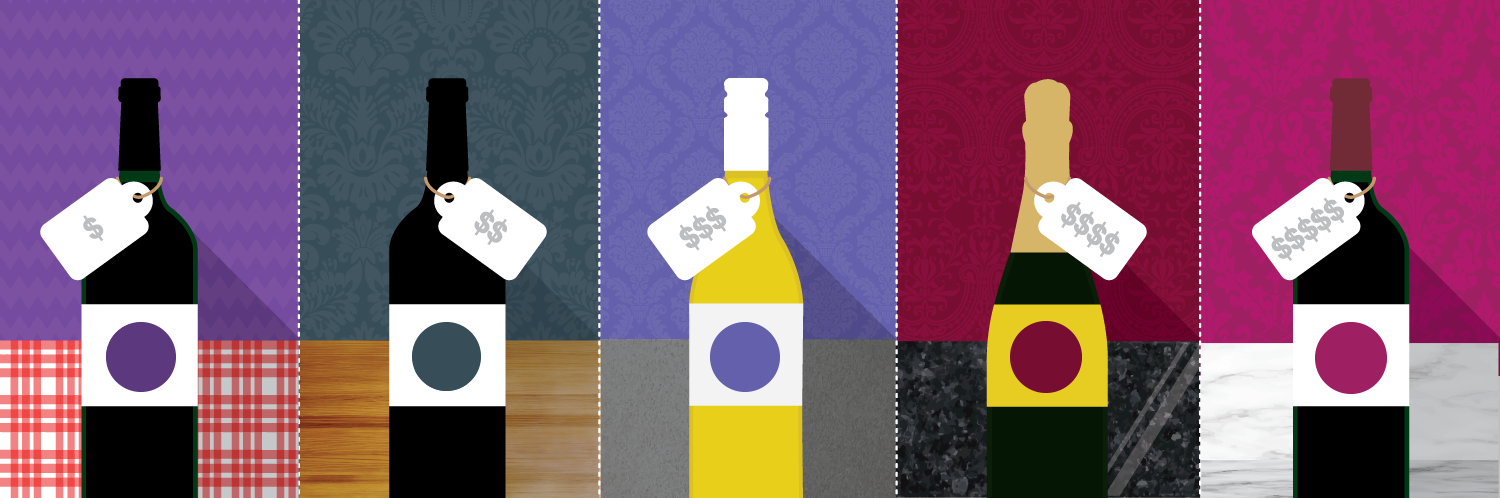
Wine prices 2018: Price creep, price confusion, and crappy wine that costs more money

Wine prices 2018 will be even more confusing than wine prices were in 2017, and that was confusing enough. This year, expect producers and retailers to use even more sleight of hand to get us to pay more money for the same quality wine — or even wines of less quality. My look at wine trends in 2018 is here.

There are four reasons for this:

1. The end of standard pricing. Traditionally, a wine cost about the same at every retailer in the country, whether it was $10, $20, or $50. No more. Today, as long-time reader Rex Warburton and I discussed, “the price spread is incredible. This is not a big problem for regular wine drinkers, but a nightmare for beginners or occasional buyers.” Which is the point. Expect to see a wine at $11 cost as much as $18 elsewhere (which was the case with the Ferrari Carano fume blanc I reviewed in the fall).

The reasons revolve around consolidation in retailing and distribution, and which are too complicated to explain here. It’s enough to know that the biggest retailers get incredibly better pricing than a neighborhood independent or even a small chain, so they can afford to sell wine for much less money. The catch for consumers is that the big retailer’s pricing is a one-off, and there is no guarantee it will sell the wine again, let alone at the same price.

2. Price creep. Or, when a $10 wine costs $12 for no particular reason. It’s not necessarily a price increase, since the wine can still be found for $10 elsewhere (and most retailers remain reluctant to raise prices). It’s just a retailer testing the market.

3. Price positioning. Look for wine to be made so it will cost a certain amount, probably between $15 and $20, and not because the wine is worth that much. This is not new for expensive wine, but it has started happening in the past couple of years with cheap wine.

The textbook example, which should be studied at every business school in the world, is E&J Gallo’s La Marca Prosecco. It’s probably $10 or $11 worth of wine, but its average retail price is $14 – and consumers are happy to pay it, turning La Marca into the top-selling Prosecco in the world.

I saw the same thing recently with a cabernet sauvignon from California’s Lodi region, listed at $17. This is twice what it was worth (and about six or seven times what the grapes cost), but the producer figured the consumer would bite. Because wine has to cost more than $15 to be good, doesn’t it?

4. Price confusion. This is more of what grocery stores and the World Market chain have been doing for years – three, four, or even five prices for the same bottle of wine. This is called fake front end pricing; the producer suggests a retail price that is artificially high so that the retailer has lots of room to “cut” it. My Kroger, for example, listed the Layer Cake rose for $21, and then put it on “sale” for $10, when $10 should have been the price all along. This practice will expand to other retailers, and it will be almost impossible to believe any wine price listed in a supermarket or World Market.

Finally, as a corollary to all this pricing foolishness, availability – already awful – is going to get worse, and it will be more difficult to find interesting wines at a fair price. First, the biggest retailers prefer to buy from Big Wine, since it’s more cost effective, and most quality cheap wine comes from smaller companies that don’t sell to grocery stores. And grocery stores sell more than half of the wine in the U.S.

Second, the biggest retailers can demand exclusives for national brands (though that’s technically illegal), further reducing availability. Finally, private label wine – those wines only sold at one retailer – will become even more common, and they will take up shelf space that might have gone to more interesting wine.

In the end, all of this will amount to price increases without there being any actual price increases. Aren’t we lucky?

Illustration courtesy of Fix.com, using a Creative Commons license

Wine trends 2018

wine trends 2018
Who needs wine? We have legal weed.

Wine trends 2018: The wine business prepares for a future where fewer of us drink wine, focusing on “authenticity” and making us believe smooth is good

Wine trends 2018 will revolve around the wine business preparing for a future where fewer of us drink wine. Meanwhile, the news for wine prices in 2018 isn’t good. And my 2017 trends are here.

• The search for authenticity, or, Can we scam the wine drinker? As Big Wine owns more brands, they’ll try to convince us these wines aren’t like other mass-produced consumer goods. Instead, they’ll insist that their plonk is “authentic,” part of a post-modern corporate effort to persuade us that “everyday consumerist choices — from organic heirloom tomatoes to eco-tourist yoga retreats to small-batch whiskey” will make the world a better place. So mass-produced grocery store brands that use every winemaking trick and tool possible will be described as artisan and boutique and hand-crafted – adjectives that are the opposite of what the wines are. Wine analyst Paul Mabray has written extensively about this, and we’re trying to arrange a podcast to talk about it.

• We’re stuck with smooth. The worst descriptor in the history of wine is smooth; first, because it means nothing – water is smooth – and second, because wine isn’t supposed to be smooth. It is supposed to have texture and structure and body. Nevertheless, we’ll see wine marketed as “a sumptuous, almost magical outcome of the growing season and winemaking process.” Or, even worse, have smooth in its name. Or, even worse still, cost $20 or more and be boring, alcohol-infused fruit juice that only a handpicked focus group could love.

• The continuing death spiral of restaurant wine. We’ve talked about this many times over the past 18 months, and it’s just going to get worse. One study says almost three-quarters of adults will make dinner at home at least four nights a week this year. Where does this leave restaurant wine? Getting pricier, less interesting, and in the hands of aging Baby Boomers, the only ones who can afford to buy it. I saw this at a tres chic Dallas restaurant in December. We were the only table with a bottle of wine, and I had to navigate a sad and overpriced wine list to find something drinkable. Meanwhile, there was only one glass of wine at the table of eight Millennials next to us, and one of the men was drinking Basil Hayden with dinner.

• Big Wine branches out. The biggest wine companies have been hedging their bets with craft beer and spirits for years, and will continue to do so. But they will also expand into legal weed; witness Constellation Brands’ $191 million investment in a Canadian medical marijuana company. And why not, given that U.S. wine consumption is flat? It’s worth knowing that Constellation’s most profitable business, even though it owns Meomi, Mondavi, and Kim Crawford, is beer and craft spirits.

• Winery consolidation continues, mostly among medium-sized companies. This means that your $20 California brand, once owned by a family or a small group, will become part of a larger company that owns a lot of $20 brands. These companies, like Precept Wine, Foley Family Wines, and the Crimson Wine Group, have been active for a decade or more and own some of the best-known names in U.S. wine. This is happening for two reasons: first, the original owners are ready to retire and no one in the family wants the business; and second, the U.S. wine business has evolved into a business just like anything else – becoming what one analyst has called corporatized. Which then leads to smooth and the authenticity scam.

2018 $10 Wine Hall of Fame

2018 $10 Hall of Fame13 wines entered the 2018 $10 Hall of Fame, but there is bad news for cheap wine on the horizon
Do not look at the 13 wines that entered the 2018 $10 Hall of Fame as a sign that all is well with cheap wine. Rather, this year’s Hall class may be the last great moment for cheap wine before we enter the dark ages of middling quality and overpriced wine.

Look past the total, and details were ominous:

• Six wines dropped out, one more than 2017, and price creep reared its ugly head. The venerable Pine Ridge chenin blanc viognier, which has been in the Hall for a decade, can cost as much as $15 now. And it’s just not worth $15.

• Just three California wines that aren’t McManis or Bogle in the Hall. That speaks volumes about how difficult it is to find quality cheap wine from California, thanks to exorbitant land prices and that most producers can’t afford to make cheap wine that’s worth buying.

• The induction total was boosted by five roses, which says more about the quality of rose than it does about cheap wine. Take out the roses, and we had a very ordinary year.

• Availability got worse this year, and it is going to get even worse. The wine business increasingly revolves around the biggest retailers like grocery stores, national chains, and the like, and the biggest retailers only want wine from the biggest producers. And most great cheap wine doesn’t come from the biggest producers.

• The weak dollar, which has lost most of its value from this time last year, will eventually force an increase in imported wine prices — and most of the value is in imported wine.

In other words, this may be the last Hall of Fame for a long while where this many wines are good enough to earn induction. The quality at $10, and even $15 or $18, isn’t there, sacrificed for “smoothness,” the chance to upsell consumers to equally inferior wine, and a resurgence in cute labels and marketing trickery.

So celebrate while we can. The $10 Wine Hall of Fame 2018, and my annual assessment on the state of cheap wine, is here. You can also find it at the Hall of Fame link at the top of the page. The Hall’s selection process and eligibility rules are here. This year, I considered wines that cost as much as $12 or $13 to take into account price creep and regional pricing differences.

Again this year, you’ll be able to print the Hall as either a text file or a PDF. Look for the icon on the upper right hand corner of the post.

Calling all conspiracy buffs: The sparkling wine glass plot

sparkling wine glass

Do we really need a sparkling wine glass that looks like a cement mixer? Of course not

The Wine Curmudgeon is old enough to remember 1960s-style sparkling wine glasses, the bowl-shaped kind that were supposed to resemble Marie Antoinette’s breasts. Then the experts told us we needed to switch to the flute-shaped glasses in use today, so we did.

But over the past couple of years, that hasn’t been good enough for the experts. First, we were supposed to switch to traditional white wine glasses. Then Riedel, which never met a wine it couldn’t create a glass for, said we needed a sort of white wine glass designed for bubbly.

And now, as Felicity Carter reports in Wine Business International, we need a glass that looks like a cement mixer. And the glass needs to be dusty.

Enough already. This is only sparkling wine, not a cure for cancer. Can’t we just drink and enjoy?

Nevertheless, Carter reports that the experts say there is scientific evidence that the cement mixer glass, and especially if it’s dusty, produces more and better bubbles. And more and better bubbles mean more enjoyable wine.

Which is all well and good, save for one thing (which doesn’t include the cost of replacing your glasses). What difference does the design make to the vast majority of wine drinkers? Can we tell the difference between the bubbles in a flute glass and in the cement mixer glass? Isn’t the wine just as enjoyable in the former?

The answers: Almost certainly not, and of course. And I can’t imagine most of us want to drink wine out of a dusty glass.

I taste lots of sparkling wine, using flutes and white wine glasses, and it’s not the glass that matters. It’s the quality of the bubbly, and all the glass does is let me determine the quality. Crappy wine is crappy wine, regardless of what it is served in.

In other words, don’t spend more on the glass than the cost of the wine. If you drink $100 wine regularly, then by all means buy a $100 wine glass. But for the 99 percent of us who drink wine that costs $10 or less, a glass that costs about $10 is more than sufficient. And the one in the link is more difficult to break. Can the Champagne people say that about their glass?

 Photo courtesy of the Wine Business International, using a Creative Commons license

Does the world need Pizza Hut wine?

pizza hut wineThe chain may not understand that delivering wine is not the same thing as delivering two pizzas for $14
Dear Pizza Hut:

I know we haven’t talked in a long time, since I wrote for Pizza Today magazine. But since I’m writing about wine these days, and you want to go into that business, I thought I should write.

Don’t.

Yes, pizza and wine make sense if you’re sitting in a corporate conference room trying to figure out the post-modern 21st century restaurant business, what with GrubHub and Amazon and all the rest. But at the store level – and that’s what I know about from my Pizza Today experience – trying to make alcohol delivery work may be one of the dumbest things you’ve ever done.

Yes, even dumber than the Papa John’s lawsuit.

That’s because of something called the three-tier system, which regulates alcohol sales and distribution in the U.S. I’m sure one of your attorneys would be happy to explain it to you in detail, but all you really need to know is that three-tier is so complicated and so byzantine – and different in every state – that even Amazon gave up trying to deliver wine. And the companies that do deliver it, like Drizly, can’t believe how difficult the law is.

This one example should demonstrate how all powerful three-tier is. Let’s say you find a wine to deliver, but it doesn’t have a distributor in one of the states you’re doing delivery. So you can’t use it, and you have to find a different wine for that state. Silly? Of course. Cheese doesn’t work that way. Or tomato sauce. But wine does.

And this doesn’t take into account trying to find a wine that’s priced fairly, delivers quality, and won’t insult your customers. See, for example, the problems that Blue Apron had – and how much better off would the CEO have been if he had read my post?

Again, the let lawyer give you the details about three-tier. All I want to do is to give you a head’s up to save you from a multi-million dollar mistake. That’s the least I can do for old time’s sake.

Your pal,

Jeff Siegel

Is this the greatest TV wine commercial ever?

A small retailer’s TV wine commercial is better than the multi-million dollar efforts that make wine look snotty or  silly — or both

Mr. Bill’s Wine Cellar is a small retailer in Roanoke, Va., hardly the epicenter of wine retail. So why did it run this ad, which can only be described as the greatest TV wine commercial ever?

It does everything that every wine ad from the past 60 years tries to do, but fails at miserably. This has been a regular complaint from those of us who care about wine; the idea that most commercials perpetuate wine’s pretentious image. It’s funny, but it makes its point. It makes fun of wine, but doesn’t lose focus. And it’s about the one thing every wine drinker cares about – buying quality wine at a fair price.

Would that more retailers and producers kept the ad’s tag line in mind this holiday season: “Mr. Bill’s Wine Cellar: Where people shop who don’t want to get robbed.” (Video courtesy of MPA Weddings.com via YouTube.)