


Tag Archives: wine sales

Winebits 803: Wine marketing, wine sales, ancient wine

Apollo drinking cup
The ancient Romans punished women fro drinking.

This week’s wine news: Yes, wine marketing is terrible. Plus more bad news about wine sales and another insight into ancient wine

Pay more attention: Lulie Halstead, the founder of the Wine Intelligence consultancy and a long=time pal of the blog, doesn’t pull any punches: “From what I’ve seen in more than 20 years knee-deep in the world of wine marketing, many wine businesses simply don’t ‘do’ marketing very well.” Which, as regular readers know, is one of the WC’s perpetual lamentations. Halstead covers all the bases: Winespeak, too many choices, and too much confusion. Compounding that, she writes, is that producers don’t care enough about marketing and when they do, it’s mostly about price cutting: “But we as marketers don’t help ourselves. We really don’t.” Hopefully, someone other than a cranky ex-newspaper reporter will read the piece and take heed.

Even worse news: The latest wine sales data is so bad that even the group that compiles the numbers noticed: “negative growth” may be the new normal. The survey, which measures the amount of wine wholesalers sell, found that wine fell almost seven percent in volume between April 2022 and March 2023. It was especially bad for restaurants, where one of the gauges found that it was significantly cheaper to drink at home – so consumers were staying at home. The culprit for all this? The survey hedges a bit, but does mention higher prices. Shocking news, yes?

No drinking for women? The WC has long been fascinated with any and all news about ancient wine, and this one is particularly interesting: “During the earliest periods of Rome’s history and up until the Middle Republican period, it was a socially sanctioned custom for husbands to punish their wives for drinking. Many Ancient Roman sources speak of female drinking and adultery concurrently.” I wonder: Have the neo-Prohibitionists thought of doing this?

Winebits 742: Grocery Outlet, lawsuit, non-alcoholic alcohol

grocery outletThis week’s wine news: Good news for Grocery Outlet and its cheap wine, plus another wine lawsuit and more buzz about non-alcoholic alcohol
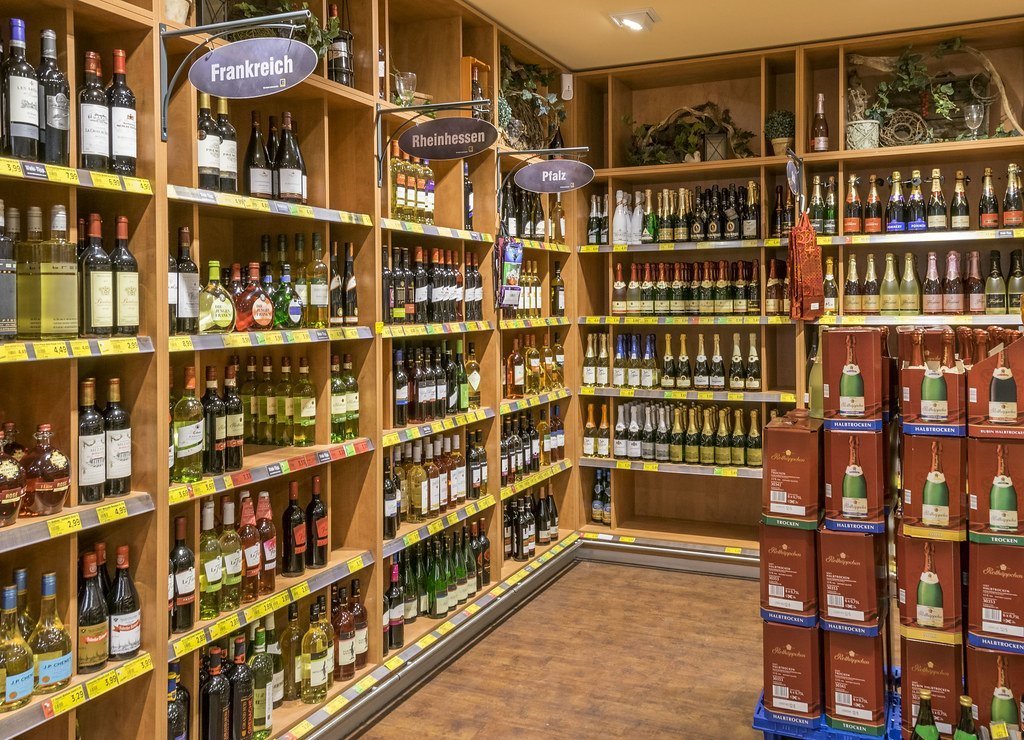
Grocery Outlet: High gas prices may be benefiting Grocery Outlet, the Wine Curmudgeon’s favorite supermarket that he hasn’t shopped in. Regular readers know about the chain’s heavily-discounted wine prices; Layla Kasha, senior vice president, chief marketing officer and chief new store growth officer for Grocery Outlet, told Supermarket News that hard times usually bring new customers to her company. The podcast doesn’t specifically mention wine; rather, it focuses on the company’s methods that allow it sell $15 and $20 wine for $8. Which it does a lot.

Another lawsuit: The WC has long been fascinated by wine-related lawsuits, and this one is a doozy. The president of Deutsch Family Wine & Spirits, whose brands include Josh Cellars, is being sued by its president, Tom Steffanci. The lawsuit claims that the company is withholding royalty payments from Steffanci. The lawsuit is quite complicated, including details about holding companies, tax consequences and — my favorite — the legal discovery process. It also raises an intriguing question: How can all these people work with each other if there is a lawsuit?

No alcohol: How about fake booze where the key ingredient is apple cider vinegar? That’s the “secret” behind Jukes Cordialites, which offers red, white and rose versions of non-alcoholic wine. The product is made with a variety of herbs and spices, as well as the vinegar; the idea is that it’s concentrated, and can be diluted with water. The WC, always willing to take one for the team, wants to know: Should I ask for a sample and review it?

Winebits 741: Mafia, wine sales, Utah

hard seltzer
Hope they bought these hard seltzers at the state store; otherwise, the Utah liquor cops will be after them.

This week’s wine news: An Italian court absolves a Sicilian winery of Mafia ties, plus more bad news for wine sales and Utah clamps down on hard seltzers

No Mafia: An Italian court has acquitted Mezzacorona of alleged money laundering in Sicily. The country’s tax police had said the company, whose holdings include Stemmari and Rotari, had used the Mafia to launder money at its Feudo Arancio winery. The company had always protested its innocence, dating to a 2020 raid where police seized more than €70m (US$76 million) in assets. The judge ruled last week that the claims had no validity. The story in the link seems to be some sort of news release from the winery, so it’s not quite clear what the judge said or did, or why the case was dismissed.

More bad news: The latest set of sales figures offer more bad news for the wine business. SipSource (composed of wholesaler data) shows wine continued its slump in December 2021. Sales, by volume, declined 6.2 percent from 12 months earlier, the ninth consecutive month of declines. Pemiumization is working well, isn’t it?

No hard seltzers: A new Utah law will force the removal of about half of the hard seltzers in supermarkets, and they will only be allowed to be  sold in state-owned liquor stores. The Salt Lake Tribune says the law prohibits the sale of beverages that contain even a trace amount of ethyl alcohol, a commonly used stabilizer for artificial flavorings that is used in such products as soda, mustard, and teriyaki sauce. Some 80 hard seltzers and kombuchas are approved for sale in Utah grocery and convenience stores; 39 of them have ethyl alcohol in their flavorings. Chalk this up as another victory for the neo-Prohibitionists, protecting us from food stabilizers.

Winebits 730: The “end of the year, and aren’t we glad“ edition

wine sales
Where have all of wine’s customers gone?

This week’s wine news: More bad news about wine consumption, plus the origin of wine grapes and airline wine

Struggles of wine: That headline on the third quarter alcohol sales report says it all, and if that’s not enough: “wine is still facing an uphill battle — let’s hope the holiday season gives it the boost it needs.” The report comes from the Wine & Spirits Wholesalers Association, which tracks wine and spirits sales from wholesalers to retailers. In this, it’s one of the most reliable sources of wine sales in the country. And the news isn’t good – table wine sales down 7.2 percent over the same period last year, and “wine is expected to follow spirits in having a strong holiday season but will most likely not see a positive trend before the new year.”

Wine grape origins: The best wine grapes come from the genus and species vitis vinifera, which includes cabernet sauvignon, chardonnay, and the like. The evolution of vinifera was always something of a mystery until DNA testing, which finally allowed scientists to start to make sense of where each grape came from. Now, a study in the journal Nature has solidified those beginnings even more: “all analyses support a single domestication event that occurred in Western Asia and was followed by numerous and pervasive introgressions from European wild populations.” In other words, every grape used to make wine today evolved from the first grapes planted in western Asia about7,000 years ago.

• In the air: Need extra wine? Consider buying it from an airline. Several have been selling off their wine collections during the pandemic, and American Airlines has gone a step further. Its Flagship Cellars wine club sells wine directly to consumers via a home delivery service, reports thedrinksbusiness. The service costs around $99 per month; consumers get three “premium” wines per month delivered to their doorstep. Once the excess inventory is gone, the service will end.

Winebits 717: Winespeak, DoorDash, supermarket wine

winespeak
“OK, now let’s make this clear — toasty and oaky are out.”

This week’s wine news: Wine Scholars Guild says it will try to make winespeak easier to understand. Plus, DoorDash expands booze delivery and a look at the supermarket wine store of the future.

No more toasty and oaky? The Wine Scholar Guild, a leading wine education group, says it wants to change the way we talk about wine. Or, at least I think that’s what it wants to do. The story describing the effort is so full of PR-speak, education-speak, and some -speak that I couldn’t decipher, that it’s difficult to say for sure. To quote: The project would “empower the individual to taste and describe wine with an enriched and universal lexicon.” In addition, it would “dive deeper into assessing the qualities of a wine’s building blocks” and look “into the nature of a wine’s personality.” Sigh. This is probably worth a separate post on the blog; I’ll try to follow up and see if I can make any sense of it.

Bring on the booze: DoorDash, the restaurant delivery  service that has branched out to groceries and clothing, is expanding its alcohol delivery effort. Customers will be able to place orders for beer, wine, and spirits (with or without food) from participating local restaurants and supermarkets in select markets in 20 states. We’ll ignore for a moment the company’s infamous reputation (and that the Wine Curmudgeon has all but stopped using it, since half my orders are wrong in some way). Instead, let’s focus on what this news means: Another chink in the armor that restricts alcohol sales in the U.S. That the company would have done this two years ago is doubtful. But the pandemic changed all that, and that DoorDash thinks it can make money with wine delivery speaks volumes.

Even in Iowa: We’ve written a lot on the blog about how important supermarkets are to the future of wine, and here’s one more example — a regional grocer has built an upscale market in suburban Des Moines, Iowa, with “a Hy-Vee Wine & Spirits department offering a walk-in beer cooler, a walk-in wine room and a walk-in humidor.” In Iowa? In addition, the story reports that building the store required a $26 million investment, and that it is its “first entirely reimagined grocery store.” What does that say about what Hy-Vee’s bosses think about selling wine in supermarkets?

Winebits 716: Eating at home, Italian imports, “waxsplaining”

eating at home
The only thing this woman didn’t buy at the supermarket for dinner was a bottle of wine.

This week’s wine news: Eating at home — and what the means for wine — is still driving supermarket sales. Plus, Italian wine imports surge and wax-sealed wine

We’re still eating at home: Kroger’s CEO told business analysts that the supermarket chain is still seeing its sales driven by shoppers buying to eat home, something that appears to be with us even as more restaurants remain open. Rodney McMullen said that “food-at-home trends remain sticky,” and that Kroger’s sales were more or less the same as they were in the same period a year ago, near the height of the pandemic. That’s an impressive performance, and is one more indication that we’re not eating out the way we were two years ago. We’ve discussed the impact of his many times on the blog; that it bodes well for retail wine sales but not for restaurants. In this, the wine business may need to re-examine how it sells wine, as eating at home becomes less of a trend and more of a way of life.

Bring on the Italian wine: Those of us who are flummoxed by the way wine continues to defy the law of supply and demand can take heart: Italian wine sales to to the U.S. rose 12 percent in value in 2020, compared to 2015-18. In other words, shoppers — faced with higher prices on French and Spanish wine thanks to the Trump wine tariff — bought less expensive Italian wine, which wasn’t hit by the tariff. Sparkling wine sales — mostly Prosecco — rose by 75 percent in value over the same periods.

“Let’s make enjoying wine harder!” So writes Amber LeBeau, writing on the SpitBucket website after battling a wax-sealed wine bottle and barely getting it open. “Why are we putting extra tolls or ‘effort taxes’ on our product that we’re expecting consumers to happily pay? And then come back for more?” LeBeau asks. Which, of course, is something the Wine Curmudgeon has been wondering about for years. The points in the piece are all well made, and explains is losing popularity to alcohol with tabs. And screwcaps.

Photo: Jason Briscoe on Unsplash 

Convenience stores to the rescue!

convenience store wine
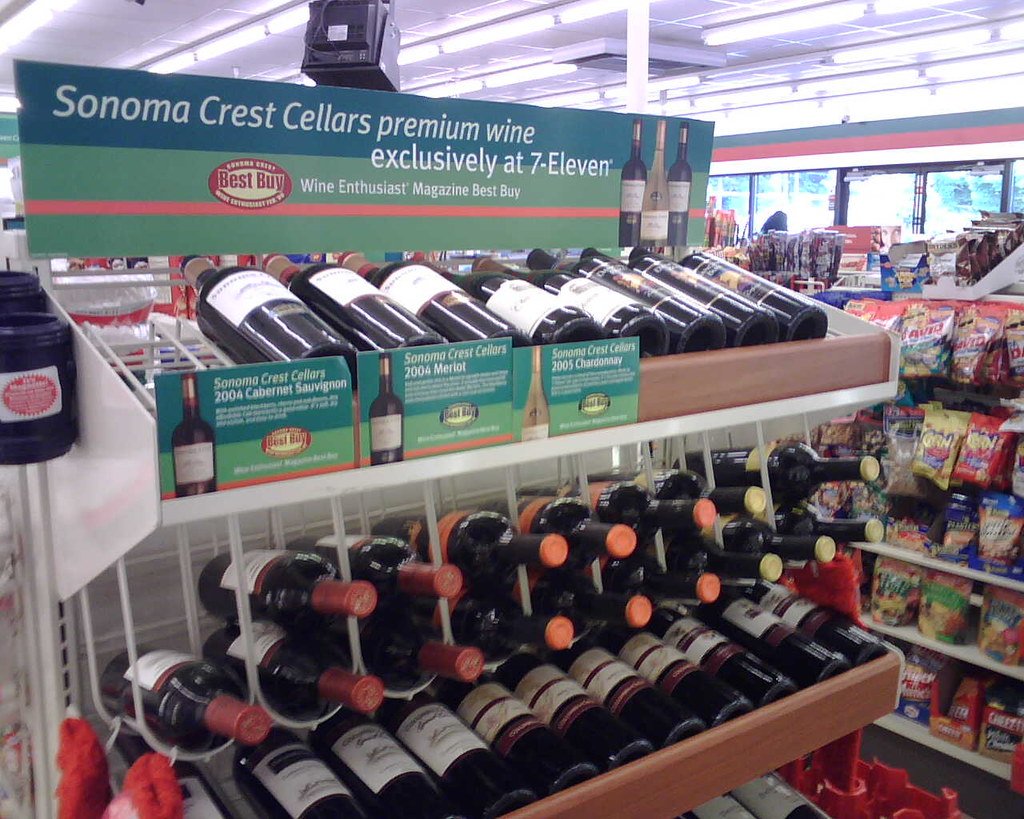
“Hey, honey, pick up some of that 7-Eleven wine when you get the diapers and the milk.”

Forget all the bad wine news – convenience store wine sales are surging

You know all that gloom and doom in the wine business?

Forget about it.

Wine sales at convenience stores surged in 2020, the fourth consecutive year of increases at 7-Eleven, QuikTrip, and the like. Wine sales, as a percentage of store revenue, increased some 20 points, as did average wine sales per store. Plus, more stores than ever sold wine, about 54 percent.

This is impressive enough. But given that overall wine sales remained flat in 2020, despite the pandemic surge, it’s even more impressive. So what’s going on?

First, since restaurants and bars were closed, we bought more wine at convenience stores, says Jeff Lenard, vice president, Strategic Industry Initiatives, for the National Association of Convenience Stores. The numbers come from the trade group’s 2020 “State of the Industry Report.” Plus, says, Lenard, the pandemic changed shopping behavior – so that buying wine at a convenience store didn’t seem nearly so odd.

Which, of course, we’ve seen before. The convenience store business has noticed this change; a recent trade magazine story urged store operators to stock more rose and canned wine, and to consider adding biodynamic and natural wine. Most wine shops don’t even carry much of the latter two. Also worth noting: A nearby  7-Eleven is selling Kendall Jackson chardonnay and Nobilo sauvignon blanc for the same price as several neighborhood supermarkets. When’s the last time a convenience store cared about competitive pricing?

In fact, wine’s growth, though starting from a smaller base, showed more or less the same percentage increases as beer. Which, given the way the convenience store business works, is amazing.

And the best news? “It’s too early to predict where things will go in 2021,” says Lenard, “but so far sales are strong, with stores holding on to some of the gains from changes in behavior in 2020, plus increasing sales from the regular customers returning to everyday life.”

Which, for wine, is even more amazing. Who knew 7-Eleven could be the wine business’ savior?

Photo: “IMG00003.jpg” by patientfox is licensed under CC BY 2.0

More about convenience store wine sales:
Convenience store wine sales 2019
Jerry Jones and 7-Eleven wine
Convenience store wine sales 2018