


Category:Spanish wine

Wine of the week: Naia 2015

naia 2015The Naia 2015: Another wine of the week, another Spanish value

The surprise is not that we’re in Spain again for the wine of the week, but that the Spanish never seem to run out of quality cheap wine like the Naia. Even I’m beginning to be surprised, and I’m the one who wrote that Spanish wine offers the best value in the world.

The Naia ($10, purchased, 13.5%) is made with verdejo, a Spanish grape that produces passable, tart white wine that has been on the blog many times. The Naia, though, has another goal in mind: A wine that is more than passable but not costing much more than the usual verdejo.

In this, it succeeds. The Naia 2015 is a softer, more round version of verdejo, with white fruit (peach?) to go with the usual lemon, and the lemon is not nearly as pronounced as usual. There’s also an herbal something or other going on that rarely shows up in verdejo. Hence, the wine isn’t as straightforward and obvious, but less tart and more balanced.

Highly recommended, and a candidate for the 2017 Hall of Fame in a year when the candidates that actually cost $10 are few and far between. Drink this chilled on its own, and keep a couple of bottles around the house as the holidays approach. And verdejo and fish are long-time pals, something to keep in mind when you’re making seafood.
Wine of the week: Zestos Blanco 2015

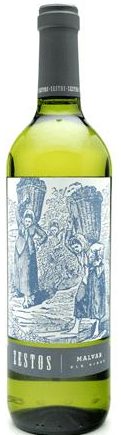
Zestos BlancoIf you’re tired of drinking great cheap wine, then don’t buy the Zestos Blanco

Tired of the Wine Curmudgeon writing about Spanish wine? Then you’re tired of drinking great cheap wine, as the Zestos Blanco demonstrates.

The Zestos Blanco ($10, purchased, 13%) fulfills all the qualifications for quality and value:

• Made with an odd Spanish grape called malvar, and we know how much I enjoy odd grapes. More importantly, since it’s not Spanish chardonnay, there’s no reason to charge a premium for it.

• Malvar produces a white wine that is not quite chardonnay, not quite sauvignon blanc, and not quite viognier. That means tart green apple and stone fruit flavors, and even a little white pepper.

• The Zestos Blanco comes from the area around Madrid, which even in Spain isn’t highly regarded for wine. Hence, another reason not to charge a premium for it.

• My favorite cheap wine importer, Ole Imports, brings the wine to the U.S., and regular visitors know how many terrific wines Ole handles. Like the Zestos rose. And the Zestos garnacha.

Highly recommended, and a candidate for the 2017 $10 Hall of Fame. Chill this, and pair it with salad Nicoise, grilled fish or shrimp, and even chicken fried steak. And, given the grape, the wine is better with food.

Cheap wine checklist: $82.67 for a case of wine

cheap winePutting my money where my crankiness is: A case of quality cheap wine for about $80.

This is the second of two parts about buying cheap wine in the age of premiumization. Part I on Sept. 22: The cheap wine checklist.

Why do so many people pay so much money for so much lousy wine? Because, as I discussed with Laura Lawson on her Wine Crush radio show last week, we’re afraid to try something different. If it’s not what we always drink, and that’s almost always overpriced cabernet sauvignon, chardonnay, and merlot, then we’re stuck paying too much.

Hence the cheap wine checklist, and its five guidelines to help us find quality cheap wine. How well does it work? Quite well; I used the checklist to buy a case of wine at the main Dallas Spec’s for $82.67 last week. The wines were from Spain, France, and South Africa, there was nary a cabernet or chardonnay among them, and four were roses.

I’ve bought some of the wines before, but almost half were first-time purchases:

• The repeats – four bottles of the Rene Barbier white Spanish blend, the Chateau Bonnet white Bordeaux, the Bieler et Fils rose from Provence, and the South African Goats do Roam rose. Total: $46.29

• I splurged on the Château La Tour Beraud Blanc, made with grenache blanc from the southern Rhone in France. Total: $12.62

• The Brumont tannat-merlot blend from Gascony in France, made by the same producer who does a nice Gascon white blend. Total: $10.52.

• Two Spanish wines from Frederico Paternina, a tempranillo and rose, because almost all Spanish wine is worth buying. Total: $16.82.

• The 2015 vintage of the Marques Caceras rose, which I hadn’t tasted in a couple of years. Total: $8.09.

Grand total, minus $11.67 in cash and case discounts and not including sales tax, was $82.67.

So no bellyaching when you say you can’t find anything cheap and good to buy. Yes, I benefited because Spec’s is the biggest retailer in Texas and because it’s locked in a death struggle with Total Wine for control of the Dallas market – both of which account for some ferocious price cutting.

But the point is not where you buy your wine, but that you understand how wine pricing works and that trying wine that you’re not supposed to like will save money. It’s one of the first lessons I learned in wine: if I don’t like chocolate ice cream, why would I buy it because someone told me I was supposed to? So why do we do that with wine?

Wine of the week: Pagos Del Rey Arnegui Crianza 2013

Pagos Del Rey ArneguiThe Pagos Del Rey Arnegui is classic $10 red Rioja – cheap and tasty

We’re not quite at the point where we can buy Spanish wine knowing nothing about it save what’s on the front label and be assure of quality and value. But we’re getting closer.

Case in point is the Pagos Del Rey Arnegui ($10, purchased, 13.5%), which I bought knowing only it was from the Rioja region in Spain, was made with tempranillo, and was supposed to have minimum oak. Tempranillo is the red grape in Rioja, and crianza is the simplest style and uses the least oak aging.

What did I get? Classic $10 crianza – cherry fruit, a hint of orange something or other, a dash of herbs, a surprisingly full mouth feel for a wine at this price, the soft tannins characteristic of Rioja, and what the tasting notes claim was real oak (and even a bit more than I wanted). All in all, hard to believe if I hadn’t tasted it. Pair this with roast beef or chicken, and even peppers, onions, and sausages.

How can the Spanish do this? Some of it is the lower cost of production, including inexpensive land and cheaper labor. Some of it is tradition melded with modern winemaking. And some of it, sadly, is that demand isn’t what it should be. Too much of the rest of the world is chasing the latest 92-point sweet fruit and chocolate wonder and doesn’t know this kind of wine exists. That’s their loss.

Wine of the week: Conde Pinel Viura-Verdejo 2015

Conde Pinel Viura-VerdejoThe Conde Pinel Viura-Verdejo is a $9 wine worthy of the 2017 $10 Hall of Fame.

What do you get when you blend two Spanish white grapes that make great cheap wine? You get the Conde Pinel Viura-Verdejo, a $9 wine that is worthy of the 2017 $10 Hall of Fame.

The Conde Pinel Viura-Verdejo ($9, purchased, 13%) demonstrates again why Spanish wine is the best value in the world. This isn’t some focus-grouped wine with lots of sweet fruit and a cute label devised by a marketing company – quite the opposite, in fact. It comes from Castilla in central Spain, where the real estate is much less expensive and the grapes, viura and verdejo, are little known elsewhere in the world.

Which is fortunate for us. Look for tart green apple fruit, a smidge of tropical something or other in the middle, and a fresh, surprisingly long finish. How this wine can be this delicious at this price is one of those questions that not enough producers are able to answer.

Chill this, and drink it on its own (yes, a porch wine), or with grilled or roast chicken, as well as anything with garlic, herbs, and olive oil.

Wine of the week: Segura Viudas Brut Rose NV

Segura Viudas Brut RoseThe Segura Viudas Brut Rose can make even a curmudgeon happy.

There are days when even I am worn out by my whining and carping and complaining, about trying to save the wine business from itself, about beating my head against Google’s Internet Iron Curtain. That’s when I buy a bottle of the Segura Viudas brut rose and appreciate some truly great cheap wine.

The Segura Viudas brut rose ($8, purchased, 11.5%) is one of the handful of cheap wines that shows what happens when a producer – even a gigantic one like Segura owner Freixenet – cares more about quality than focus groups. I’ve been drinking this Spanish sparkling wine (as well as the Segura brut) since before I started the blog, and it has never let me down.

It has changed over the years, becoming a touch softer and with less acidity than other cavas, but it remains cava and not some bastardized knockoff. Look for bright red fruit, a rich, bubbly mouth feel, and that particular fresh and minerally cava finish. How this is done for less than $10, when much inferior Prosecco costs $12 and $15, is something that even baffles me – and I’m supposed to know these things.

Highly recommended, and it will take its rightful place in the 2017 $10 Hall of Fame in January. Drink this chilled on its own, or with almost any food imaginable, including big red meat.

Wine of the week: Blume Verdejo 2015

Hey, wine geeks: Why orange wine and not verdejo?

The wine geeks spend their time telling us about orange wine and Greek wine and a bunch of other stuff that is usually expensive and that we can’t buy. So why have they overlooked verdejo, a Spanish white grape that is used to make terrific cheap wine?

The word plebeian comes to mind, because they are wine geeks and that’s how they view the world. But if the biggest problem with the Blume Verdejo ($9, purchased, 13%) is that it’s too common, then we need more wine like this.

Verdejo produces a tart, citrusy wine that is often compared to sauvignon blanc, but it approaches those qualities from a different direction. I like to think of it as the difference between Woody Allen and Mel Brooks movies. Both make you laugh, but in a different way.

This vintage of the Blume verdejo has white grapefruit, some herbal aromas, and a clean, crisp finish. It’s not especially subtle and not overly complicated, but it’s still enjoyable and a terrific value. Drink this chilled on its own, or with almost any summer dinner that isn’t red meat.

Highly recommended, and a candidate for the 2016 $10 Hall of Fame.