Category:California wine

Wine of the week: McManis Cabernet Sauvignon 2019

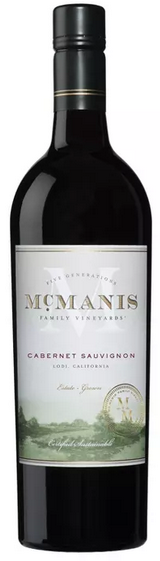
McManis cabernet sauvignon
McManis Cabernet Sauvignon 2019/$-$12

Call it McManis month on the blog – and why not, given that this is a spectacular California red

Typically, I try to vary the wines of the week, alternating color, varietal, and producer so no one grape or winery gets more than its share of attention. But when I looked through my notes to plan this month’s wines of the week, I found I had overlooked several McManis labels. Which was a serious mistake, given the paucity of quality $10 wine these days – and especially from California.

So the McManis viognier showed up a couple of weeks ago, and today it’s the turn of the McManis Cabernet Sauvignon 2019 ($10, sample, 13.5%). This is cheap red wine in all its glory – a cabernet that tastes like California cabernet and that hasn’t been “smooothed,” tarted up, or reduced to something that people who drink Dr Pepper would want to drink, if they actually drank wine.

That means herbal, rich and full, with just the right amount of tannins, and with plenty of dark fruit. Maybe it’s black cherry – or even, perhaps, currants, one of the geekiest cabernet descriptors and usually reserved for a $35 wine. The McManis is not sweet, but the fruit is ripe and no one will ever confuse it with an earthy, elegant French red made with cabernet. But it’s not supposed to be confused with one, is it?

Highly recommended, and a candidate for the 2022 Cheap Wine of the Year, as well as to remain in the Hall of Fame. Bring on the burgers and grilled beef, sip a glass or two, and be glad that McManis believes in quality when so many others in California believe in focus groups.
Expensive wine 146: Smith-Madrone Riesling 2017

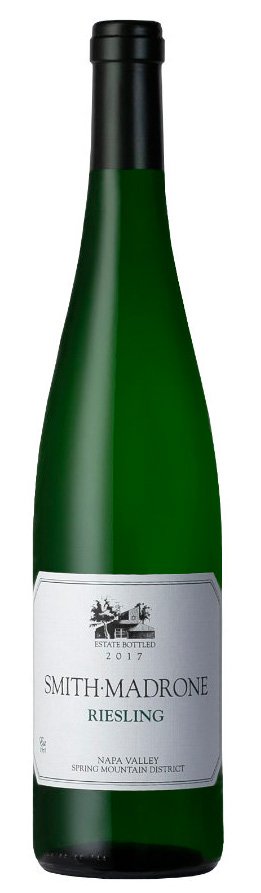
Smith-Madrone riesling
Smith-Madrone riesling/$30-$35

Smith-Madrone’s riesling is a top-notch New World take on a classic grape

Once more into the riesling breach, dear readers: And why not? I’ve probably tasted more reislings over the past 18 months than I have in the blog’s entire 14 year history. And I’ve rarely been disappointed. The Smith-Madrone, despite California’s lackluster track record with the grape, is just one more reason to sip and smile.

The Smith-Madrone riesling 2017 ($35, sample, 12.9%) combines New World-style fruitiness with the varietal characteristics that make great riesling so much fun to drink. In other words, not sweet for the sake of sweetness, and not some kind of fruity confection because, you know, that’s what Americans drink.

Look for lime zest, a bit of tingliness in the back, a hint of petrol, some sweetness floating around to remind you it’s riesling, just enough acidity to greet the sweetness, and stoniness in the finish. In fact, this is one of the few times where the wine geek descriptor “wet stone” almost makes sense.

Highly recommended – the kind of wine that people who don’t think they like riesling should try. Even the very tough crowd on CellarTracker (the blog’s unofficial wine inventory app) like this wine. And the usually only like high-end Napa wines.

Wine of the week: McManis Viognier 2018

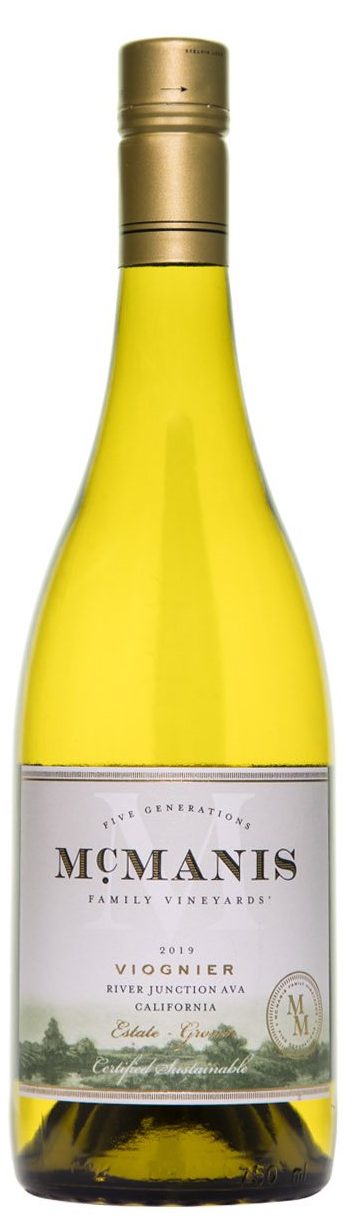
McManis viognier
McManis viognier/$8-$12

This white shows that California producers who want to make great cheap wine can – and do

The Wine Curmudgeon has long been a fan of McManis’ $10 wines, which offer quality, varietal character, and tremendous value. In fact, the winery sometimes improves even on its own high standard – a bonus we don’t see much any more.

That’s the case for California’s McManis viognier 2018 ( $10, purchased, 13.5%). It’s a stunning white wine – my notes call it a “brilliant viognier that puts more expensive wines to shame.” In other words, all we can hope for from a $10 wine.

The viognier, despite its age, is still fresh. It’s a dry wine, with peachy fruit and a sort of oily quality, the kind of thing that sometimes shows up in the best French viogniers. The finish is almost pithy, which nicely balances the fruit and offers structure. This is summer porch wine – chill it and sip it.

Highly recommended, and a candidate for the 2022 Cheap Wine of the Year (as well as to remain in the Hall of Fame). The bad news? Availability can be spotty for the McManis wines, despite their quality and the fact that the winery us among the 100 biggest in the country. There appears to be lots of the 2019, which seems to be the current vintage, but not as much of the 2018. But, given McManis’ quality, the 2019 is more than worth trying.

Fourth of July wine 2021

Let’s help the WC find quality cheap wine for Fourth of July

Fourth of July wine 2021: Four bottles to enjoy for Independence Day

The Wine Curmudgeon, several readers have noted, usually doesn’t choose U.S. wines for the annual Fourth of July post. Mostly, that’s because of price and availability. This year, though, I found one — as well as quality cheap wines from elsewhere in the world.

And, as always, keep our summer and porch wine guidelines in mind for this time of year. Consider these Fourth of July wine 2021 suggestions:

• Parducci Cabernet Sauvignon Small Lot 2018 ($13, purchased, 14.5%): Competent, professionally-made California cabernet sauvignon with all the requisite traits — lots of ripe, red fruit (sweet cherries?), soft-ish tannins, a hint of some kind of oak, not too hot, and just enough structure. This is firmly in the New World style, but also tastes like wine.

• Lubanzi Chenin Blanc 2019 ($15, purchased, 12.5%): This South African white isn’t quite as crisp as I like my chenin blanc, but still well done — apple and pear fruit, maybe a little lemon. It’s not soft — just not as crisp as something like the Ken Forester. Imported by Cape Venture

• Spinelli Terre Di Chieti Rosato 2019 ($8, purchased, 12.5%): This Italian pink costs as little as €3 in Italy. Berry fruit, almost savory in what seems to be an Italian style much preferred by Italians, as well as bone dry and a stony finish. Highly recommended. Imported by Enotec Imports

• Poema Cava Brut NV ($12, purchased, 11.5%): A touch softer than traditional cava, the Spanish sparkling wine. That means red apple instead of green and not as much lemon. But well done, and the bubbles belie the price. Imported by Kobrand

Photo: “Happy Fourth of July 2013!” by JD Hancock is licensed under CC BY 2.0

More Fourth of July wine:
• Fourth of July wine 2020
• Fourth of July wine 2019
• Fourth of July wine 2018
• Wine of the week: Domaine Bousquet Sparkling Rose Brut NV

Wine of the week: Broadside Cabernet Sauvignon 2018

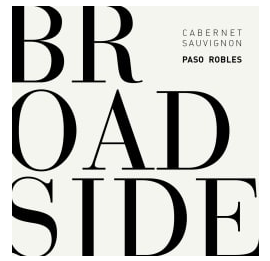
broadside cabernet sauvignon
Broadside cabernet sauvignon/$10-$16

Jammy? Certainly. But a New World-style red that is well-made and drinkable

No, the Broadside cabernet sauvignon is not the wine of the week because its name and label fit some sort of Fourth of July theme. Rather, it’s because the wine is something I don’t see much of – a drinkable, New World-style cabernet from California that is neither too jammy or sweet.

There is little doubt that the Broadside cabernet sauvignon ( $13, purchased, 13.5%) is jammy, with lots and lots of dark berries. But there is more than just sweet fruit – extremely rare for this kind of wine, where the goal is usually “smooth.”

There is sort of something resembling what wine geeks call fine-grained tannins, where the tannins hide in the background instead of puckering your mouth. And you might actually taste some spice, another pleasant surprise. Finally, there is what the winery notes call a “solid seam of acidity” – a bit of an exaggeration, but not much.

Drink this with almost any July 4 barbecue. And yes, if you pay more than $15, you might be disappointed. Still, it’s a fine example of this style, where the producer wants to make wine and not something to please people who don’t like red wine.

Barefoot wine review 2021: Merlot and Crisp White Spritzer

barefoot wine
The guy in the middle must have tasted the Crisp White Spritzer.

• Barefoot wine (again): Value or just cheap?
• Barefoot wine: Why it’s so popular

Barefoot wine review 2021: A merlot that mostly tastes like grape juice, and a spritzer that takes sugar water where it’s never been before

The blog’s 14th annual Barefoot review focuses on the traditional and the au courant — merlot, about as old-fashioned as it gets, and a Crisp White Spritzer, which (I assume) is supposed to compete with trendy hard seltzers. The former tastes like most Barefoot wine — soft, just enough sweet, and devoid of varietal character. The latter breaks new ground — a cross between a hard seltzer and the infamous wine coolers of the 1980s.

The non-vintage merlot ($6, purchased, 13.3%) has a California appellation, and I had high hopes for it. The merlot has often been the most wine-like of the Barefoots, and it almost made the $10 Hall of Fame in the blog’s early days. But no such luck. This was formula winemaking using poor quality grapes. Each component was exactly where it should be — the sweetness (not quite as sweet as the red Apothic or Menage a Trois); generic fruitiness (think grape juice that isn’t tart); a murky finish common in this kind of red wine; and no tannins or acidity. In other words, cheap, smooth wine for people who want that.

I also had hopes for the Crisp White Spritzer ($6, purchased, 5.5%). Maybe it would be something like a vinho verde? No such luck. This isn’t legally wine, so it has ingredient and nutritional labeling. Hence, everything you need to know about the product is on the label — made with carbonated water, something called “grape wine,” and cane sugar. Almost one-quarter of its calories come from “added sugars.” So sweet, sweet, sweet, and not crisp by any stretch of the imagination. It’s so sweet, in fact, that it’s almost impossible to drink on its own. Mix with vodka or cranberry juice (or both), and hope for the best.

Photo: Sylvane, using a Creative Commons license

Blog associate editor Churro contributed to this post

More Barefoot wine reviews:
• Barefoot wine review 2020
• Barefoot wine review 2019
• Barefoot wine review 2018

Expensive wine 145: Justin Isosceles 2016

Justin Isosceles
Justin Isosoceles 2016/$70-$90

The Justin Isosceles is a pricey California red blend that delivers quality and consistency

One of the many perks of this job is tasting the Justin Isosceles, a red blend from Paso Robles. It’s an example of California wine at its best, an effort that speaks to terroir, a certain winemaking style, and the idea that all California wine at this price doesn’t have to taste alike.

Because the Justin Isosceles isn’t cheap. The 2016 ($80, sample, 14.5%) costs about $10 more than the 2015, so it gives me a reason to be even more critical. Fortunately, the wine is as it always is – polished and enjoyable, combining a powerful Paso Robles style with technique and skill so that it’s fresh and approachable. In this, though, it doesn’t taste exactly the same every vintage, and the 2016 isn’t quite as big as the 2015.

Look for lots (and lots) of ripe berry fruit mixed with some green herbs and an almost menthol sort of thing. There’s a full mouth feel and soft tannins, but this isn’t an overripe, stuff it in your face whether you like it or not kind of wine. It’s not subtle, certainly, but you can take a couple of swallows without fanning yourself.

Just the wine for a Father’s Day gift or Father’s Day cookout – red meat, certainly, and something to to be enjoyed and savored with the meal.