



Category:California wine

Expensive wine 124: Beringer Private Reserve Cabernet Sauvignon 2008

Beringer private reserveThe Beringer private reserve cabernet shows off the style that made this kind of wine famous

The wine closet continues to offer surprises – witness the high-powered Beringer private reserve, a Napa red. This was a sample from the long ago recession, when producers were so eager to move product that they even sent pricey bottles to me.

The Beringer private reserve ($115, sample, 14.5%) has aged barely at all in that decade. It’s still a huge wine, with rich and luscious black fruit. I can’t even begin to imagine what it would have tasted like if I had opened it when I got it.

And, though the wine isn’t subtle, it’s not overpowering. The structure is round and supple, and if there aren’t layers of flavor, it’s much more than a one-note wine. There are very relaxed tannins hiding in the back, and all that fruit isn’t especially cloying. Despite the high alcohol, it’s not noticeable until you’ve finished the bottle. So it does need food as big as it is.

In this, it’s an excellent example of the style of Napa cabernet so beloved by critics who give points, retailers who use points to sell wine, and wine drinkers who buy wine according to price and points.

Labor Day wine 2019

Labor Day wine 2019
Fire up the grill and break out the Labor Day 2019 wine

Enjoy Labor Day 2019 with four wines that focus on value and quality

It has been a mild summer in Dallas — lots of rain in June, an unseasonably cool day in July, and no 100 degree days until July 30. Having said that, Labor Day means cooler weather sooner rather than later, so let’s celebrate with Labor Day wine 2019.

These four bottles will get you started, and don’t overlook the blog’s porch wine guidelines:

• Bonny Doon Malvasia Bianca 2018 ($18, purchased, 13.5%): This California white is nothing if not interesting, as well as a terrific food wine: Flavors of orange, lime, and then more orange. This means it’s varietally correct, and there is freshness and a very zippy acidity.

• Sierra Cantabria Rosado 2018  ($12, purchased, 13%): This Spanish pink, made from tempranillo in the Rioja region, does all it should for the price — a little orangish red fruit, some stoniness on the back, and crisp throughout.
Imported by Fine Estates from Spain

•Ludovicus Garnacha 2015 ($12, sample, 14%): It’s amazing that this Spanish red has aged this well, given the grape and the cost. Rich and full, easy tannins, lots of dark fruit (cherry? blackberry?), and surprisingly clean and un-cloying for a garnacha. Needs food — Labor Day barbecue, anyone?. Imported by Ole Wine Imports

• La Granja 360 Brut NV ($6, purchased, 11.5%): This Spanish bubbly from Trader Joe’s is pleasant and sweetish, more like Prosecco than Cava. That means  softer fruit (less tart green apple and more red delicious) and a much softer mouth feel. But the bubbles are tight, and you can do a lot worse for $6. Imported by Evaki

Photo: “Picnic-2004-681” by Nashville First Baptist is licensed under CC BY 2.0 

For more about Labor Day wine:
• Labor Day wine 2018
• Labor Day wine 2017
• Labor Day wine 2016

Mini-reviews 124: Freemark Abbey, Bogle rose, Lacrima, Terra Alpina

Freemark AbbeyReviews of wines that don’t need their own post, but are worth noting for one reason or another. Look for it on the fourth Friday of each month

• Freemark Abbey Sauvignon Blanc Napa Valley 2018 ($21, sample, 13.7%): Competent, mostly enjoyable California style sauvignon blanc (some grass, some citrus) with richness in the mouth but a surprisingly short finish. Hence, this white wine speaks to how difficult it is to offer value in entry level Napa wine. Because these days, $21 is entry level Napa wine.

• Bogle Vineyards Rose 2018 ($10, sample, 13%): Thin, bitter, and slightly sweet California pink wine with almost no redeeming qualities. Rose for people who buy buy rose at the supermarket because someone tells them they should buy rose.

• Marotti Campi Rùbico 2018 ($18, purchased, 13%): Intriguing Italian red made with the little known lacrima grape from the Marche wine region, which is best known for white wine. It resembles a quality Beaujolais – lots of red berry fruit, not too much acidity, and just enough heft to be interesting. Price is problematic, since you can buy better wine for less money. Imported by Dionysus Imports

• Terra Alpina Pinot Grigo 2018 ($15, sample, 12.5%): Alois Lageder makes some of the best Italian white wine in the world.  This is apparently its second label, but why it would sully its name with this very ordinary and overpriced tonic water pinot grigio is beyond me.

Photo: “When in Italy” by simon.wright is licensed under CC BY-NC-SA 2.0 

Wine of the week: Stephen Vincent Crimson 2016

Stephen Vincent CrimsonThe Stephen Vincent Crimson is an excellent example of that vanishing California breed, a well-made and enjoyable cheap red wine

Call this wine of the week, the Stephen Vincent Crimson, a bit of serendipity – a $12 California red wine that doesn’t taste like it has been tarted up, dumbed down, or manipulated to please a focus group.

The Stephen Vincent Crimson ($12, purchased, 13.9%) is a red field blend (mostly petite sirah this vintage), which means it’s made with whatever grapes are available that year. The 2016 offers ripe cherry aromas and lots of dark berry flavors, but finishes bone dry.

That it was dry was actually surprising, since the fruit was so ripe and because so many sweet reds pass themselves off as dry these days. In fact, I kept swallowing, over and over, figuring that the cotton candy sign of residual sugar would eventually show up in the back of my mouth.

But it never did. And that that’s a sign of how well made the Stephen Vincent Crimson is. In addition, most wines of this style and at this price wouldn’t bother with tannins or acidity. But there are tannins, are soft but noticeable, and the acidity is just below the surface, tempering the fruit.

This is an excellent example of that vanishing California breed, a well-made and enjoyable cheap red wine (and you can even drink it slightly chilled). Pair this with barbecue as summer winds down, or even something a little spicy, like pork chops tandoori. That’s what I did, and it was one of this summer’s great wine dinners.

Expensive wine 123: Long Meadow Ranch Pinot Noir Anderson Valley 2016

The Long Meadow Ranch pinot noir shows California’s Anderson Valley to its best advantage
My friend, the New Orleans wine judge, critic, and radio host Tim McNally, regularly rants about the decline in pinot noir quality and value. Tim would rant less if he tasted the Long Meadow Ranch pinot noir.

The Long Meadow Ranch pinot noir ($40, sample, 13%) is red wine from California’s Anderson Valley, one of the world’s great – if less known – pinot noir regions. The best Anderson Valley pinot noirs are more restrained than many of their New World colleagues, sitting somewhere between France’s Burgundy and Oregon in style. Which is a damn fine place to sit.

The Long Meadow Ranch pinot noir is classic Anderson Valley pinot – earthy with spice and green herbs in the front, almost silky dark berry fruit, elegant tannins (perhaps the most interesting part of the wine), and wonderfully restrained oak. All in all, this is a New World pinot noir that isn’t too big or too overpowering, yet still tastes like the New World and not a lesser Burgundian knockoff.

Highly recommended, and given the price of very ordinary California pinot, a fine value. Drink it with any sort of lamb (crusted with a garlic and herb paste, perhaps?) or a Mediterranean vegetable platter marinated with herbs, garlic, and olive oil.

Expensive wine 122: Ridge Lytton Springs 2016

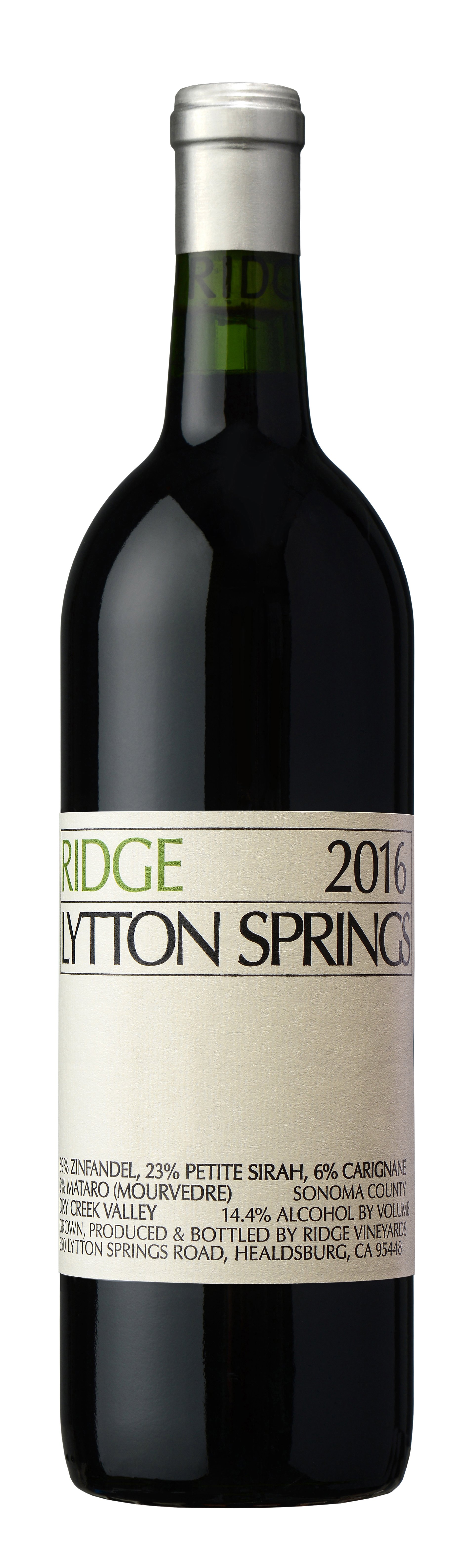
ridge lytton springsThe Ridge Lytton Springs zinfandel blend speaks to quality and value in the finest California tradition
The premiumization debate should not obscure the fact that there are expensive wines that deliver value and quality. Perhaps the foremost of those is anything from Ridge, the California producer that has been the watchword of the faith for anyone who believes in value and quality. As evidence, we have the Ridge Lytton Springs.

The Ridge Lytton Springs ($45, purchased, 14.4%) reminds us of everything that is possible with California wine. It speaks to terroir and to Sonoma’s Dry Creek Valley and its particular style of earthiness. It speaks to aging – this wine, ready and delicious now, has at least a decade of life in it, when it will become rounder and less ripe and much more interesting.

Best yet, as with all Ridge wines, it shows the rich, ripe style of California, but done with structure and and almost elegance. Look for dark fruit (black cherry? black raspberry?), a wonderfully peppery middle, and one of best uses of oak I’ve tasted in years on the finish. Plus, the tannins are not an afterthought, as with so many zinfandels (even expensive ones), but an integral part of the wine.

This isn’t a swaggering Lodi zinfandel. The fruit and alcohol aren’t piled on for show, like frat boys seeing who can chug the most beer. Rather, the Ridge Lytton Springs is rich and ripe because zinfandel produces rich and ripe wine. And because it’s a blend (four grapes, including some two-thirds zinfandel and one-quarter petite sirah), winemaker John Olney can use the blending process to make the sum greater than the parts.

Highly recommended. I decanted this about a half hour before dinner, which seemed about right. It’s a food wine, but not just red meat. I served it with roasted pork shoulder studded with rosemary and garlic, which worked more than well.

Wine of the week: Peterson Shameless Fifth Edition

Peterson shamelessThe Petersen Shameless is a terrific California red blend that most of us can’t buy – thank you, three-tier system

Today, on the day before Independence Day, the blog offers a wine of the week that most of us can’t buy, the Peterson Shameless. That’s because the three-tier system’s stranglehold on consumers deprives us of the independence to buy the wines we want, like the Shameless. Instead, we’re forced to buy the wines the second tier – the wholesalers – decide we can buy.

The Peterson Shameless ($15, sample, 14.2%) is a non-vintage red blend from California. It’s a field blend, where the grapes change with each bottling depending on what’s available and what fits the winemaker’s mood. In the fifth edition, that means nine grapes, though about one-half are barbera. The result is ripe red fruit (cherry and a sort of tart berry thing) that leads to a rich, almost soft mouth feel and wonderfully creamy tannins. It’s a terroir driven wine, something that is difficult to find at this price in California, and quite enjoyable (and especially for people who like this style).

And, unfortunately, difficult to buy even though it screams July 4 barbecues. That’s because Peterson is a small winery and doesn’t make enough of the Shameless to interest one of the mega-distributors that dominate the market. Hence, no clout to get on store shelves and probably not available outside of parts of California. Yes, you can buy it from the winery, but only if your state allows direct shipping – and most still don’t.

Call this post the Wine Curmudgeon’s contribution to the on-going debate about the the three-tier system. Yes, progress was made last week, but we still have a long way to go – as the Peterson Shameless demonstrates.