Tag Archives: wine marketing

Winebits 752: Peter Bell, wine marketing, Brooklyn Bridge

Man and woman drinking wine
“Let’s toast to Peter Bell for a career well done.”

This week’s wine news: Peter Bell, one of the best winemakers in the country, retires. Plus, no “wine for dinner” ads and wine cellars under the Brooklyn Bridge

• Peter Bell retires: Peter Bell, the long-time winemaker at New York’s Fox Run and a riesling genius, has retired. He has long been a champion of Drink Local and will be much missed. I first met Peter judging the old International Eastern competition, where we did a particularly aggravating and seemingly endless flight of supermarket zinfandels. Peter patiently explained to me how these especially corporate wines were made – tannins and acidity removed, color darkened, and sweetness added all in an attempt to make them as boring as possible. That way, they wouldn’t offend anyone. And, whenever I taste one of those wines these days, I still think of that lesson. Thank you, Peter. You taught me a lot.

• No wine for dinner: An attempt to create a national wine marketing campaign, similar to the “Beef: It’s what for dinner” effort, has failed. The organizers of the WineRamp initiative announced last week that there wasn’t enough wine business support to fund the campaign. The proposal was controversial, even without the question about how to pay for it; many respected marketers said the idea, despite its good intentions, wasn’t far-reaching enough. My take? It would have been better than what wine is doing now, which is nothing.

• Under the Brooklyn Bridge: The Brooklyn Bridge, which connects Manhattan and Brooklyn over the East River in New York City, has a couple of wine cellars. They were built into the ramps leading to the East River on both the Manhattan and Brooklyn sides – and actually constructed for wine storage. The bridge cut through two liquor retailers when it was built, so the cellars were designed to make up space the retailers would lose. They aren’t used for wine anymore, though, and haven’t been since World War II. Today, New York City stores equipment in them.

“You don’t love our wine? That’s not possible. … we had a meeting about it”

woman writing on notebook
“How can I work the the marketer’s notes about affordable and smooth into this review for a $25 too tannic red wine?”

In the world of post-modern wine marketing, we’re all partners and we’re all part of the team – even if we’re not supposed to be

Some wine marketers, after sending a wine sample, will follow up with an email asking if I liked it. Or, as one email recently asked, “Would love to know your thoughts about the wine. …”

Yeah, right.

In fact, they didn’t actually want to know what I thought about the wine. They already knew, because it was decided in a meeting at the start of the marketing campaign. In the world of post-modern wine marketing, there’s no such thing as objectivity. Everyone, whether marketer, influencer, or cranky ex-newspaperman who reviews wine, is part of the team partnering with the client.

Yeah, right.

That this is a contradiction in terms doesn’t seem to bother anyone; in fact, it doesn’t even seem to occur to anyone. Which is bad enough. But why would the marketers assume that I’ll play along? Aren’t wine writers supposed to be objective? Oh, wait a minute. We’re not, are we?

In this case, I did share my thoughts about the wine – politely, but also honestly, explaining that it wasn’t anywhere near what the producer claimed it was. No doubt I’ll get a note thanking me for my objectivity.

Yeah, right.

Having said that, many of the PR people I deal with are top-notch. They know what I’m looking for, and will be honest with me about the wine they’re flogging. Some even know not to offer me something, because it’s too expensive or too focused group or too whatever. Needless to say, I cherish those marketers, which is the reason no names are being mentioned. The last thing I want to do is get them in trouble with the client for being really good at their job.

And I turn down a lot of samples, too, probably more than anyone in the wine writing business. What am I going to do with a $30 Italian sauvignon blanc, other than to sigh and write something about the sad future of the wine business?

I wonder: Did that possibility come up in the meeting? I doubt it.

Photo: Photo by J. Kelly Brito on Unsplash

The history of wine advertising and reaching younger consumers

Portugese wine
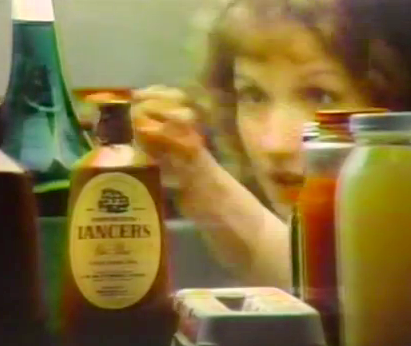
Marketing wine to younger consumers needs more than another Lancers commercial — which, of course, is what we usually get.

Younger consumers don’t want corny and Aldo Cello, but what have they been getting?

Wine Opinions’ John Gillespie, who has been analyzing the wine business for even longer than I’ve been ranting about it, offers some needed perspective about the state of wine advertising:

“If the question on everyone’s mind today is how to gain the favor of young adult beverage alcohol consumers, the first thing to understand is that the wine industry has literally been there, and done that. Of course, the playbook of the winning brands half a century ago must be updated — the wines that broke though in the ’70s and ’80s are not likely to stage a reunion tour anytime soon.”

Gillespie offers a look at the wines and advertising that played key roles in the 1970s and ‘80s boom, including E&J Gallo’s Hearty Burgundy; the German white, Blue Nun; all of those corny Riunite ads; and even Aldo Cella, who sold lots and lots of bottles of Cello Lambrusco.

Gillespie makes the telling point that as successful as those brands and campaigns were, they can’t — and shouldn’t – be repeated today. Those were Baby Boomer moments, and despite what he identifies as some similarities between the Boomers and their children and grandchildren, the demographics aren’t the same.

This is something we’ve noted on the blog many times, most recently for Gallo’s new Black Box campaign. It has more in common with those 1970s and ‘80s efforts than with anything post-modern.

What the wine business should be doing instead of what it did 50 years ago, says Gillespie, is to focus its marketing on two ” ‘features and benefits’ that resonate especially well with consumers under 40. Wines made from organically grown grapes or by wineries with sustainability certifications significantly over-index among those in their 20s and 30s.”

Which, as you may have noticed, may never have been in any important wine ad ever in the history of wine ads.

Is it any wonder I worry about the future of the wine business?

Can an eight-pack of tiny bottles save the wine business from itself?

wine packaging
Imagine an eight-pack — and watch the young people buy with joy.

Will younger consumers appreciate eight bottles of single-serve wine?

Imagine this: a 20-something, arriving for a dinner party, puts an eight-pack of wine on the table, each a single serve bottle.

Are we on the way to solving wine’s generation gap?

Maybe, says analyst Jon Moramarco, speaking at an industry webinar earlier this month. Moramarco is one of the most respected analysts in the wine business, the editor of the Gomberg Fredrikson Report, which tracks wine sales, and managing partner of the market research firm bw166.

His suggestion: The eight-pack of 125 ml bottles, which would include red, white, rose, and sweet blends. The wines would be lower in alcohol and the pack would cost around $15. In addition, he said, the product should be marketed toward younger women, with packaging designed to reach that demographic.

Pretty spiffy, yes?

The concept, of course, is not new, as the picture at the top of the post shows. Wineries have been selling multi-packs in smaller bottles for years. What’s different about Moramarco’s proposal is the size – 125 ml is smaller than the traditional 187 ml multi-pack bottle — and the contents, four different wines instead of just the one.

Which makes his idea about as revolutionary as these things get these days.

So what’s wrong with it (since I am the WC, and must point that out)?

• How do we guarantee wine quality? Typically, single-serve bottles are made to hit price points and not to taste like wine (as anyone who has ever suffered through an airline bottle knows).

• Manufacturing. A 125 ml bottle is not a standard size, which raises all sorts of supply chain and bottling questions. Plus, I can just hear the moaning from winery executives: “We can’t put different wines in the same pack – we’ve never done that before!”

• Retailers. As noted here many times, most wine is sold in 750 ml bottles; hence, most stores aren’t set up to sell something that isn’t in a 750 ml bottle. Any retailer willing to take this project on would have to be willing to rearrange shelving and adjust displays – not an easy task.

Still, don’t let it be said that the WC is standing in the way of progress. This is the first idea that I’ve heard in years that doesn’t make me worry about the future of the wine business. So let me do my part: how about calling it, “I’ll bring the wine”?

Is the world ready for Churro wine?

Churro desk
“Do I have to write all the rants around here from now on?”

Is it paws-ible to successfully market wine by selling it to pet owners?

Churro, the blog’s associate editor, saw the news release first. “What kind of marketing foolery is this?” he asked. “I count four horrible puns in the first couple of graphs, including that wretched ‘paws-ible’ – and I’m a dog and I can’t read or count.”

The subject of Churro’s ire was an email from a marketing company that was pushing a winery called Bar Dog, which is offering custom labels featuring – you guessed it – your “cute and cuddly canine kids” just in time for National Puppy Day later this month.

“Now, Churro,” I said, “let’s not get too worked up about this. You know what happens then – you run around WC World Headquarters yipping and yapping and scratching up the rug in the front room. And at least they didn’t spell canine with a k.”

“I can’t believe you’re sticking up for this,” Churro said. “This is usually the kind of thing that sends you into a 350-word rant.”

“Now, I didn’t exactly say I was sticking up for it,” I said. “You’re right — it is entirely too cute. And the world certainly doesn’t need any more pet pictures on Instagram, which the marketers seem to be urging everyone to do. Plus, the two-bottle minimum does seem like a stretch — $30 worth of wine plus shipping for something no one will likely drink. But a rant?”

Churro snorted. “Do I have to do everything around here? If my picture is going to go on a wine label, I want it to be on damned good wine – not something that is described as ‘handcrafted’ and ‘affordable.’ Which, as you have pointed out many times on the blog, are often marketing-speak for plonky wine.”

So no, there probably won’t be a Churro wine, despite the offer in the release to do one for the blog. My associate editor won’t sit for it.

Artificial intelligence and wine recommendations

cooper's hawk
Drinky is embarrassed that his AI brethren think the WC likes buttery California chardonnays.

Wine marketers are betting millions that algorithms will help us find wine we like

Most computer-generated wine recommendations have traditionally been pretty much worthless. There’s this, which we’ve noted before on the blog. But there’s also this, from wine.com, which arrived last month: The email said I would like a $64 bottle of Veuve Clicquot (I think not), as well as a $20 Kim Crawford sauvignon blanc (I think not, again), as well as a $12 California pinot noir and a $12 sweet red blend (I really, really think not).

That’s because the formulas used to put these recommendations together depend on things that aren’t necessarily related to wine – like income, age, and gender — and use past purchase information probably more than they should. Just because I bought wine A doesn’t mean I’m going to like it enough to buy wine B. And AI-generated recommendations have been notoriously lousy at using price to determine what we’ll like.

In addition, most algorithms have not been able to effectively process the wine-related criteria that do matter, like style, alcohol levels, and so forth. And I’m not sure that marketers understand the challenge. One highly-touted AI effort in 2021 said the the goal was “to personalize wine recommendations based on individual preferences, for example: Is the subscriber a red wine or do they prefer white (or maybe a little of both)?” Which seems more of a 1990s approach than something in 2021.

Another, the BottleBird app, asks a series of questions to find out what we like, including “How do you feel about the smell of flowers?” How we answer, says its publicity, will make sure we “never buy a bad bottle of wine again.” So, of course, when I tried the app, I got a 97 percent match with two Fre non-alcoholic reds and two buttery California chardonnays. Hardly the WC’s kind of wines, are they?

The process is so difficult, in fact, that a friend of mine who has written extensively about the subject once told me the only way AI wine recommendations could be successful is if they included information from human tasting panels. Which hardly sounds very AI.

So why have wine marketers spent millions of dollars trying to find a way to teach machines to make wine recommendations? My hunch is that it’s not so much about helping us find wine we like as it is selling us wine. Which, of course, is not necessarily a bad thing – if they work. But when they recommend wines I wouldn’t buy even if they were free, what’s the point?

Winebits 732: Minimum pricing, wine marketing, Champagne pyramid

This week’s wine news: Ireland sets minimum prices for alcohol, plus a look at the failings of wine marketing and a world-record Champagne pyramid

liquor store
Not to worry, wine drinkers — Irish-style minimum pricing is still a ways off in the U.S.

• No more cheap wine? Ireland has set minimum prices for alcohol, including wine, in a bid to cut binge drinking and drunken driving. The concept, reports the New York Times, revolves around the amount of alcohol in the drink, as well as its size. So, of course, quite complicated. The upshot? A bottle of wine with 12.5 percent alcohol can’t sold for less than €7.40 (about US$8.35). And the Irish do drink – those 15 and older downed the equivalent of 113 bottles of wine in 2019, compared to about 12 bottles for the typical U.S. consumer. Some U.S. states have minimum pricing, including Connecticut and Michigan, but this is far more extensive than those systems. Will minimum pricing cut consumption? An official for an Irish anti-drunk group says no, since prices for most premium brands won’t change much.The key, she says, is education. I wonder: where have we heard that before?

• Consumers aren’t stupid: Randy Caparso, a long-time wine journalist and photographer, doesn’t mince words when talking about wine marketing: “. .. If consumers are stupid, it’s only because, 1, we assume that about them, and 2, we treat them that way by giving them crap.” It’s an interesting and intriguing essay, and I’d say that even if I haven’t written many of these things many times before. Says Caparaso: “The wine industry—not just wine producers, but also distributors, retailers, restaurants, media, and anyone else who has anything to do with pushing wine on consumers—has a history of selling crap to consumers. All for the sake of the almighty dollar.” And then we wonder why wine has fallen so far out of grace, yes?

• Way too much Champagne: This is not significant in almost any way, but given the trials and tribulations of the wine business (see first two items), it’s worth reporting: A hotel in Dubai showed off its world-record Champagne pyramid, more than 27 feet high and composed of 54,740 glasses of bubbly. Which, of course, is impressive, but perhaps even more impressive is that the glasses contained Moet & Chandon, which isn’t cheap. A typical bottle costs about $50, and the pyramid used almost 11,000 bottles – so how about one-half million dollars in wine?

Photo: Clarita via Morguefile