



Tag Archives: wine humor

Wine to drink when you’re trying to do a credit report freeze

credit report freezeThree cheap wines to drink while you’re struggling with a website or a call center to get your credit report freeze

Who knew the Wine Curmudgeon would need to write a post about a credit report freeze? But how else to pass the time while watching the little circle on the web browser tab spin and spin and spin? And then doing it again, because the website doesn’t load or you get the dreaded error 500 on the Equifax site?

The goal here is to drink lighter wine, since you need to pay attention to what’s going on. Plus, given how long this takes (an afternoon and a morning for me), lighter wine with less alcohol makes the most sense. If you’re on-line or on hold so long that you drink an entire bottle, better that it’s not a 14.7 percent zinfandel.

Consider these wines:

• Aldi Exquisite Collection Provencal Rose 2016 ($8, purchased, 13%); This is the pink wine that the Today Show praised to the skies, marveling that it could be so good and so cheap (which, of course, isn’t surprising for TV people). Hence, it took five months to get to my local Aldi. It’s a pleasant enough Provencal rose with berry fruit and some minerality, though the fruit is a bit shallow and it’s a little thin in the back. But it’s perfect for sitting on hold with a call center or waiting for the credit bureau to send a PIN to your phone.

• Jolie Folle Sauvignon Blanc 2016 ($13/1 liter, purchased, 11.5%): This French white is ideal for the situation, since it’s 1 liter, or about two glasses more than a regular bottle. Plus, the alcohol is so low you’ll barely notice it. The wine itself is congenial enough, with lots of sweet lemon and tropical fruit, and the acidity is toned way down. It’s not especially French, but the key here is something to drink while listening to the voice that tells you that your call is very important and will be answered in the order in which it is received.

• Louis Jadot Beaujolais-Villages 2015 ($10, purchased, 13%): This is grocery store Beaujolais, the simple red wine from France, and every time I buy it I wish it was better than it is. But it’s fruity enough (ripe cherries?) to keep at your elbow as you sigh, take a sip, sigh again, and wonder if you’ll ever be able to get the credit report freeze finished.

The Wine Curmudgeon’s 100-point scoring system

100p-point scoring systemYes, it’s silly, but is it any sillier – or any less accurate – than the rest of the 100-point systems?

The Wine Curmudgeon’s antipathy to wine scores is well known – they are often lazy, even more often too subjective to be worthwhile, and even biased.

But since I’ve been told I need to be more than merely negative, please consider the Wine Curmudgeon’s 100-point scoring system:

• Is it wine? If yes, 75 points.

• Is the wine red, white, pink, or sparkling? If yes, 5 points.

• Does it have a screwcap? If yes, 5 points.

• Does the wine cost $12 or less? If yes, 5 points.

The total? 90 points for most of the wine I buy.

Yes, this might seem silly and not even particularly accurate. Which is the point.

Is it any sillier than the scores used by the Winestream Media, where price, varietal and region seem to have as much to do with determining the score as the quality of the wine? And is it any less accurate than a system without any standards, and where one critic’s 94 can be another critic’s 87?

Of course not. The only way to determine whether you like a wine is to taste it. You can take suggestions from me or Robert Parker or any of the hundreds of us who do this. But in the end, the decision is yours. Or, as I was told all those years ago when I started doing this: “If you don’t like chocolate ice cream, and someone tells you that chocolate is better than vanilla, would you go out and buy chocolate ice cream? Of course not. So why would you do that with wine?”

Cartoon courtesy of Bob Johnson, using a Creative Commons license

Winecast 30: Arty, the first artificial intelligence wine writer

artificial intelligence
Arty, the first artificial intelligence wine writer

“Wine drinkers want to be reassured that what they are drinking is worth what they paid for it. That’s the goal of the post-modern wine business and premiumization, and I was created to do that.”

Computer-generated wine writing has arrived, if this interview is any indication. I talked to Arty, the world’s first artificial intelligence wine writer, for this edition of the podcast.

Arty and I discussed why he was created, his goal as a critic — “We’ll always need quality wine writing, human or otherwise. But I think I can offer consumers wine criticism that they can’t get anywhere else” — and why his kind may be the future.

Click here to download or stream the podcast, which is about 3 minutes long and takes up 2 1/2 megabytes. The sound quality is almost excellent.

A tip of the Curmudgeon’s fedora to the Mary Text to Speech system, which made it possible to create this interview. Maybe what I’m joking about is more possible than we know.

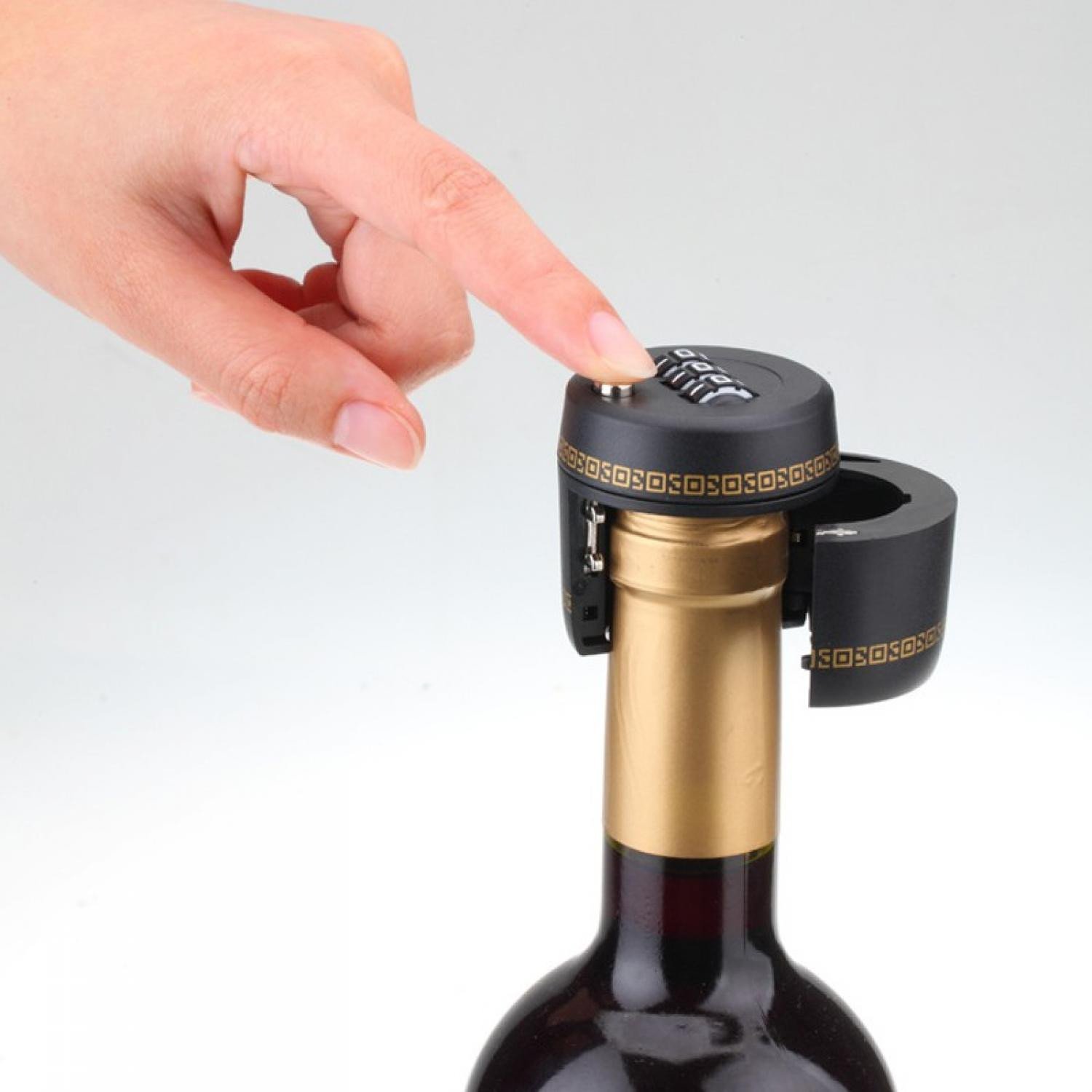
Who knew you needed a lock for your wine bottle?

But don’t forget the combination, or you’re in trouble when you need a drink

The Wine Curmudgeon, in almost four decades of drinking wine, has never had anyone steal his wine. But what do I know?

That’s because the wine gadget marketplace is flooded with wine bottle locks, since so many of us have “have a roommate who helps herself to your wine.” Or we need to “protect our cellar from thirsty thieves.”

The video, courtesy of Munawwar Rabbani via YouTube, shows how the silly things work. The good news is that most of them are inexpensive, about the cost of a cheap bottle of wine. The bad news? When I wrote this, Amazon was almost sold out the wine bottle lock in the link. What does it say about our culture that people are spending money for a wine bottle lock instead of wine?

wine critics

10 signs that you’ve been writing about wine too long

writing about wineHow do you know you’ve been writing about wine for too long? When you notice any of these 10 things:

1. Auto-complete on your phone fills in words like sauvignon and terroir when you’re sending a text.

2. You send text messages with words like sauvignon and terroir.

3. You know more about the brands that PR people are trying to get you to write about than the PR people do.

4. The PR people who used to try to get you to write about those brands are retired and living in Maine. Or Napa. Or Burgundy.

5. You realize you’re not the youngest person judging at a wine competition – and you haven’t been for several years.

6. Younger people want to judge with you at wine competitions because you have more experience than they do.

7. You remember when people drank white zinfandel – lots and lots of white zinfandel – instead of rose.

8. Eight retailers where you bought wine have gone out of business. And three of them were big local chains.

9. You need to check much more often to make sure you’re not writing the same blog post that you wrote a year ago.

10. The same crappy wines get the same 92-point scores, and you still can’t figure out why.

Photo courtesy of the Falstaff Wild website, using a Creative Commons license

More about wine writing:
• The metaphysical challenges of wine writing
• 8 signs you’ve been writing about wine for too long
• The 10 things an author worries about after writing a wine book

The John Cleese Fawlty Towers guide to restaurant wine service

The really funny part? That Cleese’s 42-year-old bit is still sadly accurate when it comes to restaurant wine service

A waiter opening wine by holding the bottle between his thighs? Yep, have had that happen. A waiter unable to use a corkscrew to open the bottle? Yep, have had that happen. A waiter arguing about whether the wine was flawed? Yep, have had that happen.

This scene, from the Hotel Inspectors episode of Fawlty Towers’ first season in 1975, is as relevant today as it was then. And, in his comic genius, John Cleese may know why so many us have given up on restaurant wine in the second decade of the 21st century. Not only does it cost too much, but too many restaurants still don’t care one way or another about wine service.

Video courtesy of holmleighnyd via YouTube, using a Creative Commons license

More about restaurant wine:
• Restaurant wine prices explained: Follow the money
• British restaurants to customers: Sod off
• Restaurant wine prices: A better way

Ancient Hebrews: “If there is any wine send it”

ancients hebrews wine
Now where did I put that wine requisition?

2,600-year-old inscription offers view of ancient Hebrew wine world without three-tier, wine scores, and restaurant markups

We tend to forget, given the foolishness that consumes the post-modern wine business, that wine is nothing new. I always tell my El Centro students that the French wine industry dates to the 12th century; one reason Henry II of England married Eleanor of Aquitaine was for her dowry, which included Bordeaux’s vineyards.

So I was both pleased and not surprised to see that Hebrew soldiers, stationed in a fortress in the ancient kingdom of Judah around 600 BC, included wine in a supply requisition. Researchers found the request on a pottery shard discovered in 1965, and used advances in imaging techniques to decipher what had not been legible for the past 52 years.

The supply request, addressed to a quartermaster, included information about paying for supplies, as well as making sure the soldiers had enough flour, oil, and wine. In other words, not that much different than one of today’s supermarkets ordering from its distributor.

The shard inscription, however, left several key questions unanswered:

• How did the wine trade survive without the three-tier system? Is this one explanation for the Babylonian conquest of Judah, which occurred around the time the inscription was written?

• How did the quartermaster determine wine quality? The deciphered inscription, just 17 words, doesn’t include wine scores or tasting notes. Again, was the failure to include these another key to Judah’s destruction?

• Also missing: any information about wine pricing and markups. Did the Judah military buy at wholesale, or was it forced to pay restaurant-style markups? If so, did the latter and its exorbitant costs bankrupt the military and lead to the country’s downfall?