
Tag Archives: wine education

Register for WC’s 2017 El Centro wine class

El Centro wine class Thursday night and the WC’s El Centro wine class: a perfect pairing

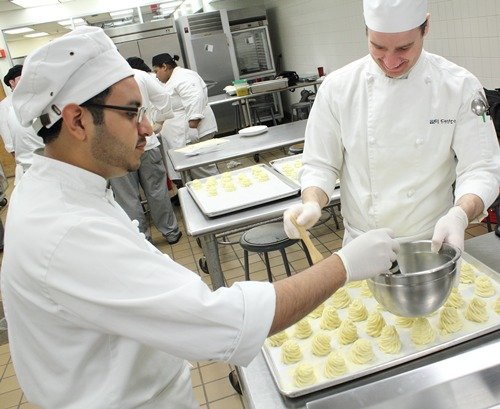
There is still time to register for the Wine Curmudgeon’s — dare I say it? — epic return to El Centro College in Dallas to teach the original wine class – RSTO 1319, viticulture and enology, for those who want to register. If you aren’t a student at El Centro, you can take it as continuing education through this link for about $100.

This semester, we’re doing 10 tastings among the 15 classes, and will cover most of the world’s great wine regions, including France, two classes on California, and U.S. regional wine. Depending on my samples, I usually find a very pricey Napa red wine for the Napa and Sonoma tasting.

In addition, we’ll discuss the three-tier system and the wine supply chain, and I’ll bring in a Dallas restaurateur to talk about everyone’s favorite subject, restaurant wine prices. That’s just one of the many guest speakers, featuring some of the smartest wine people in Dallas. There may also be a rant or two about wine scores – delivered with the proper academic perspective, of course.

All is delivered with my unique brand of enthusiasm, map drawing skills (my Texas map is legendary), humor, and passion for wine. And did I mention 10 tastings?

More on the El Centro wine class:
El Centro wine class: A new semester
The Wine Curmudgeon’s fall 2015 wine education extravaganza
Beverage management at El Centro

The WC’s El Centro wine class is back

El Centro wine classIf you’ve got a couple of hours on Thursday night, consider the El Centro wine class

The Wine Curmudgeon will return to El Centro College in Dallas next semester, teaching the original wine class – RSTO 1319, viticulture and enology, for those who want to register. If you aren’t a student at El Centro, you can take it as continuing education through this link.

That means 16 classes covering the wines of the world, the three-tier system and the wine supply chain (which is a lot more fun than it sounds), wine production and grape growing, which includes my infamous vineyard and sunlight blackboard sketches, and more than a dozen tastings. I also bring in a variety of guest speakers, featuring some of the smartest wine people in Dallas. There may also be a rant or two about wine scores – delivered with the proper academic perspective, of course.

All is delivered with my unique brand of enthusiasm, map drawing skills, humor, and passion for wine. How much more fun can one have on a couple of hours on a Thursday night?

I missed teaching this semester, and I’m excited to be doing it again, The semester begins Jan. 19 and ends May 11. It always amazes me, no matter how many times I’ve done it, to see people nod their head in agreement when something makes sense, and to know I’ve struck a blow against the foolishness of the wine business.

More on the El Centro wine class:
El Centro wine class: A new semester
The Wine Curmudgeon’s fall 2015 wine education extravaganza
Beverage management at El Centro

Seven things I learned talking U.S. wine at the University of North Texas

U.S. wineTalking about U.S. wine to college students is always a pleasure
No, I’m not teaching this semester, but I still got to preach the gospel – talking about U.S. wine this week at my pal Leta Durret’s hospitality classes at the University of North Texas. As always, the students wanted to learn, asked good questions, and gave me hope for the future of wine drinking in the U.S.

The seven things I learned:

• The folly of the three-tier system in the 21st century is obvious to everyone who doesn’t work for a distributor or a state liquor enforcement agency. Or, as one woman asked in the first class, “So you mean the only way I can get this beer I like from Washington state is to drive there and pick it up?” And the answer, of course, is yes.

• The idea of terroir, so alien to so many adult wine drinkers and wine writers, made perfect sense to the students. We did the $10 Bogle sauvignon blanc in the tasting, and its grassy aroma is classic California sauvignon blanc. This did not confuse the students in either class; the heads nodded in agreement when I asked them if they smelled the freshly cut grass and said that California is the only place in the world where this happens. Not one, “Ew, gross.”

• We also tasted the Apothic Red, the category killing sweet red blend from E&J Gallo. I wanted to do this wine because I have been told, over and over, that its target demographic is everyone who is younger than an old white guy. The students in both classes were unimpressed. The wine didn’t get any of the loud cheers or shouts of chocolate that it usually does when I taste it with women of a certain age.

• Speaking of old white guys: The students were surprised to learn that women are generally thought to have better palates than men, and that more women are super tasters, the people who can distinguish the most differences in wine. Why surprised? Because almost all of the most important wine critics in the world are men.

• One of the great joys of teaching wine is showing students how they can tell if the wine has been oaked, and how they can tell the difference between real oak – oak barrels – and fake oak, the chips, staves, dominoes, and sawdust used in cheap wine. Best yet, as these groups did, they were able to tell the difference between fake oak used well and not so well.

• Land prices. The main reason one bottle of wine costs $5 and another costs $50? We can argue about quality all we want, but it comes down to land prices. An acre of vineyard land in the Central Valley costs $25,000, while an acre in Napa Valley can cost as much as $500,000. Again, this idea, most wine drinkers don’t even consider, made perfect sense to the students.

• The Mike Nesmith look is back, and the Wine Curmudgeon is quite pleased. Women, too, are wearing knit caps. Who says college students don’t know cool?

No El Centro class this semester

The perils of academia: My El Centro College beverage management class didn’t make, as we say in the trade, and won’t be held this semester.

In other words, not enough students, and for a couple of reasons. The most important was probably this summer’s police killings in Dallas, which took place in the building where I teach and not far from the classroom. That would be enough to give almost anyone second thoughts.

Hopefully, we’ll be back for the spring semester. If you’re in the Dallas area and need information about the class, drop me an email.

supermarket wine

Teaching consumers about wine, one person at a time

wine education
Rose? Who’d have thought?

The Wine Curmudgeon embarrassed himself on Saturday, but it was for a good cause.

A 20-something woman was buying wine at one of Dallas biggest retailers on Saturday, trying to make sense of what was on the shelves in the rose section. Fortunately for her (or not, as the case may be), I was nearby, talking to one of the store’s employees. The result? A lesson in wine education.

“You should have seen your eyes light up when we talked to her,” said the employee, who will remain anonymous so he can keep his job. “You looked just like a little kid you were so excited.”

And why not? The woman needed wine for a coed baby shower, and she left the store with a dozen bottles – six roses, three reds, and three whites, all around $10. I’m not sure who was happier, the woman because she got lots of great wine without paying too much, or me because she was open, eager, and willing to do something besides buy more premiumized California chardonnay.

Yes, I made suggestions (and kept apologizing because I didn’t want to get in the employee’s way), and yes, she bought WC favorites Texas rose and Gascon white. Mostly, though, I was curious about what the woman wanted to do, part of my fascination about how consumers buy wine. The Winestream Media could care less about that; it’s too busy telling us what to buy without consideration of price or palate. Big Wine does focus groups to find out what kind of wine we want to drink, but that’s different from the actual buying process.

And she wanted to learn. She wanted to know what she could buy that would make the group happy, taste good, and not cost too much money. And when the employee found her those wines, she was eager to try them – so eager, in fact, that she was planning a taste comparison between the Texas and French roses. This is what happens when you talk to consumers instead of talking down to them and when you find out what they like instead of trying to confuse them so they’ll buy something that you want to sell them.

And the three of us had a laugh when the woman said the “real” wine drinkers in the group were bringing their own bottles to the shower. Which means they’ll miss drinking some great, cheap wine.

Finally, my thanks to the employee, and not just because he didn’t throw me out of the store. He was everything a great wine sales type should be – he was enthusiastic, knowledgeable, and respected the customer’s wishes. This contrasts with a dreadful experience I had the day before at another retailer, where I was treated rudely because I was confused by the pricing, where the same employee led another customer on a winespeak merry-go-round to sell her junk she didn’t need as I was walking out the store.

el centro wine class

Beverage management at El Centro

elcentroMy third class at Dallas’ El Centro College ended last week, the first in the Beverage management format. Which means there are now 15 culinary students armed with the knowledge that restaurant wine prices are too high, the three-tier system is not our friend, and that vodka is more adaptable to cocktails than Scotch.

Beverage management replaced the wine/beer and spirits format I started with, as part of the plan to upgrade the Food & Hospitality Institute curriculum (part of which, rumor has it, involves giving adjunct instructors like the Wine Curmudgeon a desk). Beverage management focuses more on the theory and skills the students will need when they work in the industry; hence, a terrific presentation from Eddie Eakin of Dallas’ Boulevardier and Rapscallion restaurants on bar management and especially on how to cost cocktails. Who knew how expensive a dash of bitters was?

Having said that, there is still a consumer side to the class, and we will do 11 class tastings in the fall, from sparkling wine to craft beer to single malt Scotch to cocktails. The goal, over the long term, is to offer beverage management as well as separate wine and beer and spirits classes. Until then, taking beverage management as a continuing education student is one of the best values in the wine world – $177, which includes not only the tastings and some smart and fun guest speakers but my lectures, which are more or less like getting the blog in person once a week.

Finally, a word about this semester’s class. I have taught some version of this class for almost three years, first at the soon to be late Cordon Bleu in Dallas and now at El Centro, and every day I do it I understand why so many teachers enjoy teaching so much. The students paid attention, wanted to learn, and hardly ever used Snapchat in class (because, as cranky as I am, I notice these things). We had intelligent discussions about pairing food not just with wine but with beer and spirits, whether terroir existed in beer (very controversial), and the value of three-tier system. Some of them even disagreed with me on that one, which made me smile that much more.

Winebits 432: Small Wine, wine education, restaurant wine

Small wine
I’d like a bottle of Rhone Rangers, please.

Not so fast, Big Wine: A group of Australian family producers, angered by Big Wine companies who market their “family” roots, have issued a furious denunciation of the practice. “I’m really sick of the latest trend for corporate misuse of the term ‘family’ when promoting wine brands that were sold by the family founders eons ago and conning wine loving consumers and trade alike,” Robert Hill-Smith, the fifth-generation vigneron at Australia’s oldest family-owned winery, Yalumba, told the The Weekend Australian newspaper. Hill-Smith said Big Wine subsidiaries portraying themselves as family companies undermined the validity of family-owned businesses actually owned by families. This is a fascinating story; wineries never air this sort of thing in public, though they say it in private all the time. It also speaks to Big Wine’s need not to be seen as big, something that never seems to bother General Foods or Procter & Gamble. Why that is I’ll leave to the experts.

Score one for the Italians:  The Wine Curmudgeon regularly bemoans the lack of wine education in the U.S., which is why this Italian proposal is so impressive: Children 6 to 13 would spend one hour a week learning about Italy’s wine industry as part of the national education curriculum. “We’re not trying to teach kids to drink – although even if we were it wouldn’t be so bad,” said the sponsor of the legislation. “It’s been shown that knowledge creates responsible drinkers. But this is just an extra subject that will enrich the education of our students. We make children study music in school without expecting them to become musicians.” Hopefully, the various neo-Prohibitionists who are trying to roll back U.S. drinking laws will note this and pause for a moment.

Won’t they ever learn? A website called Elite Daily, with 2.8 million Facebook likes, ran a piece about how to buy wine in a restaurant and impress your date in the process. The story, supposedly written with advice from a top wine retailer, repeats almost every misconception about restaurant wine I have lamented since the blog started. Gruner veltliner! Plus, it recommends buying white wine from France’s Loire, which is a wonderful idea save for the fact that many wine lists, and especially those at mid-priced restaurants, have little, if any, white Loire. Or we should buy cabernet franc from Spain, which hardly exists. Or we should buy a wine called Rhone Rangers, which is not a wine, but a group of producers in California who make wines with Rhone grapes. Maybe we can enroll the people at Elite Daily in the Italian school wine educations classes.