Tag Archives: Washingtion state wine

Wine of the week: Castle Rock Cabernet Sauvignon Columbia Valley 2019

Castle Rock Cabernet Sauvignon Columbia Valley label
Castle Rock Cabernet Sauvignon Columbia Valley 2019/$8-$12

Yes, a U.S. cheap wine that tastes like it’s supposed to taste

Castle Rock makes lots and lots of $10 wine, of which the Washington state reds are usually among the best. They taste like Washington state reds, they aren’t sweet, and if they’re simple, they aren’t stupid.

Which is all we ask.

Castle Rock’s Columbia Valley Cabernet Sauvignon 2019 ($10, sample, 13.5%) is an excellent example of just that kind of wine. It’s widely available (more than two dozen listings on Wine Searcher), it’s not soft just because someone, somewhere, decided soft was the way to go, and it offers cabernet character.

Which, again, is all we ask. Who knew that was so much?

Look for black fruit (maybe even some plum?) that isn’t too ripe, too over the top, or piled on to cover up other deficiencies. Even more worthwhile: There isn’t too much oak, and what there is mostly tastes like oak and not flavored wood chips. And the tannins are noticeable – not too astringent, but professionally pushed to the back, as they should be in cabernet.

Just the kind of wine for takeout pizza or burgers, or to keep around when someone who likes red wine drops by the house.

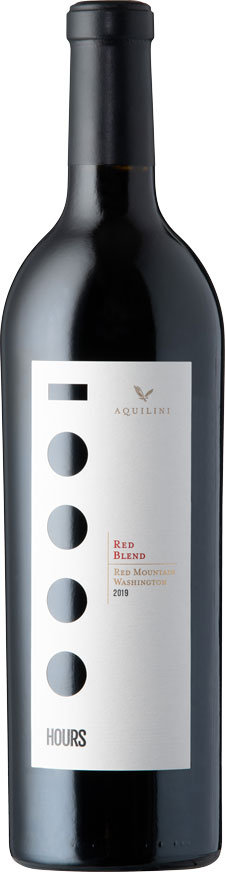
Expensive wine 152: 10000 Hours Red Blend 2018

10,000 Hours 2018 Red Blend
10000 Hours Red Blend 2018/$28-$32

This Washington state red blend shines on several levels, and especially when it comes to value

The Wine Curmudgeon drank this wine with someone who dislikes too big, over-hyped, over-made and over-done wines even more than I do. And her conclusion: “Put this on the blog!”

So the 10000 Hours Red Blend 2018 ($30, sample, 14.5%) is here, and not only because it’s well made and speaks to its Washington state terroir, but because it offers terrific value. How often do we find a $30 wine that will age for a decade?

Because the 10000 Hours, more cabernet sauvignon than anything else, will. It’s a big wine, but not so big that you need to take a nap after a couple of glasses. It holds its high alcohol quite well, and is much more balanced than I expected.

Having said that, it’s not especially subtle, but rich, direct and full. That means lots and lots of berry fruit (the winery’s tasting notes say preserves), a bit of spice and oak, enough tannins to remind you they’re there, and some nice green herbs on the finish. It’s a food wine, certainly – big red meat, as well as stews.

And, for those of you who keep track of these things, the exact blend: 56 percent cabernet, 32 percent merlot, 7 percent petit verdot, 3 percent malbec, and 2 percent cabernet franc.

Wine of the week: Pacific Rim Dry Riesling 2012

Wine of the week: Pacific Rim Dry Riesling 2012Long before the sweet wine craze and even before grocery-store rieslings like Chateau Ste. Michelle, there was Pacific Rim. It was part of the Randall Grahm empire, and offered affordable, mostly well-made riesling for those of us who were feeling adventurous. Because, of course, no was supposed to drink riesling in those long ago days.

Much has changed since then. Graham sold Pacific Rim to the Banfi family, and riesling and sweet wine have become au courant — so much so that the wine companies that looked askance at the varietal five years ago are making as much riesling as they can, sweetness be damned.

Through all of this, Washington state’s Pacific Rim ($10, purchased, 13.5%) has been a touchstone for what’s going on with riesling that most of us can find and afford to buy. Sometimes, to be honest, it isn’t all that interesting, more sweet than it should be, and without much more than sweetness going for it. In other words, professionally made, but not all that different from Chateau Ste. Michelle. Sometimes, like this vintage and the 2011, it showed what can be done with riesling in the Pacific Northwest — zingy lime fruit, tell-tale riesling oiliness, a finish that has some minerality, and the correct amount of sweetness for a dry riesling.

The wine made the $10 Hall of Fame this year, a trend that I hope continues for the forseeable future. When it’s right, the Pacific Rim is a wonderful introduction to riesling, a grape that not enough of us know about but should. Because, when it’s sweltering in July and August, a riesling, dry or off-dry, is an alternative worth drinking.