Tag Archives: Trader Joe’s

Private label wines, value, and quality

We ?re in the middle of a tremendous price war in Dallas, where retailers are selling some wines more or less at cost. Segura Viudas, one of my favorite cavas, is $6 ? about half of what it cost here a year ago (and about what it costs in Spain).

Yet the retailers don ?t seem especially concerned that they ?re giving away wine. Items like Segura Viudas are loss leaders to get customers into the store; once they ?re in, they can switch them to brands with better margins ? and, increasingly, these brands are private labels. In fact, private and store label wines, which are sold exclusively at one retailer, are perhaps the most important development on the retail side of the business over the past couple of years.

Some retailers, like Trader Joe ?s and Total Wine and More, focus almost exclusively on private label, but national grocery stores and regional chains are doing them as well, tucked onto the shelf next to the Kendall-Jackson, Yellow Tail, and Barefoot.

The question, then, is whether these private labels offer value and quality, or if they ?re just dodges to sell wine that consumers wouldn ?t normally buy. The answer, sadly, after the Wine Curmudgeon ?s recent private label experiment (unscientific, but worthwhile nonetheless) is that more and more, private labels are becoming the latter.

Consumers have long known that private label is not quite as good as the national brand ? the ketchup doesn ?t taste quite like Heinz and the peanut butter doesn ?t taste quite like Skippy. But they buy it anyway, because they ?re willing to trade quality for price, and the store brands are cheaper than the national brands.

In wine, the equation is more complicated. A traditional wine retailer ?s business is based on the premise that better wines are always more expensive, so any foray into private label sticks to that line. Kroger ?s private labels, for example, don ?t try to undercut the national brands, and you can’t even tell which are which on the shelf. However, more retailers are junking that approach in favor of ?this wine is cheaper and just as good ? or even better. ?

The most obvious example is Trader Joe ?s and Two-buck Chuck, which Two-buck Chuck ?s maker, Fred Franzia, insists is just as good as any bottle of pricey Napa wine. I ?m not quite sure anyone believes him (or that Franzia even believes it himself), but, as a marketing approach, it has been incredibly successful.

Total Wine, with 82 stores in 13 states, has taken this one step further. It identifies its private label wines as such, which almost no one else does, and displays them next to the comparable national brands ? complete with little cards under the wine, or shelf talkers, that say that its private labels are cheaper and better (or as much as it can without running afoul of federal regulations).

Are Total ?s private labels cheaper and better? Or is this just a cynical ploy to prey on consumers who can tell the difference between ketchups but who can ?t tell the difference between wines? I ?ve argued for years that the wine business is not as interested in educating consumers as it is in selling them wine, and it ?s easy to see how this could be part of that. Given how confusing wine is to most of us, our first instinct is to trust whatever the store says. They ?re not going to lie about their product, are they?

One distributor I asked, who doesn ?t have Total in his state, is convinced that the chain is counting on the consumer ?s ignorance. My experience, in the short time Total has been in Dallas, has been much the same. Their private labels are less expensive, but you can also taste the difference ? and not in a good way.

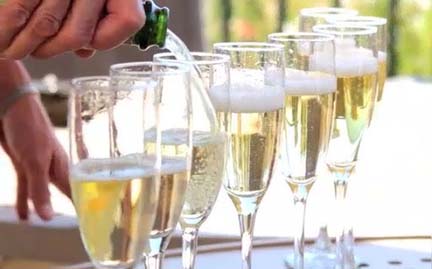
Case in point: Victoire Champagne Brut Prestige ($20, purchased), which the shelf talker claimed was half the price of branded Champagne and just as Champagne-y. I ?ve done this long enough to know that this is all but impossible, but I also pride myself on my open mind. Besides, what if it was just like Champagne at half the price?

The Victoire wasn ?t, and it wasn ?t even as well made as $20 cava or French cremant (or many $10 cavas, for that matter). The Big Guy tasted it with me; he took a couple of sips and asked if I had anything else to drink. The wine had little structure, and tasted more like apple juice mixed with club soda than sparkling wine.

No wonder it ?s easier to buy ketchup. Or that it ?s more popular than wine.

Happy birthday, Two-buck Chuck

Happy birthday, Two-buck ChuckThis year is the 10th anniversary of one of the most important developments in the U.S. wine business, almost as important as Robert Parker and the 100-point scoring system. Two-buck Chuck made its first appearance in a Trader Joe’s store in 2002.

Why important? Because Two-buck Chuck was the first cheap wine sold as something better than cheap wine. Before it, there were two kinds of wine — cheap wine, which tasted crappy, had screwcaps, and was sold in big jugs to people who didn’t know anything about wine; and good wine, which wasn’t cheap, had a fancy label and a cork, and was sold to people who figured good wine couldn’t be cheap.

That all changed with Two-buck Chuck, which got its nickname because it was made by a company called Charles Shaw and it cost $1.99 a bottle. The wines, though annoyingly inconsistent in quality, offered a lot more value than their $2 cost. More importantly, they weren’t flawed or too tannic or unripe; in this, they were more or less the first cheap wines that were professionally made that U.S. consumers could buy.

And, as George Taber has pointed out in “A Toast to Bargain Wines,” the world has not been the same since.

Before Two-buck Chuck, cheap wine options were limited. I started drinking wine regularly in the 1980s with something called Avia, which cost $7 for three bottles and tasted like it was made in the former Yugoslavia by the state-owned wine company. Which it was; call it Communist plonk designed to keep the masses tipsy. Drinking better wine, but still affordable, meant buying something like Barton & Guestier. It was French, $6 or $7 a bottle, and not as offensive as the Avia. It wasn’t especially well made, either, but what did I know?

So it’s not surprising that Two-buck Chuck, which is owned by the Bronco Wine Co. and controlled by the infamous Fred Franzia, has had such an impact. Trader Joe’s has sold more than 50 million cases in the last decade, which would probably make Charles Shaw one of the 30 biggest producers in the country if it was an actual producer. More importantly, it has spawned dozens of imitators across the country, including E&J Gallo’s Barefoot, and similar private labels from national retailers like Aldi, 7-Eleven, and Whole Foods.

Equally as important, as the Wine Market Council recently discovered, consumers “are largely content with the lower-priced wines they switched to during the recession” — and many of those lower-priced wines were made possible by the success of Two-buck Chuck.

Intriguingly, the label’s success may hamper its future. One reason why Two-buck Chuck is stil $1.99 in California (shipping costs raise the price to as much as $3.50 in other parts of the country) is that Bronco controls more than 40,000 acres of vineyards, as well as the wine’s production, like a massive bottling plant near the Napa airport.

The always savvy Paul Franson wonders: Will the end of the California grape glut, which has raised bulk grape prices, give Bronco the chance sell its grapes to others for more than it would make by using it to produce Two-buck Chuck? Will this mean less Two-buck Chuck in stores? And will this mean the beginning of the end of the brand?

Wine review: Two-buck Chuck Pinot Grigio 2010

Two-buck Chuck is the nickname for the Charles Shaw wines made by Fred Franzia's Bronco Wine Company and sold only at Trader Joe's, the gourmet grocery with the cult following. They're called Two-buck Chuck because the wines cost $1.99 in Trader Joe's California stores, even though the price varies depending on where in the country the wine is sold.

The Wine Curmudgeon doesn't usually review these wines; there aren't any Trader Joe's in Dallas (though the company is threatening to build in Texas) and the chain is only in 32 states, with single stores in a half dozen or so of those. But when I get to New Mexico, which has Trader Joe's, I always buy wine for reviews. Two-buck Chuck, if not the best cheap wine, is one of the first modern cheap wines, and deserves thoughtful criticism.

I tasted three wines during this visit: The chardonnay, which will show up in a post reviewing $3 wines one of these days; the sauvignon blanc, which was unimpressive, and the pinot grigio ($3, purchased), which was quite impressive. In fact, it was much nicer than I expected it to be from past experiences with Two-buck Chuck, and would merit Hall of Fame consideration if it was more widely available.

The pinot grigio was fresh and clean with what can best be described as a hint of lemon pith fruit — yes, a very sophisticated description for a $3 wine. Other than being a little thin in the front, it was extremely well done. And, though it had some of the turpentine-like aroma common to cheap pinot grigio, it was nowhere near as noticeable as the smell of so many badly made Italian versions. We drank it chilled on a Santa Fe patio in stunningly pleasant summer weather, but this would pair with almost any white wine food. Chill it first, and don't let it sit around the house too long. This is not the kind of wine that will get better with age.