



Tag Archives: supermarket wine

Is the $14 Yalumba viognier the new best cheap wine in the world?

Yalumba viognier
Is that the Yalumba, the one over there in the corner?

Fortunately, there are two kinds of Yalumba viogniers for sale in the U.S.

This year, you can actually buy one of the grocery store wines that won a platinum medal at this year’s Decanter World Wine Awards. It’s so widely available, in fact, that I’ve written about it on the blog – the Australian Yalumba Eden Valley viognier, about $14 in the U.S.

This wine got 95 points and was “really impressive,” with “toast, butter, peach and nectarine and subtle highlights of rose water… richly flavoured but wonderfully balanced with a flow of white peach and ginger on the long finish.”

There are actually two sorts of Yalumba wines for sale in the U.S. The Decanter winner is from the more expensive Samuel’s Garden Collection; the other, called the Y series, made the $10 Hall of Fame in 2013. Its consistency isn’t always there, but at times the Y series wines have approached Bogle and McManis for overall quality.

So why this post? Because last year, the Decanter competition gave us the infamous $7 La Moneda malbec from Chile, which wasn’t for sale in the U.S.. But Internet wine and food types, and some even mainstream news organizations, kept calling it a Walmart wine because it was sold at a supermarket owned by Walmart in Great Britain. And Walmart is Walmart is Walmart, right? Call it fake news for the wine drinker.

I got 32 comments when I wrote about the La Moneda the first time, which is about 32 more than I get for most posts. Many of the comments asked where they could buy the wine even though the point of the post was that it wasn’t for sale in the U.S.

So go buy the Yalumba, even if it isn’t $10. Or buy one of the Y series wines, which are $10. Whatever, please don’t leave a comment asking where it’s for sale. I don’t want to go through that again.
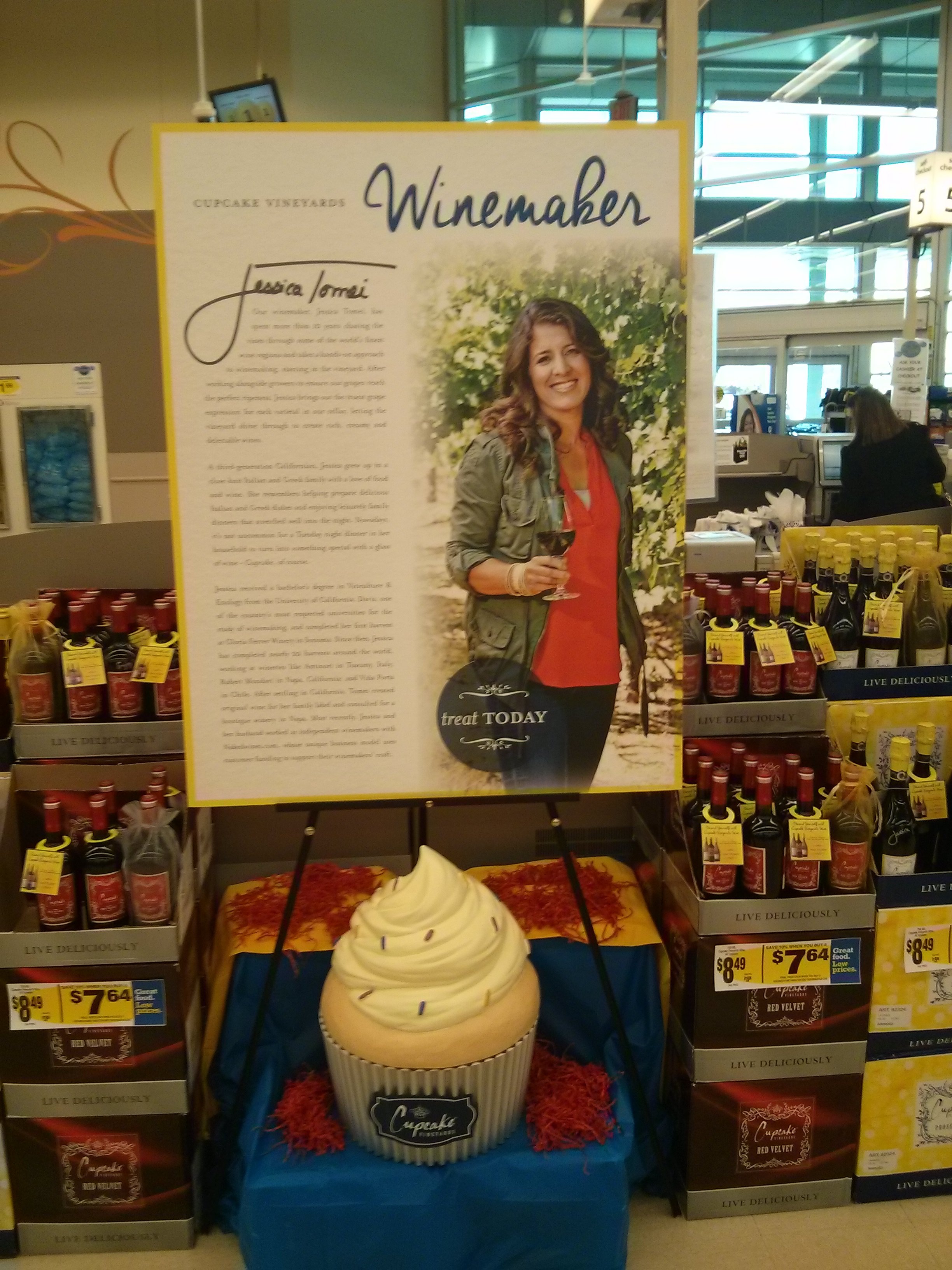
 

Cupcake wine review 2016

cupcake wine reviewA cabernet sauvignon that isn’t too bad, but a merlot that really isn’t necessary

The 2016 Cupcake wine review features the top-selling brand’s cabernet sauvignon and merlot. The cabernet surprised me; it mostly tastes like cabernet, and may be the best Cupcake wine I’ve tasted in the six years I’ve done a Cupcake wine review. The merlot? The less said, the better.

The California cabernet sauvignon 2014 ($10, purchased, 13.5%) smells like boysenberries, not unlike pancake house boysenberry syrup without the sweetness. It’s mostly dark fruit, but barely sweet at all in the way so many grocery store wines are jammed with sweet fruit. The mouth feel is surprisingly full, again not what I expected, and the tannins and acidity are pleasantly noticeable and in balance.

The catch is the finish, which involves some horrible fake oak that can best be described as tasting like cheap, bitter, poorly made cocoa powder. It stayed in my mouth despite my best efforts to get rid of it with repeated rinsing.

The California merlot 2014 ($10, purchased, 13.5%) was thin, bland, dull, and uninteresting. It wasn’t fruity or earthy (though there was a funky aroma that blew off after a minute or so) in the way that most merlots are one or the other. Even more surprising was that there wasn’t any finish, and there’s usually at least a crummy one on this kind of wine. But the merlot vanished the minute I spit it out.

Given how many grocery store merlots suffer from an overabundance of flavor and fruit, the merlot is hard to figure out. My guess? Just poor quality grapes, which may also account for the funky aroma.

For more on Cupcake wine:
• Cupcake wine review 2015
• Cupcake wine review 2014
• Cupcake wine review 2013

Winebits 453: Frose (ouch), wine clubs, Pennsylvania

froseThis week’s news: Rose morphs into frose, wine club calls it quits, and supermarket wine for Pennsylvania
• Say it ain’t so: Just when we thought the hipsters were done with frose, someone wants to ruin cheap and delicious rose to make a sweet cocktail with it. This is another example of how people who don’t know anything about wine write about it, since the recipe lists something called “sweet rose.” Which, of course, is not rose but white zinfandel, and if you want to make cocktail with that, all you need is club soda and lemon and lime slices. Also infuriating: The concoction requires three other kinds of booze, which cost about $80. And that $80 would be better spent on 8 or 10 bottles of this. Or this. Or even these.

• Saying goodbye: Global Wine, which ran wine clubs for the New York Times and Wall Street Journal and came under scrutiny on the blog, has apparently gone out of business. Wine Industry Insight reports that the company has “decommissioned” itself and that it may have been purchased by a competitor. If so, that may mean a shakeout in third-party wine clubs, which supply the wine and marketing for retailers, magazines and newspapers, and non-profits that offer wine clubs. And that may be part of the consolidation that has had the wine business in a stranglehold over the past couple of years.

• Saying hello: A Giant Eagle in suburban Pittsburgh has become the first supermarket in the state to sell wine as part of Pennsylvania’s liquor reform legislation this year. Meanwhile, 200 groceries have applied for a wine license and 81 have been been approved. This comes as especially good news to the Wine Curmudgeon, whose readers in Pennsylvania will no longer have to leave sad comments on the blog that they can’t buy the wine I review at Pennsylvania’s state stores.

Winebits 445: Wine scores, Veramonte, Tennessee

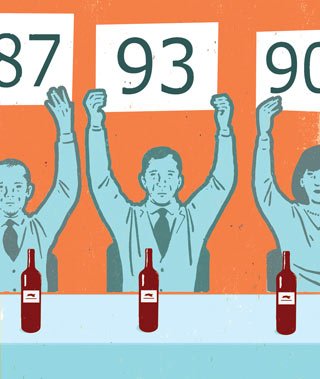
wine scores• Take that, wine scores: Writes MJ Skeggs in the Portland Mercury about wine scores: “Yep, despite how the tasting industry (the magazines, star reviewers, bloggers, anyone with a palate and a keyboard) claims objectivity, it comes down to personal preference.” Couldn’t have said it better myself, though I’ve probably said it just as well many, many times. Skeggs lists eight other reasons to avoid scores, as well as the best alternative – find a good retailer and go from there. And how can one not recommend a wine article that includes a Spinal Tap reference?

• Chilean winery sold: Control of Veramonte, once a star of cheap Chilean wine, has been sold to one of Spain’s biggest producers. This is probably good news, since Vermaonte’s current owners have presided over the wine as it has become more expensive and less well made. The new lead owner, Gonzalez Byass, makes Beronia, always quality cheap wine.

• Tennessee grocery store wine: How big a deal is supermarket wine? More than 400 grocery stores in Tennessee started selling wine this month, the first time they were allowed to do so under new legislation. The fight to allow wine in supermarkets in the state dates to the 1970s, and has been called the biggest change in the state’s liquor laws since Prohibition. Where have we heard that before?

Why the Kroger wine proposal should terrify anyone who drinks wine

Kroger wine
Spanish chardonnay? Seriously?

Kroger wants to hire the biggest distributor on the planet, which controls about one-third of the wholesale market, to manage the wine departments in its stores. This is such a terrible idea for consumers that even the federal government — which has mostly abandoned its oversight of all but the most basic parts of the wine business, like labels — said it was probably a terrible idea.

There are many reasons why the Kroger plan is terrible (and you can read about them here and read why Kroger finally dumped the plan here). But the main reason is what you see in the photo with this post, which I took at my local Kroger. Anyone who would use it to promote Spain does not care about wine — or Spain, for that matter. They only care about selling wine, which is hugely different. As such, they don’t care about quality, terroir, or value. They care about selling us wine in the easiest way possible, and if that means the wine is crappy or overpriced or not what we want, so be it. Margin, ring totals, and sales per square foot are what matters to Kroger.

Because:

• Verdejo, a Spanish white grape, is sort of like sauvignon blanc — if the sauvignon blanc is soft and lemony. However, many aren’t (like this one and this one) and if I buy a verdejo expecting tropical fruit or minerality, I’ll spit it out and never drink verdejo again. But we’re just Americans who buy wine at the grocery store; what do we know?

• Albarino is not like pinot grigio at all. In any way. That this sign would compare them attests to how little the wine part of the promotion has to do with reality, unless the reality is selling wine.

• No, I do not want to try some Spanish chardonnay. The Spanish do not want to try some Spanish chardonnay. Most Spanish wine producers do not want us to try some Spanish chardonnay. They want us to drink Spanish white wine made from Spanish grapes like viura, verdejo, and albarino, not wine made with an international grape like chardonnay that is only made in Spain to sell to Americans who buy wine at the grocery store; what do we know?

I’m lucky in Dallas, where there are two top-flight independent retailers and two chains that are pretty good. So I don’t have to buy wine at the grocery store, as so many of you do, and as so many more will as supermarkets soon sell the majority of the wine we buy.  I don’t expect Kroger to care as much as an independent retailer, but it would be nice if the chain pretended it cared. That Kroger and its ilk won’t even do that much, that they will treat wine as if it was laundry detergent — and which is the key to the terrible distributor management proposal — shows how difficult it might soon be to buy quality wine at the grocery store. This Spanish nonsense, sadly, might be a sign of even more terrible things to come.

Will Aldi and Lidl change grocery store wine?

Aldi and Lidl
See all this wine? You won’t find it at Aldi and Lidl.

Will German discounters Aldi and Lidl change grocery store wine in the U.S. the way they’ve changed it in Great Britain? That’s the question to answer as Aldi grows to 2,000 stores over the next couple of years and Lidl opens its first stores on the east coast.

Because the chains have significantly changed the way wine is sold in Britain, not only forcing traditional retailers out of business but cutting sales at mainline grocers.

“You wouldn ?t have believed it possible five years ago, but Aldi and Lidl are now setting the pace in the U.K. supermarket wine trade,” writes Finoa Beckett in the Guardian newspaper. “Between them, the pair have 10 percent of the U.K. grocery market, with Aldi alone accounting for one in every 13 bottles of wine we buy.”

By comparison, Costco, considered the biggest wine retailer in this country, has about eight percent of the U.S. market, while Kroger may account for about four percent. In other words, two upstarts in the U.K. have done almost as well in that market as two multi-billion dollar retailers do here. What does that say about the way grocery stores have traditionally seen wine in the U.S.?

What accounts for the Aldi and Lidl success?

? Cut-throat pricing. Each does $10 wine, even allowing for exchange rate foibles, in a way we can only dream of here. Beckett recommends Lidl’s 6.99 (about US$10) Cremant de Limoux, sparkling wine from the Limoux region of France; a similar wine costs $16 here. And she says Aldi does a French red and South African white for 5.49 (about US$8), about two-thirds the price of each in the U.S.

? Supply chain brilliance. A British grocery store consultant told me the companies get such good prices because they make producers an offer the latter can’t refuse. The grocers will buy all of a vintage at one time, so that the producer is happy to sell at a lower price because it has the cash immediately and doesn’t have to wait for the wine to be sold over the course of the year.

? Smaller selection. The same consultant said that smaller selection translates into lower overhead and keeps costs down. “The traditional supermarkets’ massive range makes choosing hard for the 99 percent of consumers who have no idea what most of the wines are,” he explained. “And the discounters have been winning awards and getting plaudits for the quality of their wines, which when combined with their much cheaper prices is a sure fire winner for most consumers.”

That’s the good news. The bad news? So far, Aldi hasn’t shown it wants to do the same thing in the U.S. My local Aldi, as well as the others I’ve visited, has good prices and a small selection, but most of the wines are of indifferent quality — too much Winking Owl and not enough Vina Decana, and I’ve yet to find a white to buy regularly. If Lidl follows the Aldi example, we haven’t gained much.

Still, there is reason for optimism. Most experts ignored Aldi and Lidl when they entered the U.K., and now even ASDA, owned by Walmart, is suffering badly from the discounters’ success. Besides, given the sad state of cheap wine in the U.S., any sign for improved quality and value is welcome.

Winebits 427: Judgment of Paris, grocery store wine

Judgment of Paris ? 40th anniversary: One of the most important moments in the history of wine will be commemorated in May, when the Smithsonian — yes, that Smithsonian — will hold several events on the 40th anniversary of the Judgment of Paris. The judgment, a blind tasting in Paris between the best French and California wines and where the latter won, was the first time the wine world realized that California wine could be as good as it has become. The festivities include a winemakers’ dinner featuring several of the winning California wines, which I’m told by one of the winemakers are still pretty good.

? Supermarket influence: How much do grocery stores affect what wines we buy and what other retailers sell? Quite a bit, says this story by Liza Zimmerman on Wine-Searcher.com. The story is notable for several reasons, not the least of which is that an editor at Wine-Searcher once told me her readers weren’t interested in that kind of reporting. How times have changed, as supermarkets get closer to selling 50 percent of the wine sold in the U.S. The story talks about why grocery stores only carry the biggest brands (because they’re the only ones who have enough product), and how they can afford to sell wine more cheaply than independents. It’s well worth reading and shows that the Winestream Media does have an idea that the world is changing.

? If it works in Canada? The Canadian province of Ontario has decided to allow wine to be sold in 150 grocery stores, a significant move given how tightly booze sales are regulated in Ontario. But, reports the Business News Network, the provincial government is broke and needs the revenue from grocery store sales. The new system is still quite restrictive, though, and includes rules that require the retailers to sell Ontario wines and probably isn’t a model for the 18 or so U.S. states that don’t allow supermarket wine sales.