


Tag Archives: Rob McMillan

SVB wine report 2023

Man slumped over computer
“Negative demand growth? Say it ain’t so, Rob!”

Think the WC is full of gloom and doom? This year’s annual wine industry survey takes gloom and doom to places where even I’ve never been

The annual Silicon Valley Bank state of the wine industry report, released yesterday, is so full of gloom and doom that it sounds like I wrote it after a too long day tasting $18 smoooth red wine. But Rob McMillan, the study’s author, is hardly a curmudgeon.

Which should tell you the desperate situation facing the wine business – too high prices, too few drinkers, too few people interested in wine, and no one in wine much concerned.

This is obviously a place where none of us want to be,” said McMillan, speaking to an international webinar. “If a rising tide floats all boats, then a shrinking tide is the opposite. In that case, we’re in a Darwinian model, where the only way to get business is by taking it from someone else. And that’s obviously a place where we don’t want to go.

Among the report’s findings:

• A decline in wine sales and demand — “negative volume growth” — for a second year in a row, as wine continues to lose market share to spirits.

• The two generations younger than the Baby Boomers are not going to flock to wine as they get older, no matter how much wine thinks they should: “Consumers younger than 60 have a lower share of wine consumption compared to what they did in 2007,” while about one-third of those 21 to 29 drink alcohol — but not wine. And expecting them to suddenly embrace wine just because is a march of folly.

• The divide between Big Wine, the 100 or so largest producers that control some 90 percent of U.S. production, and the other 10,000 or so small, premium producers is the biggest in memory. Which means the biggest producers have very little in common with helping the rest of the business survive.

• The lack of a strategy to promote wine – partly because of the divide in the business, partly because not everyone sees a problem, and partly because wine is wine — is having a consequence that’s obvious to anyone who looks at the numbers.

In fact, even the little good news for some wine producers isn’t especially good for the rest of us. There is growth for wines costing $15 or more, but since most wine sold costs less than $15, the trend is only benefiting the few.

Photo: “News Flash–Heat Bad for Productivity” by moria is licensed under CC BY 2.0.

More SVB wine reports:
2022
2021
2020


SVB wine report 2022

TR
“Yes, wine business, I’m pointing at you — and you know why!”

The annual wine industry survey is pessimistic about wine’s future, thanks to too high prices, too old wine drinkers, and too much plonk

The annual Silicon Valley Bank state of the wine industry report, released yesterday, is so depressing that I almost didn’t write about it.

But if study author Rob McMillan is going to say things that get him dirty looks at wine events, then he needs all the support he can get. The truth will set you free – and boy, is this report full of truth:

• Wine faces continuing, serious problems with “falling interest in wine among younger consumers, coupled with the encroaching retirement and decreasing wine consumption of baby boomers.” This, McMillan writes, “poses a primary threat to the business. That issue has yet to be addressed or solved, and the negative consequences are increasingly evident.”

• McMillan, who thought premiumization would start to recede last year, said that hasn’t happened. Instead, the “reality was that COVID continued to accelerate premiumization.” Hence, a devastating trade-off – less wine sold overall, but at higher prices. And he doesn’t necessarily see this ending any time soon.

• And why not, since the wine business has all but abandoned entry-level wine. Does this sound familiar? “The wine industry has allowed the lower-priced entry-level wines to be produced without transparency as to ingredients and in a homogeneous and uninteresting way,” which is unlikely to appeal to younger consumers. In other words, plonk. And, McMillan adds, without quality entry-level wine, “it’s going to be hard to grow the wine category.”

• And that post-pandemic party so many expected? “Throughout the reopening, wine lost market share to spirits. Worse yet, total wine sold through wholesale declined through most of the year. … We predicted there would be a reopening celebration, and it turns out we were correct, but the reopening celebration that took place in 2021 didn’t include the wine industry.”

And, finally, the most depressing news: That restaurant wine sales may never return to what they were, and what they were in the several years leading up to the pandemic was nothing to get excited about. The reason? Prices that are too high and that scare off younger consumers.

Hang in there, Rob. The WC has your back.

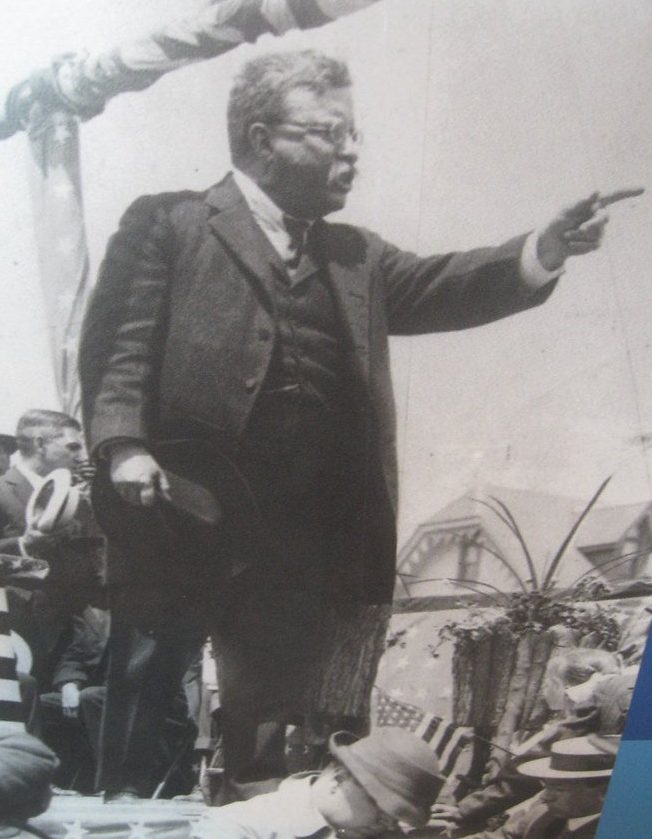
Photo: “Teddy Roosevelt” by JBrazito is licensed under CC BY 2.0

More SVB wine reports:
2021
2020
2019

SVB wine report 2021

svb report
SVB report 2021: The wine business must find a way to reach under-40 consumers.

The good news in SVB wine report 2021: This year should be an improvement over 2020. But don’t get your hopes up for 2022

How about some good news in the SVB wine report 2021, Silicon Valley Bank’s annual state of the wine industry effort? It would be a welcome change from the gloom and doom of the past 10 months, as well as the past couple of years of SVB reports.

So rejoice.

“I think the news will be measured and good,” says Rob McMillan, the report’s author. We exchanged emails in the run-up to the report’s official release and webcast yesterday.

“I think we have a bounce ahead of us,” he says. “And going back to history, I remember having data that showed a massive growth in wine consumption in 1945, then a drop in 1946. I do expect a bounce in 2021 – maybe not like 1945. Call it a rolling celebration that will span 2021 and into 2022 as occasions and delayed celebrations come back.”

The report reinforced that good news – assuming the pandemic gets under control and the wine business doesn’t do anything stupid:

• Expect a bounce in demand if tourism and restaurants come back. The report sees an increase in wine sales gaining momentum in 2021, but it may not be sustainable next year.

• Wine demand this year did not increase, no matter what others are saying. Instead, says McMillan, what happened is what’s called a channel shift — we bought less wine at restaurants and more wine at supermarkets and on-line, but the overall total didn’t change. In this, restaurant wine sales have not recovered and may still be down as much as two-thirds over the same time last year.

• Premiumization is nearing its peak, but will continue this year thanks to that pent up demand and the industry’s efforts to reduce the wine supply. The 2020 California harvest may be the smallest in a decade.

• Retailers who understand on-line sales and e-commerce – even without more loosening of three-tier laws — “will have a strong 2021.” The report says on-line sales could represent 20 percent of an average winery’s sales within five years – an impressive figure, given those are in the mid-single digits now. And e-commerce sales during a three-month period in 2020 increased as much as the previous 10 years.

Not all was good news, of course. What else would we expect after 2020? Wine’s growth rate, even with premiumization, has declined across all price segments for years, and there is no reason to expect a long term change unless the wine business changes tactics in how it sells wine. In addition, as Baby Boomers continue to drink less wine, the industry must find a way to reach under-40 consumers. Which, as we know, it has failed miserably at.

studio microphone

Winecast 43: Rob McMillan and what happens when all this is over

rob mcmillan
Rob McMillan: There are going be better quality grapes in cheap wine, even as wine prices decline.

“What’s going to happen to demand? People are still going to drink”

The good news? Rob McMillan of Silicon Valley Bank, perhaps the foremost financial analyst in the wine business, says wine can survive the coronavirus pandemic. The bad news? It’s not going to be a lot of fun during the duration.

The highlights of our conversation:

• Expect to see weaker wineries fail, as well as some grape growers who don’t have producers to buy their grapes. In this, there probably won’t be bankruptcies or foreclosures as much as there will distress sales. There are always people wiling to buy wineries, says McMillan, even in a recession, and prime vineyard prices probably won’t decline all that much.

• Wine prices were expected to fall before the pandemic hit the U.S., and the stay at home orders and layoffs will only hasten the process. In this, though, since there are too many grapes, expect to see better quality grapes going into cheap wine. One rumor? That a major $3 producer snapped up Napa Valley cabernet sauvignon at bargain prices.

• Look for more producers to try to sell their wines at mass retailers and supermarkets. The loss of tasting room business needs to be made up somehow, and retail wine sales haven’t slumped as much as some thought.

Click here to download or stream the podcast, which is about 18 minutes long and takes up 11 megabytes. The sound quality is very good; it’s my first podcast with Zoom.

SVB wine report 2020

svb wine report 2020
“I know those younger consumers are down here somewhere.”

SVB wine report 2020: The wine business is hurting, and things are going to get worse before they get better

How upside down is the wine world? This week, during the annual Silicon Valley Bank state of the wine industry webcast, one of the panelists said something that was almost unprecedented:

“We need to pay better attention to consumer demand.”

Which, as regular visitors here know, is the opposite of what we’ve heard for decades, and especially since the end of the recession and the growth of premiumization. The wine business knew best, and sold us what it said we needed, and not necessarily what we wanted.

Because that’s how we ended up where we are today, with decreasing wine sales, decreasing demand, and decreasing interest in wine among younger consumers. Which, not surprisingly, was the theme during this year’s wine industry webcast. Rob McMillan, the executive vice president and founder of the Silicon Valley Bank wine division, put it bluntly on Tuesday morning: The wine industry has to change the way it does business and focus on what makes wine worthwhile. It can no longer assume that consumers will drink wine because they always have.

And, reinforcing just how different things are from where they were just a couple of years ago, McMillan said it was time for wine to reconsider its objection to nutrition and ingredient labels. Because, of course, that’s what consumers want.

We ain’t in Kansas anymore, are we?

The rest of the webcast was depressingly familiar for anyone who has been paying attention to something other than wine scores and premiumization for the past decade:

• A price bubble exists for California’s best quality grapes, as prices continue to increase while demand doesn’t.

• Retail wine sales, measured by volume, have declined to where they were in spring 2015.

• The amount of bulk wine on the market is at record levels, which is a key gauge of wine industry health. More bulk wine means less demand, which means lower wine prices, which means wineries make less money.

Will the wine business take its head out of the sand and act on the report? McMillan isn’t necessarily optimistic. I talked to him this week, and he said that there is still tremendous denial among producers, save for the very biggest. Big Wine, he says, “is looking for ways to change the industry,” but it’s about the only ones.

2019 SVB wine report

2019 SVB wine report
SVB’s Rob McMillan: “The U.S. wine industry needs new direction and a changed focus.”

2019 SVB wine report says U.S. retail wine sales may decline this year, and the future  doesn’t look much better

Someone in the wine business may be more worried about its future than the Wine Curmudgeon. Consider these projections, from the 2019 SVB wine report that was released yesterday:

• How about a forecast that says retail wine sales in 2019, as measured by volume, could actually decline? This would be almost unprecedented in the post-1980s history of U.S. wine.

• Or that growth by value may be less than one percent, with even premiumization starting to slow?

• Or that younger wine drinkers, more interested in legal weed and paying off their student loans, aren’t showing any interest in picking up the slack left by the aging Baby Boomers?

Why does this matter to those of us who drink wine? Because Silicon Valley Bank’s Rob McMillan, the study’s author, is one of the smartest people in the wine business. How important has McMillan’s annual report become? This year, a vice president for Big Wine’s Constellation Brands participated, and the company doesn’t usually do those sorts of things.

So if McMillan says a slowdown is coming and the wine business needs to reexamine how it does business, then it had better. Or else we all suffer.

“This is probably the most important report we’ve ever put together,” McMillan said during Wednesday’s live videocast. “Starting now, wine has reached a tipping point. We’re not closing in on a tipping point, we’re feeling it.”

The videocast threw around a lot of jargon – I even heard psychographics – and several of the other panelists nitpicked about some of the conclusions.

But that didn’t change the hard news: Younger people don’t care about about wine the way their parents and grandparents did, They are focusing more on beer and spirits and legal weed, and they’re hampered by lower relative incomes and intimidated by the repeated attacks on wine drinking by the neo-Prohibitonists.

In other words, wine is too old, too Anglo, too snotty, and too out of touch with the younger consumers. So, said McMillan, “We have to look at what the wine industry is doing about it now and what can we do in the future to fix the problem.”

Also worth noting: McMillan, who invented the term premiumization to describe consumers trading up to more expensive wine, said he’s surprised to see it slow as it faces price resistance from consumers. Price resistance? What an amazing concept.

Finally, the Wine Curmudgeon’s suggestion to the wine industry: Sweetening dry wines and calling them dry ain’t going to do it. How about giving younger wine drinkers quality and value? I know — almost as revolutionary as the idea of price resistance.

SVB wine forecast 2018

SVB wine forecast 2018SVB wine forecast 2018: This will be a good year for the U.S. wine business. But what the wine business does next could determine the health and success of wine in the U.S.

The first thing that Rob McMillan said at yesterday’s videocast for the SVB 2018 wine industry report was a warning. How seriously the ostriches in the wine business take his prediction could determine the fate of the U.S. wine business over the next decade.

“I look at the horizon, what’s going to happen,” said McMillan, Silicon Valley Bank executive vice president and the founder of its wine division. “Some people would say that’s a negative way to look at it, because business is good, and 2018 will be a good year. But what’s on the horizon?”

And the answer to that question, as I have written many times, may not be what the wine business wants to hear. It has focused on short-term growth, premiumization, consolidation, and wringing out profits at the expense of value and quality. And guess what McMillan said consumers, including and especially Millennials, are looking for in the wake of those developments?

“Value,” he said, “even at premium prices. It’s what I call the frugal hedonist.”

Where have we heard this before?

In other words, unless the wine business once again embraces value, trouble is looming. Here are some of the numbers in the SVB wine forecast 2018 that led to this perspective:

• Sales growth in the U.S., measured by volume, has been flat since 2013. This has not happened since the early 1990s.

• The high-powered growth rate for wine costing more than $9, which has been the highlight of premiumization, is starting to slow. This is especially true for wines between $9 and $15, which has been among the fastest growing price ranges.

• The bank’s clients, many coming from California’s top wine regions, have seen sales stall after a string of 10 percent annual bumps almost since the end of the recession. This is especially worrying, said McMillan, and nothing like this has happened since the early 1990s.

• Consolidation among distributors, which has been on hyper-drive for the past 18 months, seems to have hurt retail sales, funneling more business toward the biggest retailers.

• Traffic to tasting rooms in Napa, Sonoma, and Washington state has declined. Which, frankly, is inconceivable to anyone who came of age drinking California wine.

Finally, one bit of good news: Drink local seems to have become an established part of wine, said Mary Jo Dale, the marketing director, Americas, for Vinventions/Nomacorc, and one of the videocast’s panelists.