

Tag Archives: restaurant wine

Welcome back, restaurants: Please let wine drinkers help you return to normal

pandemic wine
Want to fill those empty tables? Then meet wine drinkers halfway.

Five suggestions to increase restaurant wine revenue and make wine drinkers happy

Dear restaurant business:

I know we haven’t always been on the best of terms, given restaurant wine prices. But that doesn’t mean I don’t want restaurants to recover as we begin to come out of the pandemic. Because I do understand how bad the past year has been – in jobs and store closings, as well as $27 billion in lost sales.

And, despite our differences, we both understand that restaurants and wine are part of each other – when one suffers, we both do. So please, don’t exclude wine drinkers as the recovery begins. Let us help you:

• Don’t take us for granted, and assume we’ll be back just because. Because we may not be. Many of us discovered that home cooking isn’t as bad as we thought it was.

• Keep experimenting. Many operators tried something different during the pandemic, and much of it worked out quite well. Or, as one Texas restaurant official told me about cocktails to go: “How do we help to provide opportunities for restaurants, and especially since what looked like it was going to be a two-week crisis has turned into 10 months? This was a way to do that.” So why stop experimenting now?

• Meet us halfway on pricing. Why expect the old rules from the old normal to be relevant given all that has happened? So consider (where legal) offering wine bottle discounts. Or (again, where legal) buying two or three glasses to get the next one free. Or even cutting wine markups from 3- and 4-to-1 to 2- and 1½-to-1. As noted on the blog many times before, this can bring in thousands of dollars of revenue that would otherwise be left on the storeroom shelf.

• BYOB is an opportunity to regain customer loyalty and trust, and not – as some complain – lost revenue. What better way to win back those of us who enjoy drinking wine with dinner than to let us bring it to your restaurant? We would be happy to pay the corkage fee, and you’re getting two or three or four people at the table who might otherwise stay home.

• Shake up the wine list. Offer us something that we haven’t seen at the supermarket or Drizly or a chain retailer. This is an opportunity to replace the wholesaler-driven, Big Wine brands that you use because it’s easy, with wine that’s interesting and different. Which is how you think about your food, isn’t it?

As always, let me know if there is anything else I can do to help.

Your pal,
The Wine Curmudgeon

Photo: “Restaurant tables” by TChapman9 is licensed under CC BY 2.0

Winebits 688: The “three more reasons why I worry about the future of the wine business” edition

coravin This week’s wine news: An argument about how to score wines closed with Coravin, plus another intellectual property lawsuit, and the dismal future of restaurant wine

Dancing on the heal of a pin: Fair warning: British wine critic Jamie Goode considers me one of the people out to ruin the wine business, so some may see this as petty. But his latest complaint strikes me as worth noting, regardless. Should wine critics disclose if they’ve used the ultra-pricey Coravin opener when tasting a wine? The most common Coravin costs $300 – talk about taking wine drinking to a place where only the rich can afford it. Frankly, I’d rather buy 20 bottles of Domaine Tariquet. So no, I never use the Coravin when I taste my $10 wines.

One more lawsuit: This lawsuit isn’t about wine, but it does involve a wine company. Big Beer’s AB InBev, has sued Constellation Brands because the latter used the Corona brand name for its new line of hard seltzer. This is one of those times when I almost wish I had taken my mother’s advice to go into the law, since the suit is incredibly complicated and I’m sure the billable hours will go on forever. That’s because AB InBev sold the Cornoa brand in the U.S. to Constellation in 2013, but kept the brand in Mexico and elsewhere. So, when Constellation decided to market Corona hard seltzer, one would have thought that this would have been settled beforehand. But apparently not (though, to be honest, the WC does appreciate intellectual property lawsuits where only the attorneys get rich.)

Not good news: The full-service restaurant business, already devastated by the pandemic, may not be back to normal until 2024. And that, of course, is bad news for restaurant wine and the smaller producers, distributors, and importers that account for some of the most interesting restaurant wine lists. The assessment comes from the Rabobank consultancy, via Wine Industry Insight. Rabobank predicts that chains will reach their pre-pandemic level more quickly than independents, which may still be 10 or 15 percent below that mark in 2024.

Winebits 674: Holiday season wine snobs edition

wine snobsThis week’s wine news: The wine snobs celebrate the holiday season

Ice in a glass of wine? VinePair asks sommeliers when it’s OK to put an ice cube in a glass of wine, because we need guidance on this subject from people with initials after their names. The post, believe it or not, includes a section on how to properly add ice. It’s pieces like this that make me wonder if I’ve wasted the past 13 years writing the blog. How about this advice? Add a cube or two when you feel like it. Which, in Texas in August, we feel like a lot.

The kindness of strangers? Mary Margaret McCamic, MW, writing on the Karolus Wine Imports blog, notes that “many of the most exciting bottles that I have enjoyed were the result of the generosity of collectors.” How does one respond to that? Does this mean that when the Big Guy comes over, and we dip into the wine closet for my latest $10 find, it’s not exciting? It’s pieces like this that make me wonder if I’ve wasted the past 13 years writing the blog.

No affordable wine? Megan Krigbaum, writing for Punch, laments the loss of affordable Beaujolais on restaurant wine lists. She defines this as Beaujolais costing less than $100 a bottle. It’s pieces like this that make me wonder if I’ve wasted the past 13 years writing the blog. $100 is affordable? For whom?  This also begs the question of Beaujolais’ availability on restaurant wine lists, and especially in the middle of the country. But what do I know? I put ice cubes in un-exciting $10 wine.

Winebits 673: Wine.com sales, restaurant wine, tasting notes

wine.comThis week’s wine news: Wine.com reports 217 percent sales increase, plus restaurants are headed in the opposite direction and another critic ponders the need for toasty and oaky
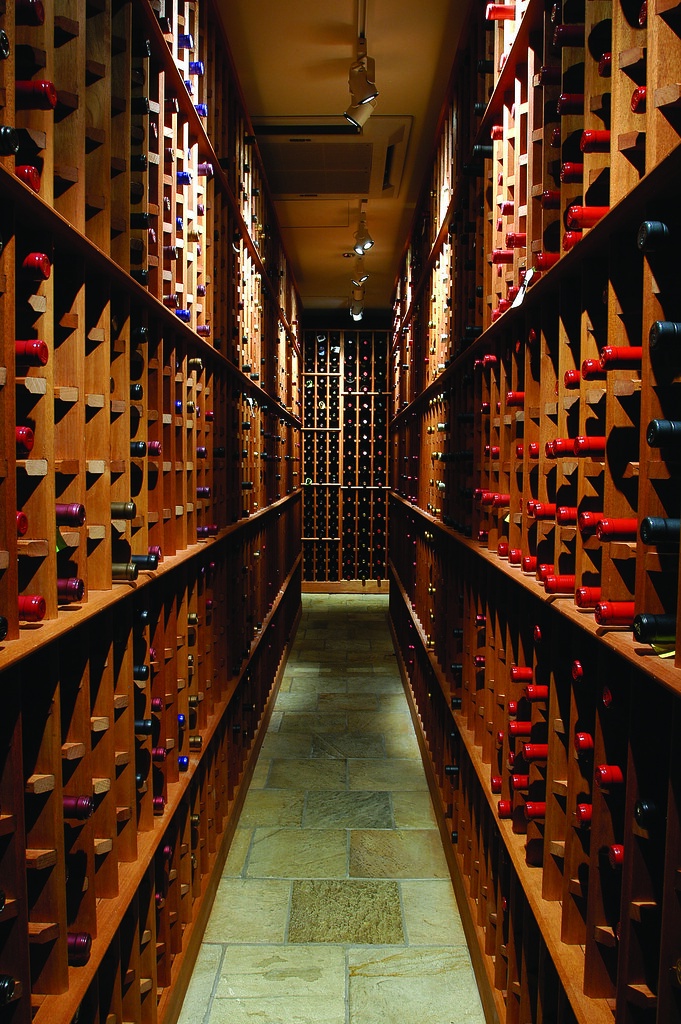
Wine.com sales: Wine.com, the U.S.’ biggest on-line wine retailer, ended the first six months of its fiscal year with a 217 percent sales increase compared to the previous 12 months. Can anyone say pandemic? Even without the increase in on-line retail caused by the coronavirus, sales for the previous 12 months were up 102 percent. One key to the jump: repeat sales from customers who pay $49 a year for free shipping, similar to Amazon Prime’s free shipping. Sales from those customers increased by about one-fifth more than overall sales for the past 12 months, as more of those customers bought more wine on-line. This raises the question again: How, once the retail world returns more or less to normal, will we be able to go back to thinking of on-line wine as something special, and not something we buy every day?

Not so good news: Tom Wark, writing on the Fermentation blog, asks: “Do we allow a huge swath of restaurants across the country to simply disappear in the wake of COVID and state’s restaurant shutdown orders or do we act to aid these institutions?” This has been the elephant in the room as the pandemic continues, with restaurants — rightly or wrongly — bearing the burst of government restrictions. I don’t know that I agree with all Tom writes, but his piece is well worth reading.

No tasting notes: Guy Woodward, writing in the British trade magazine Harpers, pulls no punches: “Who reaps the benefit, for example, of reading that a wine has notes of  ‘gentian, elderflower, seaweed, mussels, salt spray, chicken stock, sage, fennel, peach kernel, lemon, alkali and wet stone’?” This is the second British shot over the winespeak and tasting notes bow in recent weeks — quite a surprising development, given how entrenched the two are. Again, reason for optimism that some in the wine business understand the need to make wine more accessible.

New study says we’ll be eating – and drinking – more at home, even after the pandemic ends

restaurant wine
USA Today reports that 2.3 million restaurant jobs have been lost during the pandemic.

As many as one in four say they anticipate forgoing restaurants – and restaurant wine – in the future

A Florida consultancy predicts that restaurant spending could fall by as much as one-half by the time the pandemic ends. Even more surprising, says its study: Consumers seem content to cook and eat at home. If true, this has tremendous implications for the wine business.

That’s because about 40 percent wine sold in the U.S., measured by dollar sales, is sold in restaurants. So if that market goes away, there’s going to be even more wine glutting the market – and there’s already a glut.

And if that happens, we could be looking at lower prices but also more winery failures – and especially on the high end, since that’s where much restaurant wine comes from. This might also lead to more winery consolidation, which means less consumer choice. The biggest wineries have the deepest pockets, and will be better able to survive a massive glut.

The results come from Florida-based Acosta, in a study called “COVID-19: Reinventing How America Eats.” It described what seem to be massive shifts in consumer eating habits: 44 percent report eating breakfast at home daily, compared with 33 percent pre-COVID. Similarly, 31 percent are eating lunch at home every day versus 18 percent pre-COVID, and one-third are eating dinner at home daily versus 21 percent pre-COVID. All of those people eating at home, says Acosta, translates into 31 to 50 percent less spending at midscale, casual and fine dining restaurants.

Don’t panic yet

But let’s look at the caveats:

• Acosta didn’t respond to a couple of requests for an interview. The study is based on “online surveys of Acosta’s proprietary shopper community” in early July, as well as industry data and “proprietary information sources.” Proprietary means the company doesn’t discuss how the survey works, which means it’s OK to be skeptical about the results. We know how Nielsen measures sales; we don’t know how Acosta divines its results.

• On the other hand, Acogta’s pessimism about the future of the restaurant business dovetails with most of the gloom and doom prognosticated elsewhere. USA Today reported in early October that 2.3 million restaurant jobs have been lost during the pandemic, while 12 percent of sit-down restaurant chain units that were open before COVID-19 had closed.

• The 40 percent restaurant wine sales number is misleading, since it’s measured in dollar terms. Given that restaurant wines tend to be more expensive, and that restaurant markups inflate that total, the amount of wine sold in restaurants in actual bottles is probably much less than 40 percent of the U.S. total. Hence, the loss of the restaurant market wouldn’t be quite as devastating, and it would also be mitigated by people buing less expensive wine at the supermarket.

• Some of the results in the survey require a second look. For example, “35 percent of consumers said they’ve discovered a new passion for cooking amid the pandemic.” Which is all well and good, but does it actually mean anything? And one-fifth to one-quarter of the respondents say they anticipate eating out less in the future, which is understandable in July but may not mean much next spring.

So, yes, more not good news for the restaurant and wine businesses. But maybe, given all the bad news we’ve had, not quite as bad as it seems.

Winebits 665: Restaurant wine, intellectual property, legal weed

This week’s wine news: High-end restaurants are selling their wine collections to raise cash to say in business. Plus, an Argentine winery may have stolen an artist’s work and more woes for legal weed

So long, wine collection: Nation’s Restaurant News calls them “great wine cellar sell-offs of 2020.” High-end restaurants, which often spend years putting together award-winning wine lists, are selling their wines to stay in business during the pandemic. One New Jersey chain sold as much as 40 percent of its wine; a New York City restaurant turned its wine into $50,000 when it was closed in March and April. Said the restaurant’s wine director: “For us, if it’s between saving the cellar or the restaurant, save the restaurant. Product can be replaced, but you can’t replace the loyal staff members who have been with you for 10 years. A well-stocked wine cellar is of minimal value without the staff who sells it.” Restaurant wine pricing has come in for a lot of criticism on the blog over the years, but no one likes to see this going on.

Give me back my art: An Argentine winery has allegedly stolen a drawing from a well-known U.S. artist, using the art work to decorate its box wine. ArtNet.com (bet you never thought you’d see that link on a wine site) reports that Shantell Martin says Bodegas San Huberto lifted the label for the company’s Aminga Malbec from drawings she made for a work she created for a 2017 show at the Albright-Knox Art Gallery in Buffalo. There’s a picture of the box and the drawing at the link, and they do look quite similar. The story also says Martin’s work appears to be ripped off regularly, and once by retailer Lane Bryant.

More losses for legal weed: One of Canada’s biggest legal weed companies says it lost C$3.3 billion (about US$2.47 billion) in its 2020 fiscal year. Aurora Cannabis saw net revenue fall by some 30 percent and the company laid off thousands. In other words, more bad news for legal weed. And I’m not the only one who feels that way – the comments to the story, posted on the CBC website, wonder how it’s possible to lose billions of dollars selling marijuana. That’s a fair question, eh?

Winebits 652: Restaurant carryout booze, local rose, cheap local wine

carryout boozeThis week’s wine news: More restaurants opt to sell carryout booze, plus Illinois wineries embrace rose and local wine needs to be more affordable

Restaurant carryout booze: More restaurants see carryout booze, including wine and cocktails, as a way to help the weather the duration. Which is pretty damned amazing, since this was illegal in most of the country before the pandemic. In Texas, for example, the governor has signed an order allowing restaurants to sell to-go cups, just like New Orleans. This is mind-boggling; most of Dallas was dry in some way until a decade ago, and the state is still famous for its dry counties. Perhaps even more amazing? A suburban Chicago restaurateur is selling wine at retail for carryout and not phony restaurant prices. She hopes to make up the difference in volume – an amazing concept, yes?

Local rose: Just when the WC gets all flustered about the future of Drink Local, I read this in the Southern Illinoisan newspaper in downstate Carbondale (where, a long time ago, I was a general assignment reporter). The Illinois Grape Growers and Vintners Alliance launched an aggressive and seemingly expensive marketing campaign this spring to make rose Illinois’ official state wine, and “unite” the industry with a common product. Give the WC’s enthusiasm for Drink Local and pink wine, what could be a better idea?

Not just in England: Oz Clarke, one of the patriarchs of modern wine writing, says English wine won’t become more successful or more popular until more people can afford to buy it. This is a lesson that emerging wine regions, whether in the U.S. or elsewhere, never seem able to understand. It’s one of the biggest problems with Drink Local, where producers don’t understand that people are more likely to buy $15 wine than $30 wine, no matter how noble the $30 wine is. Clarke told a wine seminar that it was crucial to get “really good bottles of still wine in front of people for the same price as, say, New Zealand.” Wise words, indeed.