

Tag Archives: nutrtional labeling

Beer drinkers — and Big Beer – love nutrition facts labels

nutriton labels
If beer, why not wine?

So why is the wine still business still opposed to telling us what we’re drinking?

An independent survey found that more than 70 percent of the beer products sold in 2020 included a nutrition facts statement that listed the alcohol, the number of calories, carbohydrates, protein, and fat on products either on the packaging or on a website.

Best yet, said a companion survey, beer drinkers welcomed the information – 60 percent were more likely to purchase beer, wine, or spirits that included the information and almost three-quarters said labels encouraged responsible alcohol consumption.

Not that the wine business cares much. It remains as obstinate about nutrition and ingredient labels as it has for more than a decade. Every once in a while, it will commission a survey that says real wine drinkers don’t care about junk like ingredient labels and keep pretending that it’s still the 1990s and all is well.

But when Big Beer – hardly the most enlightened business in the world – recognizes the need for labels, then something important is happening.

“I don’t know why beer decided to do this, but I can tell you for sure that and without exception that they were very smart to do it,” says Nancy Glick, the director of food and nutrition policy for the National Consumers League. Her organization has supported nutrition and ingredient labels for alcohol even longer than I have.

“The beer industry is showing that it’s more committed to its consumers,” she says, “and the data is showing them that consumers appreciate that.”

The labels were part of the Brewers’ Voluntary Disclosure Initiative, a Beer Institute program started in 2016. The goal was to show that brewers and importers could put a nutrition label on bottles and cans of beer despite the cost and the small size of the containers.

Which, apparently, they were able to do. Yes, the participating companies included Anheuser-Busch, Molson Coors, Constellation, Heineken, and FIFCO, whose brands include Labatt and Gennessee – all of whom are some of the largest beer producers in the world. So the cost and technology to add labels wouldn’t be as onerous as it would be for a craft beer producer.

Still, says Glick, that’s almost not the point. What matters, she says, is that these companies added the labels despite years of objections that it wasn’t possible.

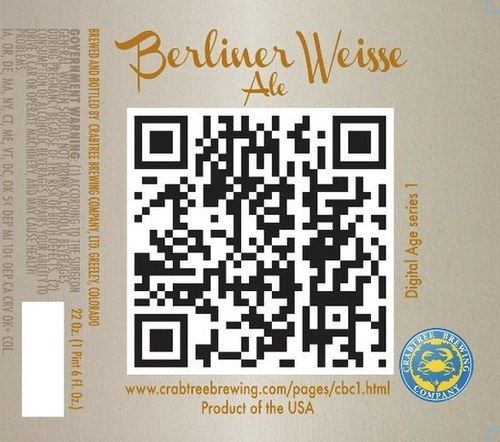
n addition, using a QR code – the boxy thing you scan with a cellphone – instead of actual ingredient labels solves most of the cost problems. The can or bottle code doesn’t have to change when ingredients do; rather, the QR code sends people to a website where changing the ingredients and nutrition information is as simple as a couple of keystrokes and mouse clicks.

Beer drinkers responded enthusiastically. Three-quarters in the above linked survey said alcohol beverages should have nutrition labels, while 77 percent would support wine and liquor companies providing this information to consumers.

Is anyone in wine listening?

And, because the Wine Curmudgeon appreciates irony: Even though Constellation Brands’ beer unit (a host of Mexican brands) added labels, its wine unit – including Robert Mondavi– doesn’t use them.

More about ingredient and nutrition labels:
Leading wine experts call for ingredient and nutrition labels
Clean wine: Has the Winestream Media finally figured out why we need nutrition and ingredient labels?
Bud Light debuts new and improved ingredient labels

Leading wine experts call for ingredient and nutrition labels

nutrition labels
Remember when Bonny Doon took the lead in adding ingredient labels to wine? And we thought labels had a chance to spread?

Has the time finally come for ingredient and nutrition labels — given that people with initials after the name agree with the WC?

The past couple of weeks have been filled with demonic news stories about pandemic drinking and the imminent alcoholism of anyone who has ever had a glass of wine with dinner.

How about: “Soaring Pandemic Alcohol Sales Cause Concern For Doctors”!

Or, “America’s all or nothing attitude toward alcohol: Binge or be sober

And, “As pandemic drinking surges. …”

So what’s the wine industry to do? Obviously, it hasn’t done much of a job reminding people that the U.S. is not anywhere near a collective drunken stupor. As noted here way too many times, there is little evidence we’re drinking more during the pandemic.

Dare the Wine Curmudgeon suggest – once again – ingredient and nutrition labels? And, this time, I’m not the only one who thinks so.

No less than the Institute of Masters of Wine recently held a webinar on the subject – and many people with initials after their name said ingredient and nutrition labels were a good idea.

And imagine my joy when Ines Salpico, writing in a British trade magazine, spared no punches: “Wine has been able keep itself at the margins of a basic consumer right: knowing the full list of ingredients and allergens present in a product. … [G]reater transparency needs to be seen as a key opportunity rather than a threat.”

Her argument makes perfect sense to everyone but the wine business:

• “Transparency will engage a generation of consumers that is data-driven, data-hungry and very skeptic about products without full traceability.” In other words, all those young people who don’t drink wine.

• Labels will make wine seem more like a food product and less like tobacco, a tactic that the neo-Prohibitionists have been using to great success.

• The lack of labels gives the impression that producers “might have something to hide,” and makes it possible for foolishness like clean wine and healthy wine.

So, once more, please: Can’t we offer ingredient and nutrition labels on wine?

Wine, food, and truth in labeling

farm-to-fable-ledeimageSerious food writing may be more rare than serious wine writing. Usually, it’s poetic rhapsodizing about quinoa and kale, beatifying this week’s hot chef, and barely paying attention to quality, price, or value.

That’s why it was such a pleasure to read Tampa Tribune food critic Laura Reiley, who wrote that some chefs in her region are – and there is no more accurate way to say this – liars. A variety of Tampa area restaurants that claimed they used local ingredients not only didn’t use them, but were buying the same corporate food from the same distributors that sell to the chain restaurants that those chefs love to hate.

Best yet, many of the chefs didn’t understand why they couldn’t lie about it. As one told the newspaper, “We try to do local and sustainable as much as possible, but it’s not 100 percent. For the price point we’re trying to sell items, it’s just not possible.”

So why does this matter to wine? Because, as regular visitors here know, wine also plays fast and loose with labeling. Artisan and hand-crafted, anyone?

The latest: The federal study that found that about one-quarter of wine labels incorrectly listed the amount of alcohol in the wine. Can you imagine the outcry if one-quarter of the ketchup in the grocery store made the same sort of serious labeling error?

At some point, someone who isn’t looking for an arsenic fast buck will do for wine what Reiley did for Tampa’s phony farm-to-table restaurants. And then, when the U.S. consumer finds out that their favorite $20 bottle of wine, with its expressive boysenberry and toasty mocha flavors, used Mega Purple and highly-processed wood chips to get those flavors, there will be hell to pay.

Finally, a note to newspaper bosses everywhere: Read Reiley’s story. See how well done it is. And just imagine that you had the guts and good sense to do something like that at your paper. Maybe the business wouldn’t be in such bad shape, would it?

Illustration courtesy of Tampa Tribune using a Creative Commons license