

Tag Archives: healthy wine

Winebits 754: “Healthy” wine, wine etiquette, Coke and booze

Man and woman sitting at table
“$36? I guess I can pay for half of it.”

This week’s wine news: More non-alcoholic wine “health benefits,” plus wine etiquette, and Coke inches into alcohol

Just 110 calories! The Wine Curmudgeon, ever vigilant about health claims made by non-alcoholic wine, found another in his inbox recently. The product heralded its calorie count – just 110 for one serving. And a bottle only costs $30. How could we turn that down? Easily, of course, since one serving of wine only has 125 calories. And, because, there is no ingredient information on the product’s website, we don’t know how many of those calories are added sugars. As always, the devil is in the details.

Splitting the check? This young people and wine thing is much more complicated than even the WC suspects; no wonder the wine business is so baffled. A woman asked a web financial guru how to split a check when her date had two glasses of wine (chardonnay and cabernet) and she didn’t have any wine because she doesn’t drink during the week. Yes, my sarcasm is intended, and aimed at the guy; how cheap can he be? But the question also illuminates the challenges wine faces in attracting younger people – increased abstention and the high cost (two glasses for $36!) among many others. Because, of course, not all of us are aging Baby Boomers eating at steak houses who drop a couple of hundred dollars for wine without a second thought.

Coke and booze: Coca-Cola is inching into the alcohol business in the U.S., an effort that one top executive calls an “interesting experiment.” It has three products – a hard version of the Topo Chico water; a hard lemonade knockoff, and my favorite, canned cocktails under the Fresca brand. Fresca, for those of us of a certain age, still elicits giggles. The story is fascinating reading, given the company knows so little about selling alcohol. But, as the official notes, if there is a demand for it, why not?

Photo: Matt W Newman on Unsplash
Winebits 746: “Clean wine,” convenience store wine, three-tier system

clean wine
The federal government says this is about the only kind of clean wine that is legal.

This week’s wine news: The federal government warns on “clean wine,” plus Gallo soars at convenience stores and a history of the three-tier system

No such thing: The cyber-ether has been beside itself with news about clean wine, healthy wine, and the like over the past year or so. Now, the federal government agency that regulates alcohol has told marketers to calm down. The Tax and Trade Bureau, part of the Treasury, announced recently that “clean” should not be used to create the “misleading impression” that consumption of the alcohol beverage will have health benefits, or that the health risks otherwise associated with alcohol would be somehow lessened. The statement didn’t say if there would be legal penalties for anyone who did that; consider it a warning. And, added the bureau, “consumers should not interpret the term as meaning that the beverage is organic or has met other production standards” set by the federal government.

Gallo soars in c-stores: The WC, ever alert to changing wine trends, keeps a sharp eye on convenience store sales, which are about the only bright spot for wine these days. As such, E&J Gallo helped a Midwestern chain increases its wine sales 8 percent over the past year. The key to success? Sweet wine, selling to Millennials, and making sure the wine was cold.

Keeping it three-tier: Two of the most knowledgeable people in the country dissect the history of the three-term system in this interview, featuring Sovos ShipCompliant’s regulatory general counsel Alex Koral and Tom Wark, executive director of the National Association of Wine Retailers and author of the Fermentation Newsletter (both of whom have been on the blog). The interview gets a bit wonky, but it’s well worth reading for anyone who wonders how we ended up down this rabbit hole. My favorite bit? How a book published in the early 1930s, called “Towards Liquor Control,” still determines how we regulate booze in the U.S. The great Lou Bright once had one of my El Centro classes spellbound talking about the book.

Do wine drinkers really care about the trends that the marketers say we care about?

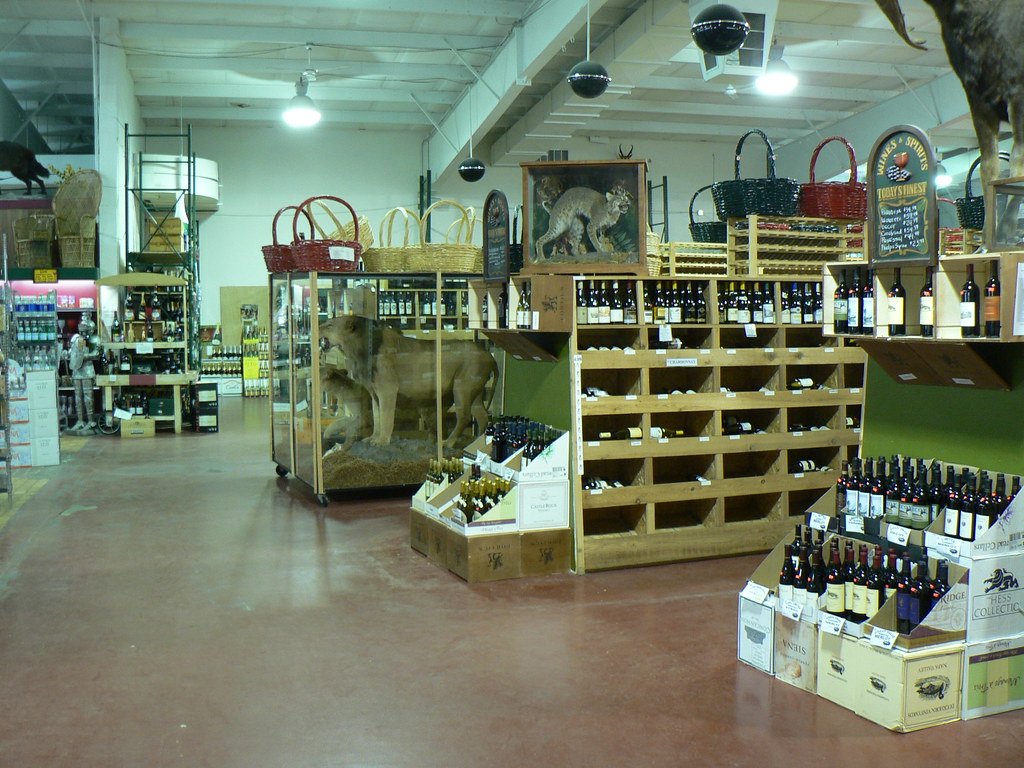
wine store
Organic wine? Not really, thank you.

Not really, says one survey, citing little interest in cans, “healthy wine,” and organic wine

One of the problems with deciphering the wine business is that there is almost no good data. If we don’t even know for sure how much wine is sold in the U.S. each year (and we don’t, apparently), then how can we know what’s going on with even more abstract concepts?

I mention this because I’ve spent much of the past couple of months writing about wine trends, both here and for several freelance pieces. Those trends included “healthy” wine, canned and box wine, and organic wine, and how each will be key parts of the wine business this year.

Turns out I may have been wasting my time.

That’s because the Wine Opinions consultancy recently asked its group of mostly high-frequency wine drinkers (those who drink wine at least once a week) about canned wine, wine that is “better for you,” and wine made with organic grapes. The results were stunning:

• Organic grapes: Just 9 percent said they would buy more wine made with organic grapes this year.

• “Better for you” wine did even more poorly – only 5 percent said they would buy more wine marketed as “healthy.”

• And cans and boxes? Hardly worth mentioning, with only 3 percent saying they would more wine in cans, while potential box purchases were more or less flat for 2022.

What’s going on here? How can these results be so different from what the experts have told us is going on?

The answer, I think, rests with the highly conservative nature of all those high-frequency wine drinkers. If it doesn’t come in a 750-ml bottle with a cork-style closure, then they’re not especially interested in it. And many of the wines in the survey are certainly not of the 750-ml glass bottle variety.

Age didn’t even particularly matter, save for the organic and healthy categories. Younger wine drinkers, who are supposed to be more open to cans, boxes, and all the rest, didn’t show that much more of a preference for alternative packaging.

And where age did matter, it didn’t seem to matter all that much. Yes, there were significant differences in the number of drinkers older than 40 and those younger than 40 in buying “healthy” and organic wine, but those younger than 40 didn’t embrace either with much enthusiasm. Just 17 percent of respondents under 40 said they would be more likely to buy “better for you” wines in 2022, and the number was only 21 percent for organic wine.

One out of five people from a demographic that doesn’t buy as much wine as their elders hardly seems like enough to build a trend around, does it?

Photo: “Wine store” by stu_spivack is licensed under Creative Commons

A few words about “healthy” wine

healthy wine
“So what kind of ‘healthy’ wine can I pair with this?”

No, wine is not healthy, and any attempt to make it so does a disservice to wine and to health

How do we know something bizarre is going on in wine? Because “healthy wine” is all the rage. Or, as a wine marketing friend told me recently: “I’m receiving an insane amount of press requests (and coverage) about low-calorie / keto / sugar per content wines from lifestyle media. And I am quite confused, to be honest.”

Never fear. The Wine Curmudgeon is here to make sense out of the nonsensical.

Diets and diet fads are like fashion – someone is always reinventing the hemline, and what was au courant 20 or 30 years ago is au courant again. Keto, for instance, bears more than a passing resemblance to the infamous Atkins diet, and Atkins may well have its roots in something especially nasty – the so-called diet plate of cottage cheese, canned fruit, and hamburger patty that was the rage from the late 1950s to the early 1970s.

And who can forget when pizza and beer were diet food?

So no, it’s not surprising that lifestyle writers – whose knowledge of trends is much more detailed than their knowledge of wine – are agog over “healthy wine.” After all, lifestyle writers gave us “Mommy wine,” as well as the neo-Prohibitionist terror that alcoholic mommies, zombie-like, are walking among us.

In this respect, “healthy” wine makes sense. Why not tell people that they can drink wine and still maintain a healthy lifestyle? It’s what they want to hear, for one thing, and it sort of, maybe, kind of, has a little medical validity. Everyone should consume fewer calories and less sugar, and the idea behind “healthy” wine is that it has fewer calories and less sugar – mostly because it has less alcohol.

That wine is not healthy – that it can be addictive and kill you — is just a minor inconvenience that the lifestyle writers will be sure to mention in a sentence or two about three-quarters of the way down the story.

A friend of mine, who writes about this subject with the same passion and crankiness that I bring to wine scores and ingredient labels, has said that the entire idea of “healthy” wine is not just a fraud, but a disservice to wine. If you want to drink wine and be healthy, then drink wine in moderation. Why buy special wine that almost certainly won’t taste as good (low- and no-alcohol wines are notoriously noxious) and will cost as much as traditional wine?

Because, as I learned as a young newspaperman, there’s only one way to lose weight and to be healthy: Eat less and exercise more. Everything else is just lifestyle writing.

Photo: Restaurant-ing through history


Winebits 736: AI ID checks, restaurant wine, “healthy wine”

ai wine
“Stand still so I can get a good look at you.”

This week’s wine news: Artificial intelligence and checking IDs, plus more changes for restaurant wine and “healthy wine” is hip

Can AI card drinkers? An English Aldi is testing software that will scan customer faces to see if they’re old enough to buy wine, beer, spirits, and cigarettes. The store, in Greenwich near London, is the discount retailer’s version of Amazon’s infamous Go stores, where there are no employees and no checkout – save for someone who wants to buy wine. Technically, says the story, it’s not facial recognition software, since the image is deleted after it’s used. For what that’s worth. Also in the “If you say so” department: The software company claims its system is so accurate that there is less than a 1 percent change of a 17-year-old fooling it.

Smaller wine lists? Restaurants are scaling back their wine lists in the wake of the pandemic, says Nation’s Restaurant News, The story is wordy and tries to position the changes as “adjustments,” but the sense is that the days of massive, many page wine lists are ending – if they haven’t ended already. The other change? Restaurants will be changing lists more frequently, so that there will always be new items on it to make up for having fewer wines.

Healthy booze: I’m going to take a more detailed look at so-called “healthy wine” – the low- and no-alcohol labels that seem to be all the rage these days, as well light wine that’s made to have less calories. I mention this piece because it shows how trendy these things have become; it includes details about a liquor store in swinging Soho that only carries non-alcoholic booze as well as a dedicated TikTok for sober drinking and a woman who compiles non-alcoholic cocktail recipes.