







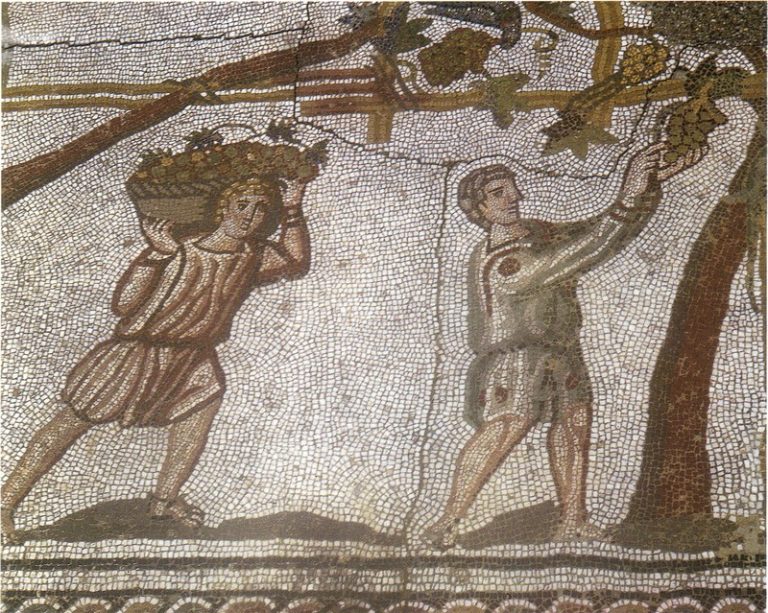
 Ancient Rome, and how its wine business dealt with natural disasters, mass production, and wine critics
Does the following sound familiar?
They refined production by using barrels and cultivation techniques that allowed them to make more for less cost. … experts estimate that a bottle was being consumed each day for every citizen.
No, this isn’t a description of Big Wine and the U.S. wine boom that lasted from the 1980s to the beginning of the 21st century. It’s the role of wine during the Roman Empire, about 1,800 years before any European had ever heard of Napa or Sonoma.
The more things change, right?
In fact, the parallels between Roman culture and 21st century California wine business are more than spooky:
• The Roman Empire’s version of Napa Valley, perhaps in and around Pompeii. The city, near what is now Naples on the Mediterranean, was a key Roman wine center. When it was wiped out in 79 when the Mount Vesuvius volcano erupted, “the vineyards were destroyed, and the cost rose so rapidly that only the rich could afford it.”
• High land values. In 92, Emperor Domitian banned new vineyards in Rome and ordered the uprooting of half of the vineyards in use so grain could be grown. Farmers had been planting vines and taking out grain to replace the vineyards lost in Pompeii. Because, of course, vineyard land had become more valuable.
• Their own Winestream Media. Pliny the Elder, who was killed in Pompeii, was among the most important Roman wine critics, and not just because he wrote: “In vino veritas (in wine there is truth).” Book 14 of his 37-volume Naturalis Historia covered wine, which included a ranking of Rome’s top vineyards. Book 17 discussed viticulture and defended the notion of terroir. And Roman critics, as I discussed in the cheap wine book, were notorious for their disdain for the wine most people could afford to buy.
Slider photo courtesy of Aveine, using a Creative Commons license
More about ancient wine:
• Ancient Hebrews: “If there is any wine send it”
• A brief history of wine, wine writing, and the wine business

 This edition of Ask the WC: What happened to the Mulderbosch rose? Plus, why are there so many older vintages on store shelves and what’s going on with Big Wine?
 In the wine business, history repeats itself – and we know what premiumization, overpriced wine, and consolidation mean for consumers
 Big Wine 2019: It still has a stranglehold on what we drink, but the biggest companies aren’t quite as big
 Cheap doesn’t mean a wine is worth drinking, and the Two-buck Chuck rose is almost undrinkable
 This week’s wine news: Alcoholism in the restaurant business, plus Big Wine wants to move into weed and more Chinese booze fraud
 Big Wine’s continuing dominance over what we drink means less interesting wines to buy, as well as fewer places to buy them