Tag Archives: Barefoot wine

Barefoot wine: Why it’s so popular

Barefoot wine
• Barefoot wine review 2020: Rose and Riesling

Barefoot has made wine as easy as it’s going to get; who else can say that?

Barefoot wine will soon be the best-selling brand in the U.S. – as it has been the most popular wine on the blog for the past three years – for three reasons. First, it’s cheap, usually no more than $8. In an age where wine that costs twice as much isn’t appreciably better, that’s a huge advantage. Second, thanks to owner E&J Gallo’s billions of dollars worth of marketing muscle, it’s available throughout the country and especially in the newly crucial grocery store market.

Third, and most important, Barefoot gives consumers what they think they’re supposed to drink. This doesn’t have as much to do with the Gallo house style – smooth, soft, and fruity – as it does with what the wine business has preached to U.S. consumers since the 1970s. That message: The best wines are varietal, and you should only drink wine that says cabernet sauvignon, chardonnay, merlot, and the like on the label. The rest of it is too confusing and too foreign and too difficult to bother with.

Barefoot has embraced the varietal message with brilliance. Any wine drinker, regardless of knowledge, can go to the grocery store and buy a bottle of technically correct, pleasant tasting Barefoot chardonnay or merlot or pinot grigio or moscato without any trouble at all. It has made wine as easy as it’s going to get; who else can say that?

Even the brand’s name and its continuing use of cork, which I’ve never understood, works for it. Barefoot is a stupid name for a wine – until you realize that most of us can’t remember wine names. But we can remember the wine with the foot on the label. And of course corks, since they’re part of the varietal message that we’ve been hearing for 40 years. The best wine uses corks in the same way that the best wine says cabernet sauvignon on the label. That neither is necessarily true is irrelevant, since we’ve heard the message so long we accept it as truth.

That discerning wine drinkers think Barefoot is too smooth, too soft, and too fruity misses the point. As reader Neidin McCullough wrote on the six-year-old Barefoot post that remains the blog’s best-ever read entry: “It tastes nice. End of story. Can’t be bothered with pretentious wine snobbery.”

Frankly, I can’t argue with Neiden. My colleagues in the Winestream Media have never understood the ordinary wine drinker, and their refusal to do so is one reason why more people don’t drink wine. Why do we mock Barefoot drinkers instead of showing them how much more fun wine can be if they’re willing to try something else?

For more on Barefoot wine:
• Barefoot wine review 2016
• Barefoot: Almost the best-selling wine in the U.S.
• Bogle edges Barefoot to win 2014 cheap wine poll

Barefoot wine review 2015

Barefoot wine revie 2015How is Barefoot the best-selling wine brand in the country, and perhaps the only wine costing less than $10 to thrive during premiumization? Because Barefoot is wine for people who don’t drink wine, and this year’s labels are excellent examples of that approach. And if the chardonnay was a touch sweet, the cabernet sauvignon was pleasant enough to drink again.

In this, it’s not so much that the cabernet ($6, purchased, 13.5%) and the chardonnay ($6, purchased, 13%) are simple, but that there is a method to their simplicity — sophisticated winemaking is used to get them to taste the way they do. Each wine emphasizes its fruit while pushing the stuff casual wine drinkers don’t like, the tannins and acid, to the background. The result? A soft, fruit-forward wine made for someone who buys Barefoot to have a glass or two in the evening, re-cork what’s left, and then drink again the next night. Frankly, that’s an impressive achievement for a $6 wine.

The cabernet, with an Argentine appellation but no vintage, was more enjoyable than the chardonnay, with a surprising amount of cabernet character, juicy dark berry fruit, almost no acidity, and enough tannins so that I noticed them but not so noticeable as to bother the brand’s target demographic. This is a red wine that is smooth and easy drinking, two terms that make wine geeks cringe but that are perfectly understandable to the people who buy Barefoot, and are the reasons they buy it.

The chardonnay tasted much like Cupcake’s chardonnay — not quite sugary, but sweet enough to linger on the tongue, plus caramel fake oak and lots and lots of green apple fruit. There was almost no acidity, and the sweetness helped mask a bitterness on the finish (probably from tannins from grape seeds and stems). That Barefoot delivers the same wine as Cupcake for half the price speaks volumes about how smart Barefoot parent E&J Gallo is. This wine is also non-vintage, and the grapes are from California.

More Barefoot wine reviews:
? Barefoot wine review 2014
? Barefoot wine review 2013
? Barefoot wine review 2012

Barefoot wine revie 2015

Barefoot wine review 2014

barefoot wineThis year’s verdict for the best-selling wine brand in the U.S., with some 11 million cases? Much, much better than I expected, and perhaps the two best I’ve tasted since I started doing annual Barefoot wine reviews in 2009.

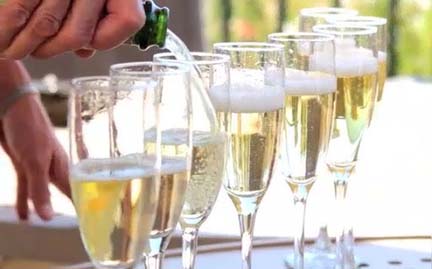
The Barefoot Bubbly Brut Cuvee NV ($10, purchased, 11.5%) won a platinum medal at the Critics Challenge, and that’s a tough audience. I don’t know about platinum, which is one medal above gold, but this is a quality sparkling wine that tastes exactly like it is supposed to taste — crisp apple fruit and a little creaminess. It was wine, and not like something put together by the marketing department to appeal to consumers who assume sparkling wine should be sweet and gooey. The bubbles weren’t quite as tight and long-lasting as I like, but given that the wine is made using the charmat method (common for less expensive sparklers and which results in less impressive bubbles), they weren’t bad. I’d buy it again, and serve it blind to get a few giggles.

The only problem? Price, ironically, which may be the only time in wine writing history that price will be mentioned as a problem with a Barefoot product. Much cava, made with the more expensive methode champenoise, costs less than the Barefoot, and is at least the same quality. And other California bubblies, like Korbel, are methode champenoise and about the same price. But Barefoot, knowing its audience likely doesn’t know the difference between charmat and methode champenoise (or much care), probably isn’t overly concerned.

The Barefoot Zinfandel NV ($6, purchased, 13.5%), meanwhile, is exactly the kind of wine that helped make the brand such a success. It’s dry, but loaded with the kind of fake oak that lends a chocolately finish, giving it the flavor profile that Barefoot reds are famous for. Having said that, the oak isn’t offensive — just obvious. In fact, minus the oak, the wine reminded me of the inexpensive, brambly, dark berry, and low alcohol zinfandels I drank in the old days and hoped would become the next big thing in cheap wine but didn’t.

Is the zinfandel a value the way Aldi’s $5 Vina Decana tempranillo is? Probably not, but the Decana is a $10 Hall of Fame wine. But it’s certainly a value compared to most of the $10 red wines, with their cute labels and sweet fruit, that overwhelm grocery store shoppers. That’s not a bad thing for a $6 wine, is it?

More Barefoot wine reviews:
? Barefoot wine reviews 2013
? Barefoot wine review 2012
? Barefoot wines (again): Value or just cheap?

Barefoot and the wine magazines

Last week, Barefoot was annointed as the No. 1 wine brand in the country by SymphonyIRI Group, which tracks wine sales. At more or less the same time, the Wine Enthusiast ran a story that said restaurants “are where wine trends are generated and brands are built.”

Can any two statements be more contradictory? Barefoot, which costs about $6 a bottle, is the ultimate anti-restaurant wine, a brand that has made its mark in grocery stores and is rarely seen in restaurants — and certainly not the kinds of restaurants that the Enthusiast writes about. This difference in perspective is Kakfka-esque, and it demonstrates once again why the wine industry is at odds with itself, and why wine continues to lag as the drink of choice among Americans.

The Wine Curmudgeon has noted this contradiction more than once. The Winestream Media, which insists it is the voice of the consumer, pays almost no attention to brands like Barefoot, which are the wines most of us drink. Barefoot, reported SymphonyIRA, sold almost $260 million worth of wine in the 52 weeks ending June 12, but you’d never know it be checking the leading wine magazines. A Google search turned up nothing from the most important wine magazines about this, though the listings did show Decanter stories about Gina Gallo’s babies and Pinot-gate (E&J Gallo owns Barefoot).

How can this happen? And no, it has nothing to do with the quality of Barefoot’s wines. Instead, it’s about the people who drink Barefoot wines. The Winestream Media doesn’t think they’re good enough. They don’t make enough money, aren’t educated enough, and don’t have nifty enough jobs. For example, the Enthusiast’s average subscriber is a 47-year-old man with a household income of about $200,000.

In other words, the magazine is geared toward four percent of the U.S. population. Is it any wonder most Americans consider wine to be elitist? The irony here is that even that demographic drinks cheap wine. My numbers, as measured by Quantcast, are just below those of the Wine Enthusiast, and about the only thing our editorial content has in common is the word wine.

I’m not making a value judgment about who the magazines write for. They want those Lexus ads, and they’re certainly entitled, under our system, to get them by appealing to middle-aged men with six-figure incomes. My point is that this approach limits wine’s audience. The Wine Magazines, whether true or not, are seen as the public face of the wine world. And it’s not a welcoming face for newcomers and aspiring wine drinkers. The winespeak is bad enough, but the bigger obstacle is the wine they write about, which is pricey and often hard to find.

The result? We have two wine worlds — the wine people drink and the wine that the magazines write about. Which is bad enough. What’s worse is that too many wine producers figure the latter is more important than the former. They live to get a good score, even if it’s not necessarily going to help them sell more wine.

Everyone in wine talks about how beer is slumping, and how wine will eventually overtake beer as the U.S. beverage of choice. Really? Then why is per capita beer consumption almost four times more than per capita wine consumption, according to the National Institute on Alcohol Abuse and Alcoholism? I’m convinced it’s not cost, since a six-pack and a cheap bottle of wine are about the same price and provide more or less the same buzz. Rather, it’s barrier to entry. You don’t need to decipher the beer world to pop open a cold one. And the wine business doesn’t seem to have any desire to lower that barrier to entry.

For more on Barefoot wine:
• Barefoot wines (again): Value or just cheap?
• Barefoot wines: Value or just cheap?
• Wine of the Week: Barefoot Riesling NV