

Tag Archives: Amazon wine

Amazon can revolutionize grocery stores, but it still can’t sell wine

amazon
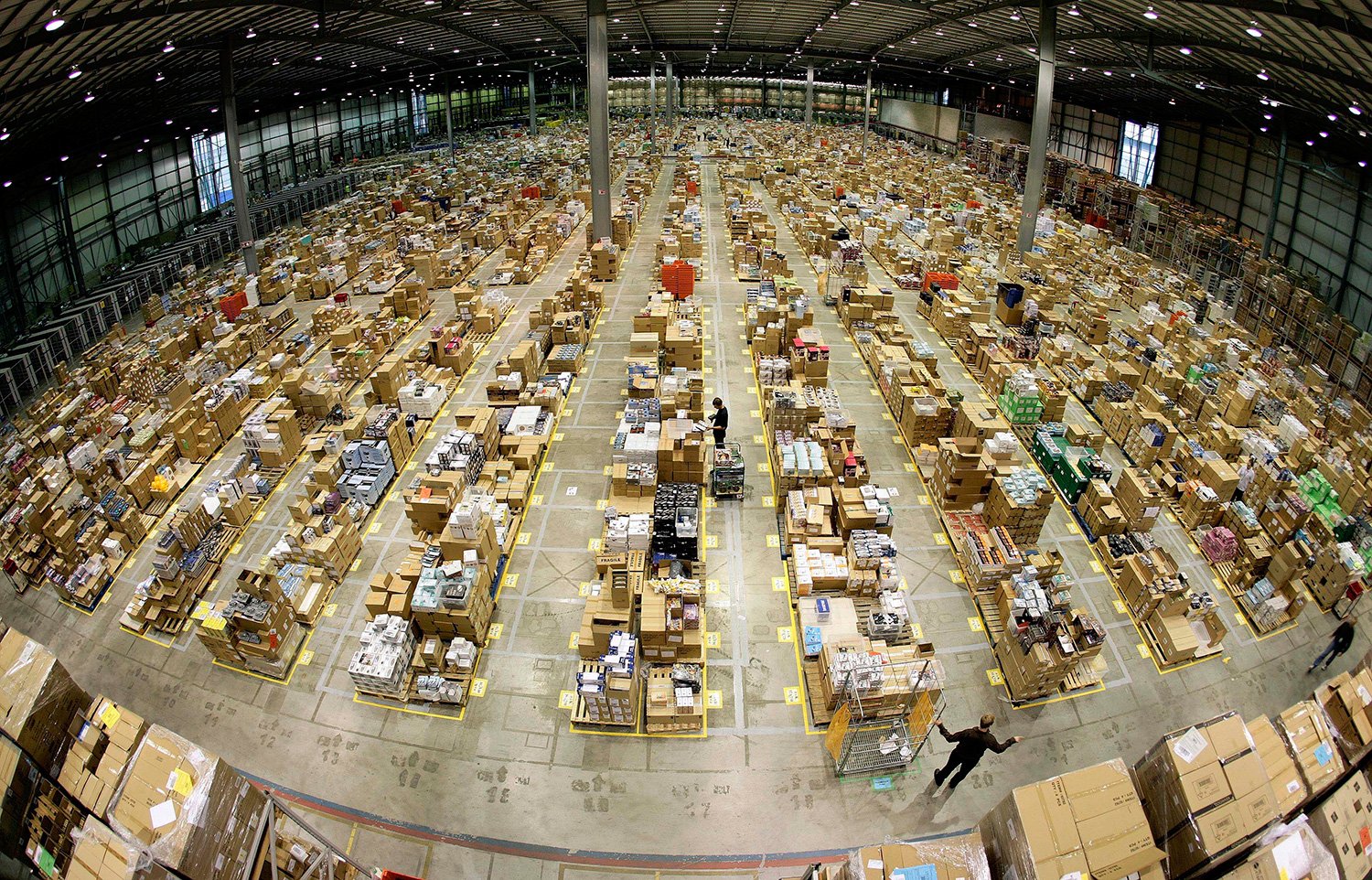
Nary a wine bottle in sight, because even Amazon can’t solve the three-tier system.

Amazon has invented a cash register-less supermarket, but it can’t beat the three-tier system

Amazon says it will open convenience stores that are actually convenient by eliminating the checkout process, using technology to make shopping quicker and easier.

The grocery store business is agog with the news; the blog’s grocery store consultant told me “The idea is not new, but I think the technological advances are what make it possible now. Getting rid of the most hated part of the shopping experience is brilliant.”

Perhaps, but the irony is not lost on the Wine Curmudgeon. Some seven years ago, Amazon killed a program to sell wine over the Internet. The pilot, called AmazonWine, would have allowed consumers to buy wine like we buy everything else from the Internet giant. Search, click, and wait for it to show up at the door – and likely with free delivery for Prime customers.

So consider this: The world’s largest Internet retailer, whose technology, efficiency, and clout have changed the way we shop, says it can open a store without an employee working a cash register. Which is mind boggling. But it has never been able to figure out how to sell wine given the antiquated, decades-old regulatory system that governs alcohol sales in the U.S. — 50 laws for 50 states, and the requirement that almost every bottle of wine pass through a distributor licensed to sell wine in that state.

Ain’t three-tier grand?

Amazon “sells” wine today, but it’s a tiny part of its business and is nothing more than a way for wineries to sell directly to consumers. All Amazon does is charge wineries a fee to appear on the Amazon website, and the wineries do the rest of the work, just like they do when selling directly from their own websites.

And, because I do appreciate irony so much, one last thought. Not only did Amazon give up trying to sell wine, it apparently never made an effort to change the laws. What does it say about three-tier is when it’s easier to invent a store without a cash register using technology that didn’t exist a decade ago than it is to change laws that are almost a century old and mostly obsolete?

Winebits 277: Direct shipping edition

? New York decision: There is a lot of legalese in this blog post from the California firm of Dickenson, Peatman & Fogarty, but the gist is that New York state ? based on a recent liquor authority ruling ? will apparently make it harder for third parties, like Amazon, to participate in Internet wine sales. Specifically, says the post, the New York decision (which we ?ve discussed here) and a 2011 California liquor board ruling aren ?t consistent in several important areas. This is crucial, since Amazon is basing its business model on the California ruling. I ?ve been told by my liquor law sources that what happened in New York is not surprising and that there are still many unknowns as Amazon tries to expand into the two-thirds of the country where it doesn ?t do business.

? Welcome to Texas: Amazon, on the other hand, scored a victory here when it announced five Texas wineries will participate in its wine marketplace. The Texas liquor board decision to allow Amazon into the state was a close run thing, I was told, but the result is that consumers in the 15 other states (plus the District of Columbia) that Amazon serves will be able to buy some very nice wine. If you need any recommendations, click on the blog ?s Texas wine category link. Also worth noting: I talked to several Texas winemakers, and they said Amazon sent employees to the state to taste wines before launching the program. Now there ?s a job ? wine scout for Amazon.

? Who needs Amazon? Not the British, where two entrepreneurs have a plan to let retailers sell excess inventory on the Internet. GrapePip.com, reports the Harpers trade magazine, was set up by Caspar and Victoria Bowes, who run fine wine merchant Bowes Wine. Their goal is to sell almost $400,000 worth of wine in their first year, using an eBay-style auction system.

Winebits 275: James Tidwell, Amazon, national chains

? Appreciating wine: James Tidwell, who works for the Four Seasons in suburban Dallas, is not only one of the most knowledgeable people in the wine business, but one of the nicest. So I'm particularly happy to note this interview with James, where he talks about what it's like to taste some of the world's great wines: "I knew food and wine went well together, but this transcended all conceptions of how they can be paired. It really has influenced my understanding of what can be done with food and wine."

? Making the Amazon model work: A rare look at how and what Amazon is doing with its wine marketplace, courtesy of Wines & Vines magazine. Peter Faricy, the executive in charge of the wine marketplace, wouldn't discuss sales or how many wineries are participating, but did note that the Internet giant is "super pleased with the reception so far. ? More importantly, he said, Amazon is working as fast as possible to add other states to the current lineup — 15 plus the District of Columbia, while ensuring complete compliance with the various local liquor regulations. It charges wineries 15 percent of the sales price to be part of the marketplace, but is waiving some fees.

? Want to be a national chain? Then offer better service, says the man in charge of Total Wine & More, whiich is agressively expanding across the U.S. ?If we can have the best people, we win. You ?re not going to find those people in Walmart or anywhere else, ? said president and co-owner David Trone. This is, of course, easier said than done, and I've heard it about a zillion times in the two-plus decades I've written about business. I once spent 40 minutes in a Dallas Total Wine without an employee even looking at me, and the one employee I watched wait on another customer didn't seem all that interested. But maybe that's a small sample size.


Is New York liquor ruling a setback for Amazon?

Amazon Wine, the Internet retailer's end-run around the three-tier system, may be in trouble. The New York State Liquor Authority, reports Wine Industry Insight, has fined a New York retailer for $50,000 for ?third-party liquor sales. ?

Said the authority in its ruling: ?Arguably, since these third party companies are not licensed to sell alcohol, they are violating the three tier system. Additionally, by participating in this arrangement, retailers could be construed as availing their license and sharing their profits with these companies, all of which weaken the system and do not conform to the rules and regulations that govern sales of alcohol. ?

The ruling was not directed at Amazon, and the case is not exactly the same ? the retailer was fined for selling wine on the Internet in conjunction with a distributor. Amazon doesn ?t ?sell wine, ? but allows consumers to use its marketplace to buy wine from retailers and wineries, All Amazon says it does is facilitate the sale, for which it takes a cut from the retailers and wineries.

Still, that sounds a lot like a third-party retailer, and Amazon doesn't help matters by calling itself a wine store on the site. And, as I reported last fall when the program was announced, there was no guarantee it wouldn ?t run afoul of ?newly aggressive state regulators, who might be inclined to sue Amazon just because. ?

Amazon Wine launched in 2012 even though it wasn ?t available in New York, the most important wine market in the country. This ruling seems to indicate it may be a long while before the marketplace gets there. In addition, though the decision has no meaning outside of New York, liquor cops across the country will undoubtedly be parsing it for ways to use in in their jurisdictions.

Winebits 269: Champagne, wine in grocery stores, Amazon

? More bad news for  bubbly: Just when you thought it couldn ?t get worse for Champagne, it did. Sales fell 4.4 percent the 12 months through December, according to the Comit Interprofessionnel du Vin de Champagne trade group. And Champagne shipments to the U.S. were down 25 percent in the first six months of last year, continuing that trend. And to think ? it wasn ?t all that long ago that the Champagne business was considering expanding the size of the Champagne region so they would have more land to get grapes from.

? Never underestimate three-tier: Abut a year ago, a federal judge ruled that a Kentucky law that banned grocery store wine sales was unconstitutional. So what ?s advancing through the Kentucky legislature? A more constitutional version of the ban, reports wkyufu,org. Said the bill ?s sponsor: ?So we would have liquor in convenience stores, dollar stores, wherever they could get a liquor license. And that's something that nobody wanted. ? Nobody, of course, not being the state ?s wine drinkers, who don ?t have the campaign cash to pay legislators to write bills for them. but the state ?s retailers who want to keep grocers out.

? Amazon adds two states: And they ?re not New York and Pennsylvania, which speaks volumes about how difficult it is to sell wine directly to the consumer in the U.S. If you live in Colorado or South Carolina, you can now use the Amazon service, which includes 15 states and the District of Columbia. Amazon usually doesn ?t break out many sales figures, but we should be coming up the first quarter of its wine retail operation. The numbers would be fascinating.

Amazon goes into the wine business

Maybe Amazon knows something the rest of us don’t. Maybe the world’s largest on-line retailer’s much awaited wine store offers something that isn’t obvious at first glance.

Because, frankly, the debut of Amazon Wine, announced yesterday, is underwhelming. Or, as one winery official told me. “In looking through some of their selections, there are ‘no’ bargains. In addition, Wine.com seems light years ahead of them.”

The wine business has been slobbering over Amazon’s wine store since Lew Perdue at Wine Industry Insight broke the story in September. Initial reports of a limited debut featuring select wines from mostly West Coast producers and sold by the wineries — with Amazon serving as a marketplace and not the actual retailer — didn’t seem quite right. It wasn’t the Amazon way of doing business.

Turns out that was exactly what Amazon announced yesterday, and is what makes its on-line wine site so disappointing. You know that seamless shopping experience it offers for everything from books to music to hiking shoes to pots and pans? This isn’t it:

• A very limited selection, around 1,000 wines ? or about what you ?ll find at a good-sized regional wine retailer. By comparison, Wine.com offers thousands of wines. Amazon has fleshed this out by including third-party, independent retailers like New York’s Morrell Wine and Wine Chateau in New Jersey, which have established on-line presences.

• No free shipping, which will almost certainly be a huge problem given Amazon ?s reputation for and reliance on free shipping through programs like Amazon Prime. The store will charge $9.99 for up to six bottles, which adds 15 percent to the cost of a $10 wine. By comparison, Lot 18, the discount site, charges $9.99 for up to six bottles and free shipping for larger orders.

 • A very odd product mix that includes $100 bottles as well as Coppola’s $10 wines and Ariel’s non-alcoholic products, both of which are widely available in traditional retailers. Why would anyone buy them on the site and pay the shipping charge?

• Very limited shipping, to just 12 states and the District of Columbia The program doesn’t include Texas, with three of the largest wine markets in the country, and New York or New Jersey. Wine.com does 42 states and DC.

In this, shipping — as expected — is the program’s glaring weakness. Amazon’s decision to do an end run around the three-tier system by serving as a marketplace and not the actual retailer means consumers who buy wine on the site face what one marketing executive told me was “a bit of a confusing experience.”

Are they buying from the winery, which may not ship to one of the 12 states and DC that Amazon advertises? Are they buying from one of the third-party retailers, with its own shipping and pricing policies? Do they want to use the $9.99 shipping, which takes three to five business days (so much for buying a bottle of wine for dinner), or pay three times as much for next day shipping?

How confusing is it? There are a handful of New York and Virginia wines for sale, but residents of New York and Virginia won’t be able to buy them.

Having said all this, Amazon is the expert in on-line retailing, and if anyone can make it work, Amazon can. But this haphazard and clanky program doesn’t give one cause for optimism.

Winebits 249: Amazon wine

This week, an update on the news that Amazon, the world ?s largest Internet retailer, wants to get back in the wine business:

? Solving the compliance problem: Lew Perdue at Wine Industry Insight, who broke the story last week, follows up with details on how Amazon will help wineries follow the various and byzantine state direct shipping laws. Because, in order to make this work, Amazon won ?t ship any wine, but will leave that ? and compliance — to the wineries. All it will do? List the wine on its website, just like any other third-party reseller. Perdue also reports that only 12 states will be part of the program; again, this makes me wonder why Amazon is bothering, since 12 isn ?t a whole lot and probably won ?t include New York and Pennsylvania, which are notorious for their liquor laws.

? Get those lawsuits ready: I noted yesterday that Amazon ?s plan could well provoke a legal shoot-em-up, given the regulatory climate in the U.S. What I overlooked is that the beer business, which hates direct shipping the way I hate the designated hitter, has very deep pockets. Case in point is a lawsuit in which two distributors are being sued by a beer manufacturer. I don ?t completely understand what the suit is about, but what ?s important to note is that the beer distributor trade group is supporting the distributors: ?Beer distributors are dedicated to keeping alcohol out of the hands of minors and we oppose alcohol sales on the Internet. ? Hope Amazon has lots of lawyers on retainer.

? What about the locals? Stephen Eliot at Connoisseur's Guide to California Wine asks: ?[H]ow this [will] impact the independent, brick-and-mortar wine retailers. I have long believed that the classic wine retailer, is among the most important and underappreciated players in real wine education. A good question, but probably one that won ?t make much difference in the short run. Assuming Amazon gets this to work, its scope will be limited and will only include California wineries (and a limited number at that). Plus, wine is different than music or books, which are mostly Internet-only products these days and put book and music stores out of business. Can ?t have a digital bottle of wine.